I wrestle with what to write about. So many ideas. Do I post more pictures of critters from my yard? Do I write about more important to the world sorts of things, like the dismantling of our government? Ideas come and go and I jot down notes on a variety of topics. I write 3 legal pages of notes about my family’s relationship to music, from me to ancestors I’ve never met. I have been hearing more bird song lately and think maybe I should write about that. Or, I should finally write up my words about Harriet Tubman that I have been meaning to write up for about a year. It is Black History month. My mind keeps churning out subjects.
Serendipity strikes. Many things have entered my life in the past few months that seem connected.
Have you ever heard of the Rosenwald Colored schools? Neither had I until the past year. I had first run across them in a legal document among some old family papers.
The document reads in part:
“Be it known and remembered, that on this the 10th day of March A. D. 1926, I, Mrs. Ellen J. Buie, widow of H. H. Buie, deceased, have granted, bragined and donated, and by these presents, grant, bargain, donate, set over and deliver unto the Franklin Parish School Board, of Franklin Parish, La. herein represented by H. W. Gilbert, President, accepting this donation in all its parts and clauses, the following described property, towit:” A description of the property’s boundaries follows, and then this:
“To Have And To Hold the said property unto the said Franklin Parish School Board for the use and benefit only of the Rosenwald Colored School.”
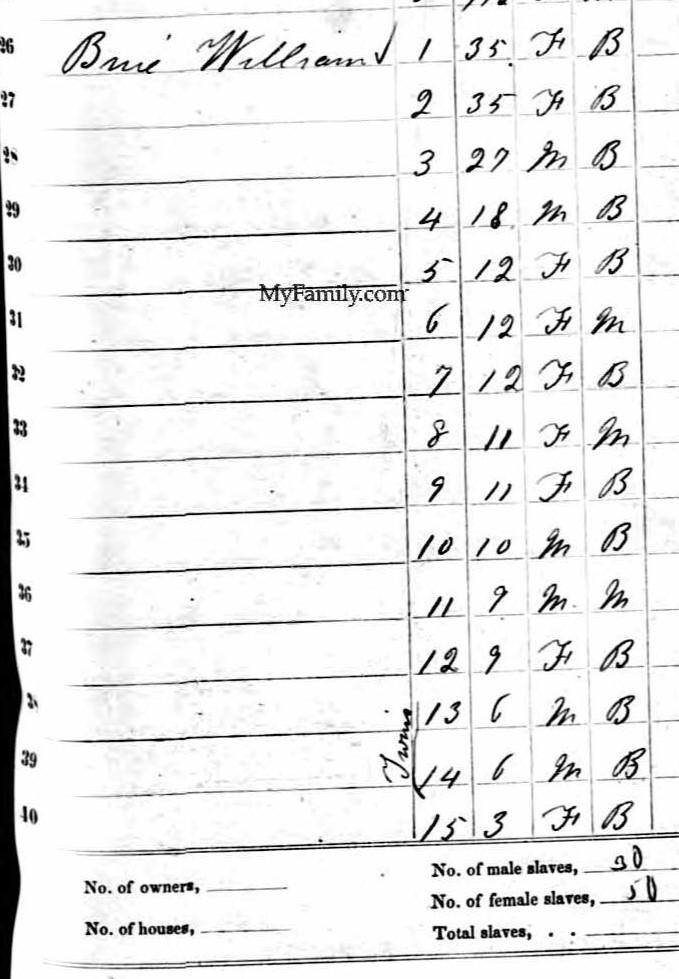
My great grandmother was born in 1856 into a family that owned slaves. In the 1860 U. S. Slave Census her father owned 32 slaves aged 50 years old down to 6 months old. 66 years later she gave something back to the descendants of the people her family had enslaved. 2 acres for a school. When she was 14 she had been sent away to a convent school in St. James Parish. Maybe it was this experience that made her value education? And her daughter, my grandmother Mary, became a school teacher.
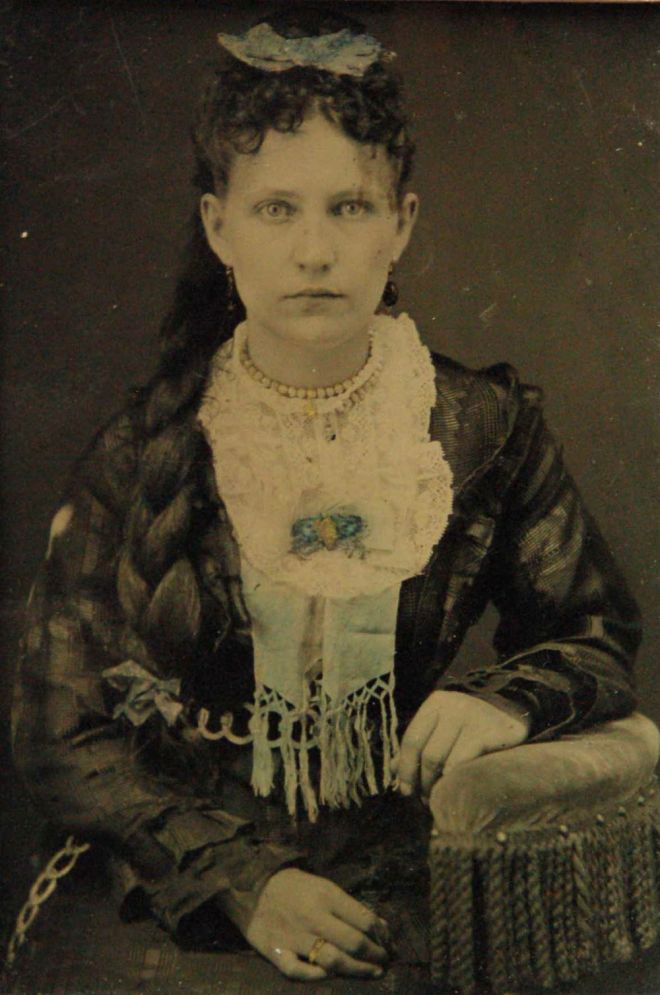
Here is a photo of my great grandmother Ellen Julia Copeland Buie (1856-1935):
But, the name Rosenwald meant nothing to me at the time I first looked at the document. Some months later, I happened to read a genealogy blog post about the Rosenwald schools. (there is a link to the blog at the end of this post). Then I happened to be showing the family document to my brother and I realized the importance of the name Rosenwald Colored School.
And then…I saw an advertisement for a special exhibit at the Bob Bullock Texas State History Museum that was about the Rosenwald schools in Texas. And they would be showing a film about Rosenwald on February 8th, with a panel discussion afterwards. I felt compelled to go. The film, by Aiva Kempner, was about 90 minutes long and told the story of Julius Rosenwald who was a rich philanthropist. Descended from Jewish immigrants who instilled quite the work ethic in him, he eventually bought Sears and Roebuck. He believed in giving back to the community. One of his projects was building schools for colored children in the southern states. He partnered with Booker T. Washington to do this. He built these schools during the Jim Crow era. “Separate but equal” was not equal at all. His generosity led to the building of thousands of schools to educate black children. He had three parts to these projects. One, he put up some money. Two, the community also raised funds, and Three, the community did the labor to build the schools.
This exhibit at the Bob Bullock museum only runs through February 23rd, so I urge all my Austin friends to go before it ends. There is also a former Rosenwald school near Bastrop that has been renovated. The panel discussion after the film talked about this. It is called the Hopewell school and we plan to visit it soon. (American Youthwork’s Youth Build Program put in some labor on this renovation).
Here is where the serendipity keeps on giving…
The film has interviews and photos of many African American celebrities from politicians to those in the arts…actors, singers, poets, composers, business people…people who either went to Rosenwald schools or benefited from Rosenwald’s other philanthropic projects: Rita Dove (poet), Maya Angelou (author, poet), Gordon Parks (photographer, filmmaker), John Lewis (politician, activist), Marian Anderson (singer)……
On the way home from the museum we stopped to pick up our mail. There was only one piece. The envelope’s stamp was a picture of John Lewis!
At Christmas I was gifted a book that I had never heard of and now am currently about 3/4 of the way through this novel. It is based on the friendship between Eleanor Roosevelt and Mary McLeod Bethune. It follows their friendship and how they worked together to advance the rights of black people in this country. Two women with different skin colors working together. The authors of the book are two women, one white and one black. One episode in the book is about securing a public appearance for the singer Marian Anderson when the DAR refuses to let her sing in Constitution Hall in Washington, D. C. She ends up singing for a huge crowd at the steps of the Lincoln Memorial. The book is entitled The First Ladies and the authors are Marie Benedict and Victoria Christopher Murray.
Flipping through t.v. channels earlier this month I came across a film on PBS about the poet Paul Laurence Dunbar. I had heard the name but was not familiar with his work. I learned that Maya Angelou’s title “I Know Why The Caged Bird Sings” is based on a line from one of Mr. Dunbar’s poems (“Sympathy”).
See what I mean? ….birds,singers, arts, education, history of our country and the struggles of blacks in this country…
There is a threat to dismantle and destroy the U. S. Department of Education right now…and any kind of diversity initiatives. What can we do? We can all take positive actions to lift up our values, be it contacting our representatives, to showing up in solidarity, to giving money to those organizations that lift up our sisters and brothers, neighbors and friends. No matter your political sympathies, the current destruction of our government will affect us all.
Take action with Love in your heart and as John Lewis is quoted:
“Get in good trouble, necessary trouble, and help redeem the Soul of America.”
*”Lift Every Voice and Sing” is the title of what is called The Black National Anthem and was written by James Weldon Johnson.
*I don’t know whether or not a Rosenwald School ever got built in Franklin Parish, Louisiana on the land my great grandmother donated.
Links:
donorschoose.org Donate directly to individual teacher’s projects
rosenwaldfilm.org
thestoryoftexas.com
americanyouthworks.org
http://creolegen.org/2014/10/13/the-unfortunate-lost-history-of-rosenwald-schools/
Sympathy by Paul Laurence Dunbar

 Natural Musings