Our backyard is an eclectic collection of growing things. There are our natives, the giant Bur Oak, delicate Redbud trees, and various bushes and flowers. And there are our non-native plants like the Crepe Myrtles and the Rose of Sharon bush…both of these are part of my late mother’s legacy. Part of me wants to go totally native in our yard plants, but I don’t want to get rid of the ones I got from my mom.
And my husband enjoys having a yard of grass to mow. Our grass is a combo of native buffalo grass and St. Augustine. We planted the buffalo grass. The St. Augustine has migrated from a neighbor’s yard and now covers much of the yard…except for various weeds.
Weed- “a plant that is not valued where it is growing”-Webster’s Ninth New Collegiate Dictionary
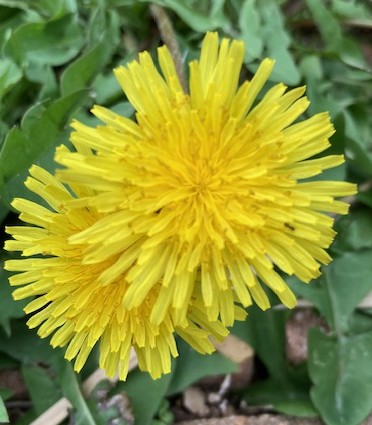
Late Winter Dandelion Flower
In late winter the Dandelion and Sow Thistle flowers are often the only thing blooming and are a source of food for bees and numerous other insects. So, I like to let them be.
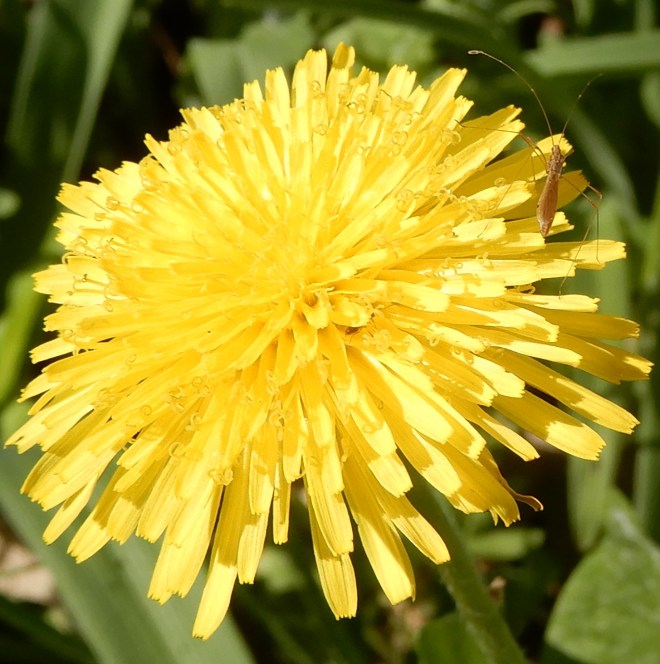
Unknown Type Of Insect On Dandelion Flower
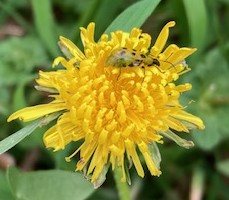
Cucumber Beetle On Dandelion Flower
My husband and I “consult” on what can be mown and what I want to let grow. Something new this year are the little red flags placed around areas I want let alone, mostly the bunches of native purple Spiderworts that are all over now. They are descendants of a couple of plants my mother gave us years ago. I have written here before about how wonderful it is to see them come up each year, a part of her legacy that lessens my lingering grief.
Anyway, beyond the red flag areas, my husband had some other plants to ask me about. One was an old Sow Thistle plant. It is growing just off our back porch in the path of our brick walkway causing us to step around it. Seeing that the flowers were gone, and it having gone to seed, I said “Sure, go ahead and mow it down.”
I was thinking that having lost it’s flowers it had lost it’s usefulness.
We had the mowing conversation while sitting on the porch enjoying a warm February day. The upcoming mowing would be the first of the season.
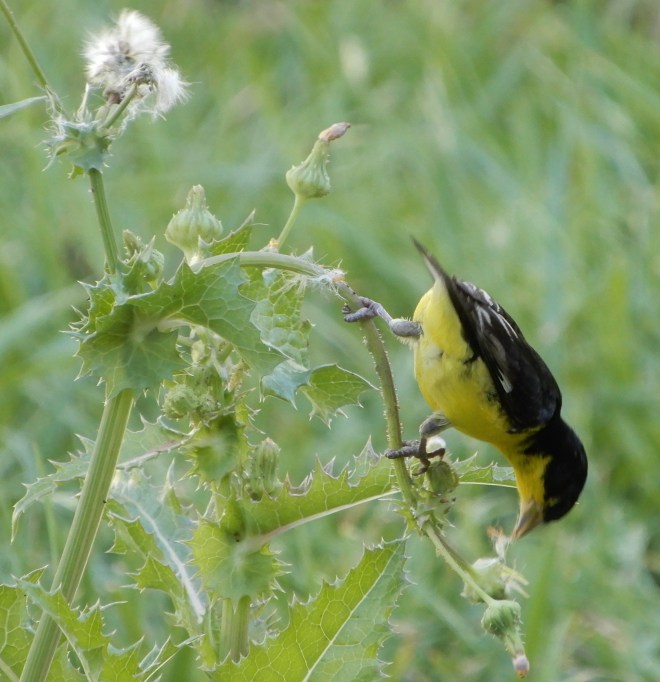
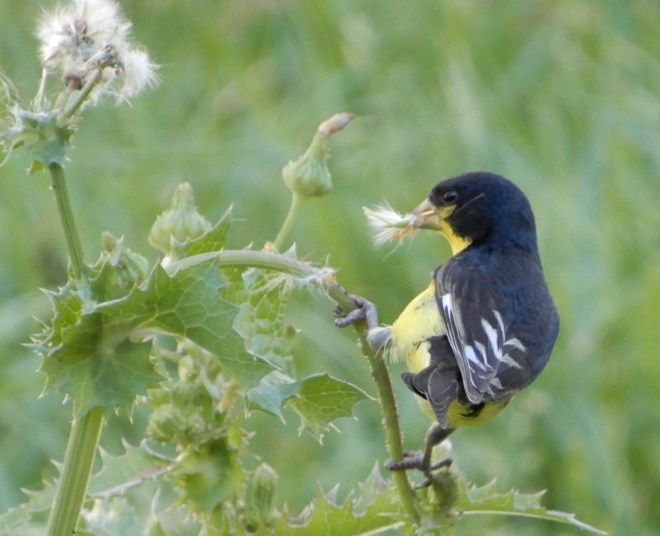
Suddenly, a little bird landed on the plant in question.
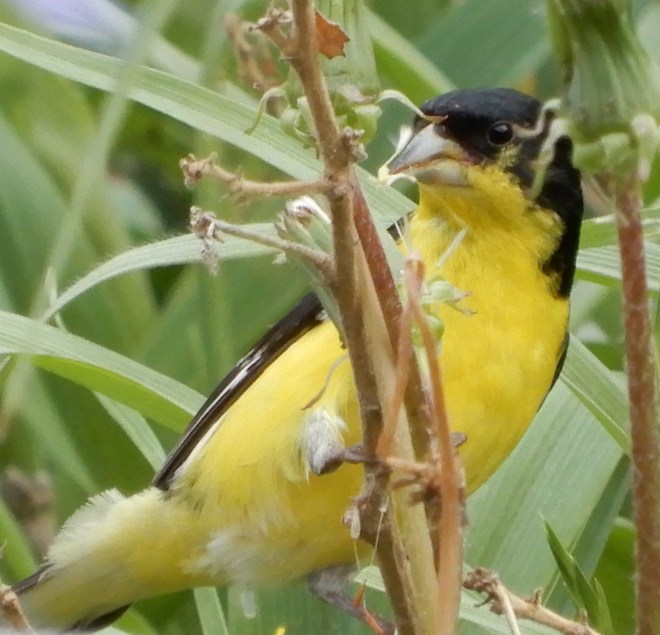
Lesser Goldfinch Male On Sow ThistleLesser Goldfinch Eating Seeds
Okay…So, I had forgotten about birds liking the seeds. The plant would stay for awhile longer in our yard as a nice little food source for these critters. And the plus here is that we were only about 6 feet away from this little guy and got to enjoy his beauty.
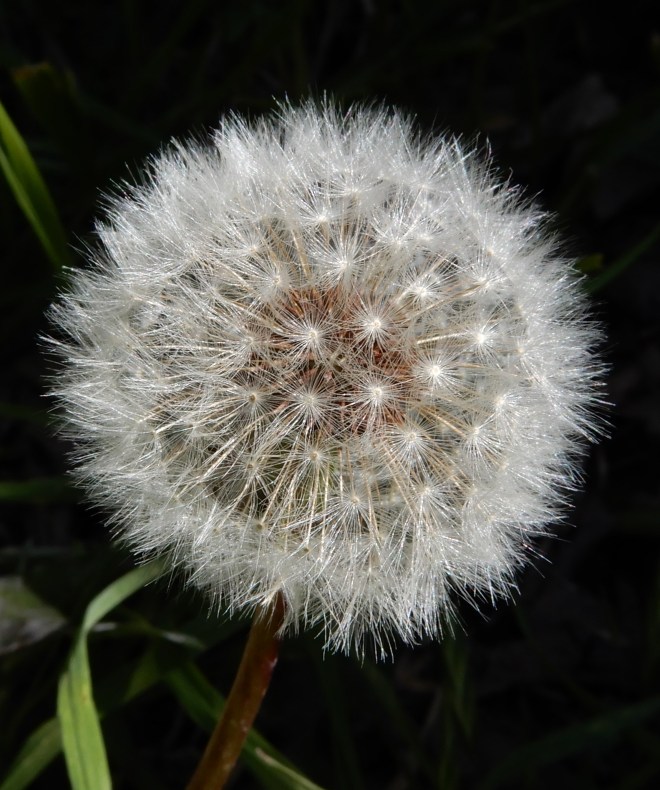
Here is another weed shot:
Can you imagine never, ever getting to pucker up and blow this bundle of seed heads off into the sky, maybe making a wish as you do?
On the 10 o’clock news I hear the weatherman say “And today in San Angelo it hit 100 degrees” and i see the name San Angelo on the big televised map of Texas. I have seen this name for years, but it meant nothing to me. I had never been there. I didn’t know anyone who lived there. And then one day, on Facebook, I saw a post about the San Angelo State Park. The poster had gotten some nice bird photos there. It was Spring, and I thought: “Road Trip.”
San Angelo is 205 miles to the northwest of Austin. We drove through rolling hills and interesting towns, the elevation gradually rising with each mile. The state park is on the outskirts of San Angelo. It has 7,677 acres and is a fairly new state park, having opened in 1995. There is a north shore area and a south shore area with a large reservoir made from damming up the Concho river. Check out the website for more information:
Here are just a few of the other things we saw during our all day visit:
Texas Longhorn Cattle
American Bison
Blooming Mesquite
Prickly Pear Cactus And Daisies
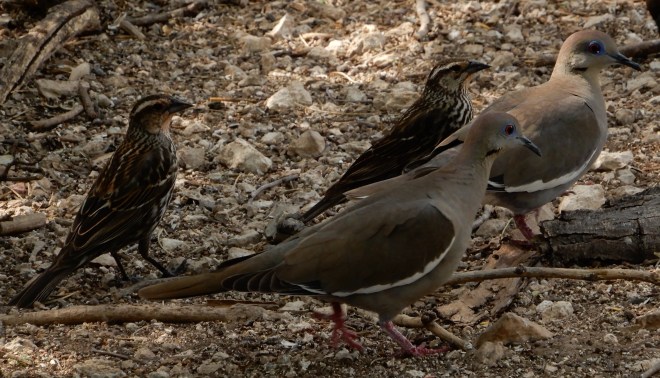
Female Red Wing Blackbirds and White Wing Doves Up Close At The Bird Blind
Turkeys
Scissortail Flycatcher
And as we neared the park exit…
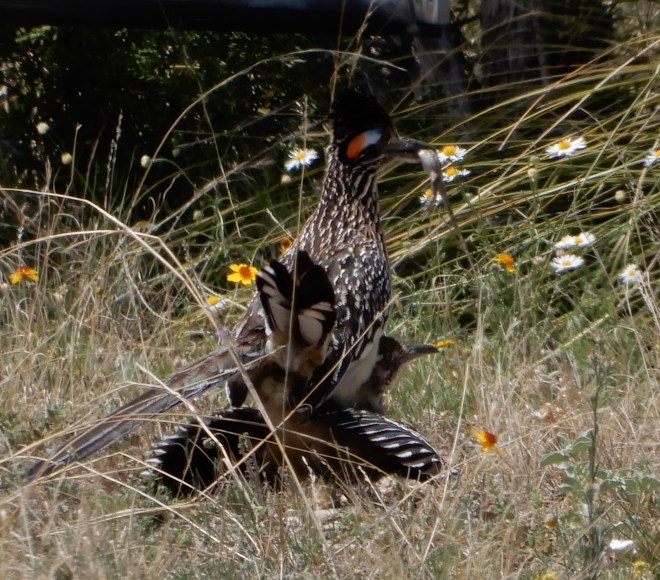
Road Runners Mating…note the lizard in the male’s beak. When they separated he still had the lizard…maybe to attract another mate?
We also saw deer and ground squirrels and a fox. And we saw other unidentified birds that I didn’t get shots of. This is a wonderful place and I recommend it to all who love spending time in the great outdoors. Now, when I see the name on the map, it will bring back the happy memories of all that I saw.
As March progressed, I anticipated and looked for signs of Spring. I saw many and knew more would be coming…more flowers blooming…birds singing and nesting. But, there was also a gnawing at my soul in the background of the beauty. My mother’s death date approached, March 25th. It has been 15 years since her death and the pain of grief has lessened. But, I want to hug her and share my life with her and I want her to see the physical beauty she left the world. The tears are coming as I write this even though I have been thinking about writing about it for quite a while.
On the other hand, I am glad my mother is not here to see the destruction of our country. She who supported civil rights with her body and soul…she who always rooted for the underdog. She was a proud American and she voted. I’m sure that if she saw the video of the woman being taken away by unidentified men to be locked up and silenced, she would have felt that woman’s fear in empathy.
A couple of days ago, March 29th, I attended a Birthday party for my friend Joan who was turning 80 that very day. This was also my Mother’s birthday. As we sang Happy Birthday to Joan, I was also singing to my mother. My mother’s death was just 4 days before her birthday and as she lay comatose on life support, we had sung Happy Birthday to her.
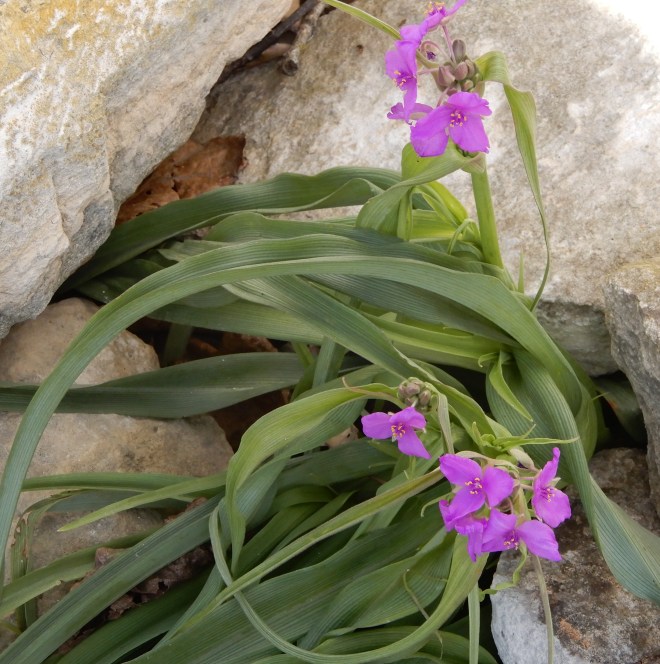
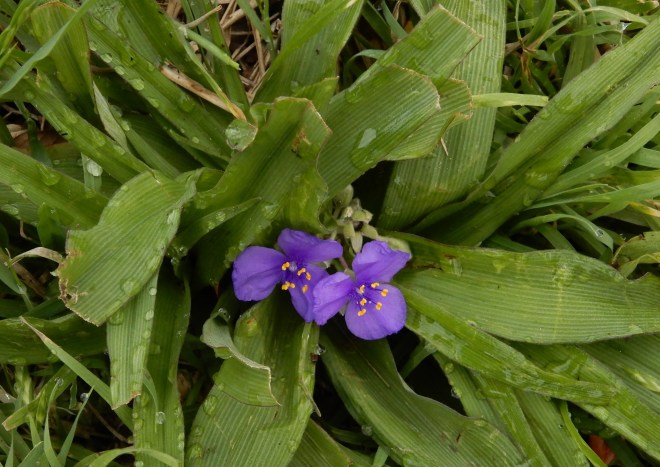
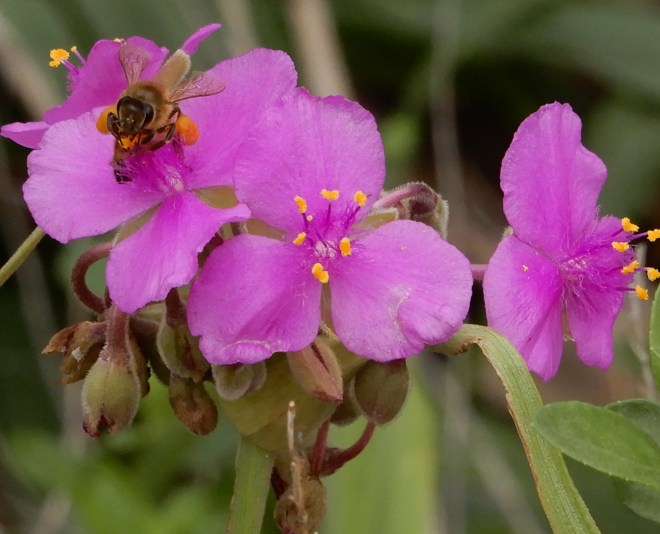
Okay! Enough grief for now! Here comes the Joy. In my blog posts of April 2019 and March 2021 I shared photos and a few words on one of my mother’s legacies, the lovely purple spiderworts she transplanted from her yard to mine over 20 years ago. From a literal handful of plants to the current abundance of them is one of nature’s miracles. What started as one purple clump in the backyard has now spread all over the yard and into the front yard. And both my brother and my friend Laura have transplanted some from my yard into their yards, where they are now flourishing.
As you look at these photos, remember that a small, positive action can take hold and grow. This is something to remember as we navigate our way through the coming months.
Beauty Among The Rocks
At The Trunk Of The Bur Oak
Near The Rotting Hackberry Stump
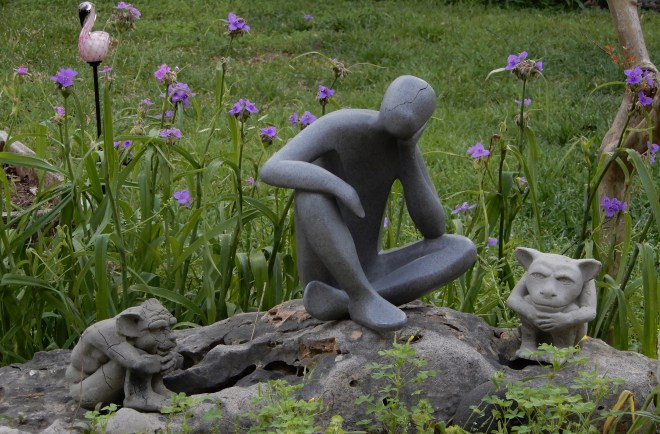
Near Philosopher’s Rock
Growing Low To The Ground
Pink Colored With Bee Gathering Pollen
With A Tiny Bee
With A Big Bee
So Pretty!
And there are many more photos of the flowers that I will not publish here…the flowers next to yellow dandelions …some next to orange crossvine blooms…the ones I can see in the front yard outside my office window…the view of them through my kitchen window…
May the natural world give you peace and strength each day. And remember that each positive act you take may grow and spread
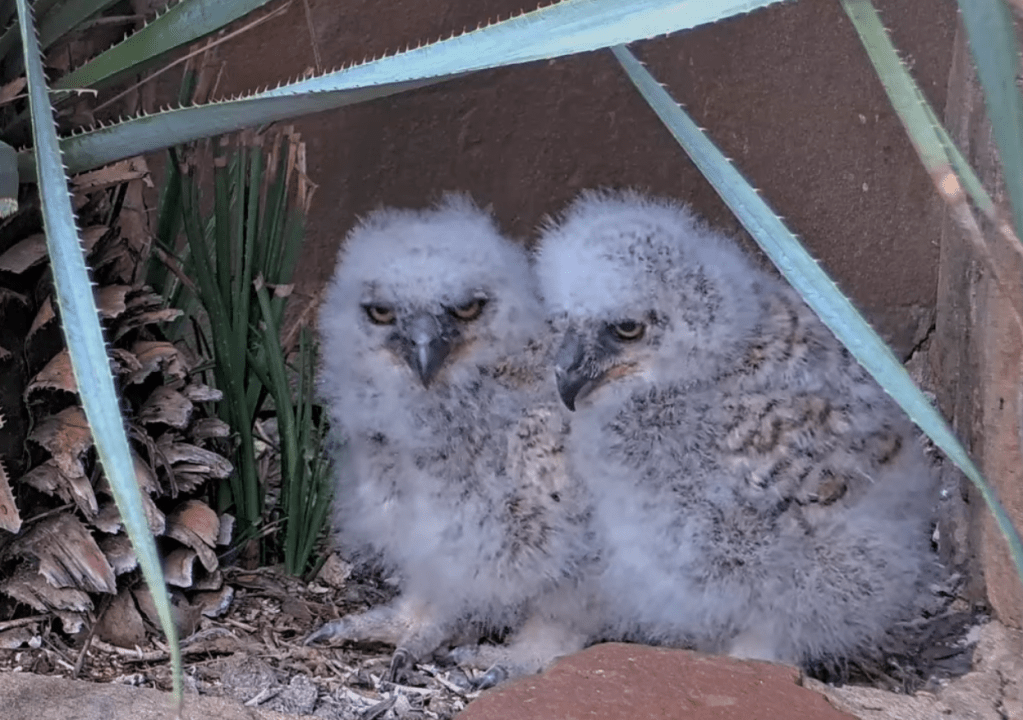
In April and May I shared with you a Great Horned Owl family’s behavior and the development of two chicks. For this month’s blog I want to share some more families.
Some families feed and nurture their young.
Grackle Parents With Fledgling Grackle Begging For Food In Background
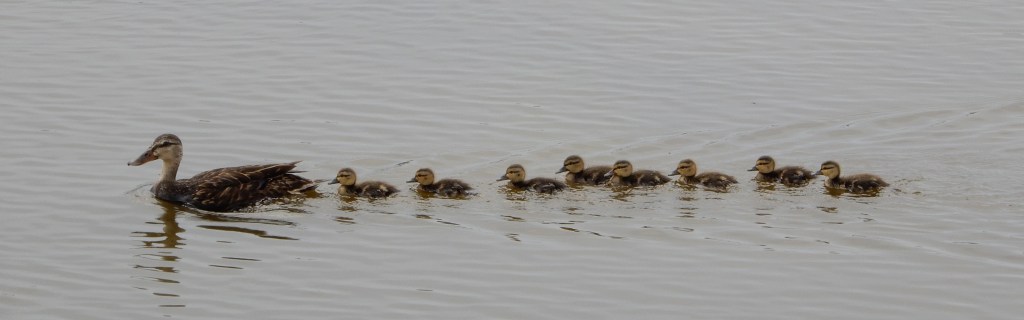
Some families lead their young.
Duck Mama With BabiesDon’t Leave Me Behind!
Some parents hide the young to protect them from predators.
This Doe And Fawn Could Not Be Seen From A Nearby Trail. (This shot was through a window up above the area)
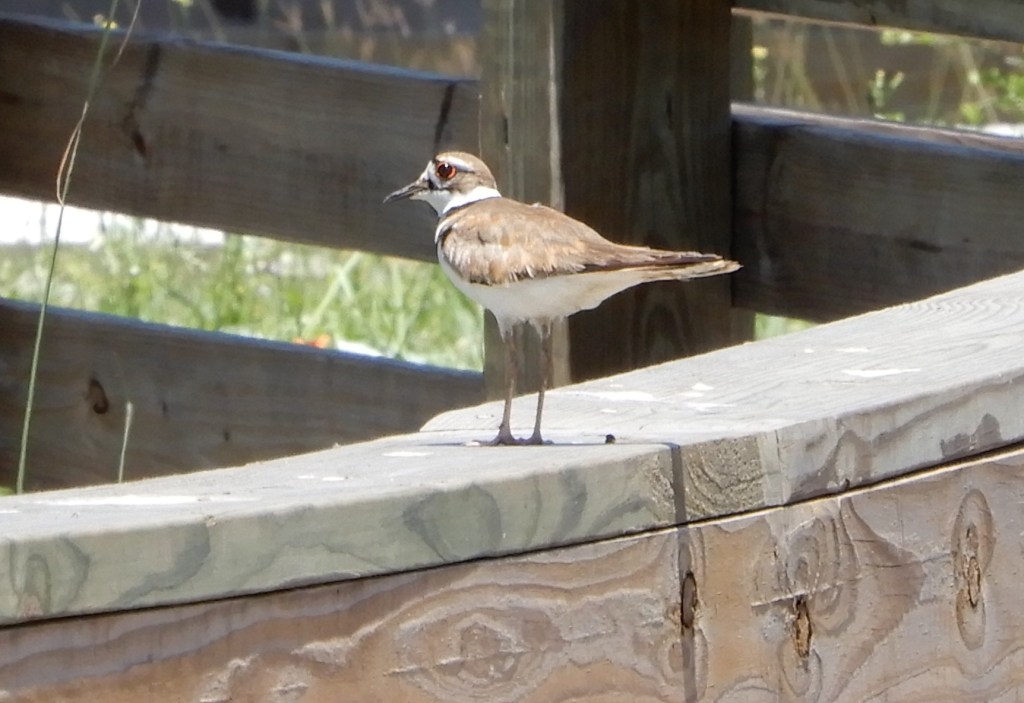
Some parents protect their young in other ways.
Killdeer ParentKilldeer Parent Distracting A Possible Predator (Me) By Feigning An Injury
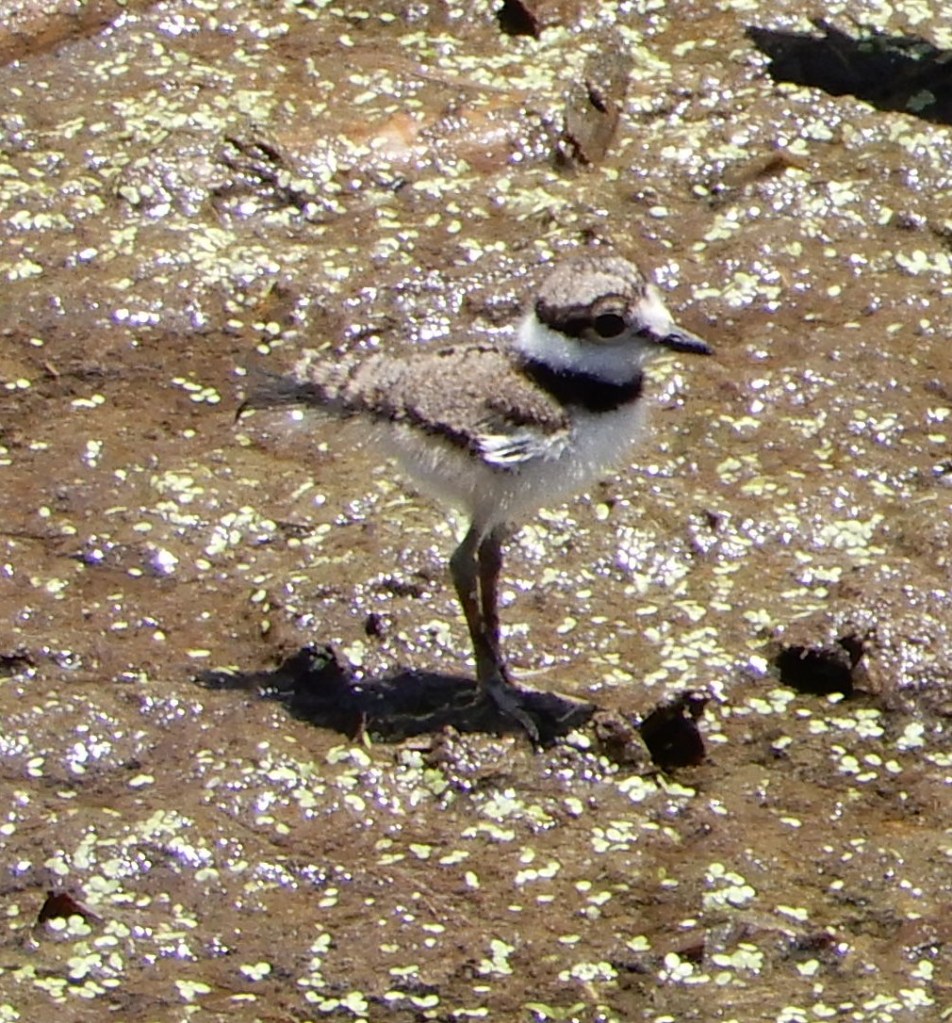
Who are they protecting?
Baby Killdeer Chick In Marsh Below Boardwalk
And let’s not forget the sibling relationships. Some siblings irritate each other.
Sibling Squirrels Jostling For Space
Some siblings get along with each other.
Sibling Squirrels Sharing Space
(Bird photos were taken at Aransas Pass; the Doe and Fawn photo was taken at the Lady Bird Johnson Wildflower Center; Squirrel photos were taken in my back yard)
The anticipation was almost painful. Would she or wouldn’t she? Beginning in the Spring of 2012, a pair of Great Horned Owls (Bubo Virginianus) have been visiting The Lady Bird Johnson Wildflower Center to nest and raise their chicks. For the first time ever, the Cornell Lab of Ornithology set up a camera near the place that the female nested so they could record the behavior of the owls. And the best part would be that it would stream all day and night. She and her mate and chicks have been well photographed over the years. This live camera would capture even more of the behavior at the nest and would be available for people around the world to observe something few have seen. But, would she even come back this year? She did!
On March 1, 2024 Athena laid an egg in her nest above a stone archway near a sotol plant. On March 5th she laid egg number 2. I tuned in to see her multiple times, but unless she was eating or standing up and moving the eggs, I didn’t find it very interesting. So, I missed seeing her mate bring her meals.
On April 4th, the first egg hatched and I began to tune in quite often.
Athena On Nest April 4th (I did not see hatchling)
On April 6th the second egg hatched-
Day Old Chick Next To Egg With Chip Out (Mom off nest hunting?)
As soon as I saw that first chick, I was hooked on watching and began to tune in several times a day.
Athena In Rain Protecting Chicks (April 9)Athena and Chick (only one visible-April 13)Sibling Chicks
I began to worry about the chicks when she was off the nest. What if something got them? I knew she could handle any predators that might come while she was there.
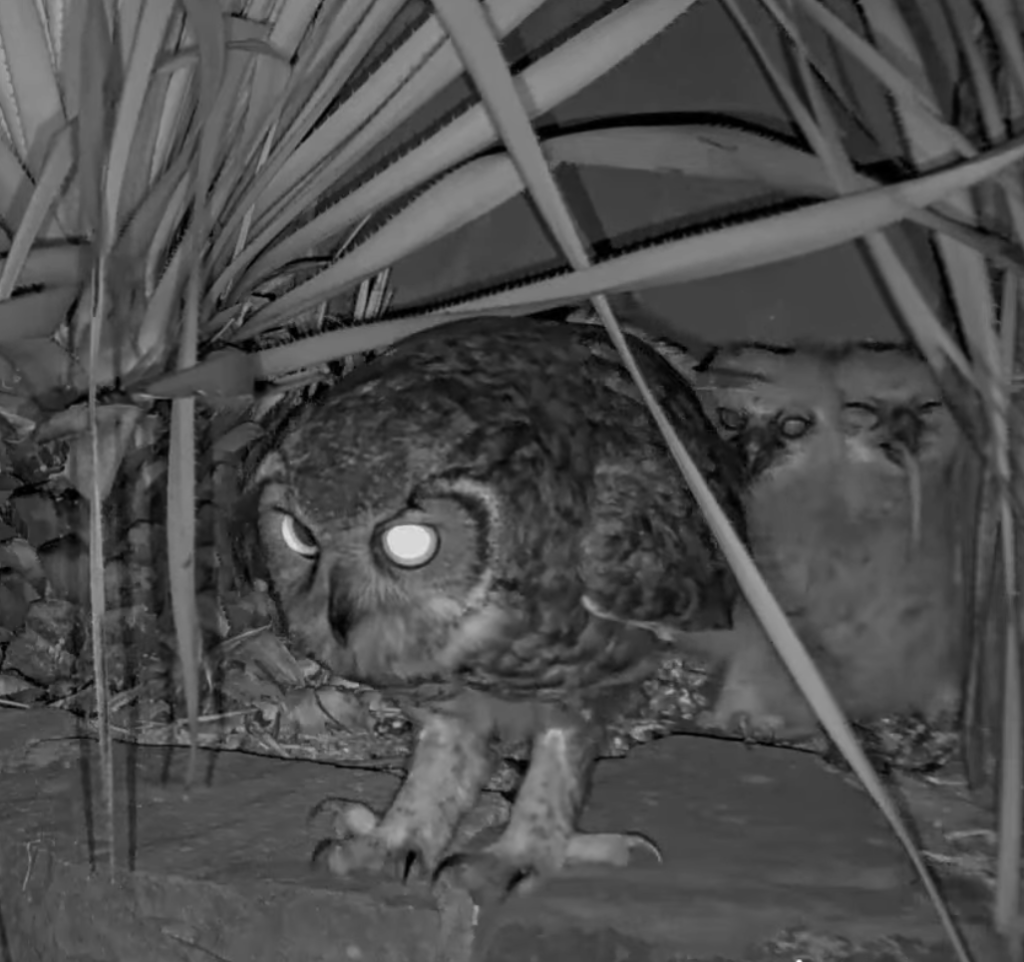
Athena’s Talons
I enjoyed watching what Athena might bring back to feed the babies. I saw many types of food: snakes, maybe a frog, a large bird (grackle?), small birds, big rodents, small rodents, a rabbit, an opossum. And for the first time I really grasped the concept of owl pellets (regurgitated compressed pellets that contain undigestible bits such as bones, feathers, fur) when I saw big furry chunks being swallowed down by the hungry chicks.
I enjoyed watching the 2 chicks interact when mom was gone. How lonely it would be to be a lone chick.
The camera also has sound and at times I would hear one of the chicks (usually seemed to be the littler one) make a peep. I heard what sounded like an adult owl vocalization (sort of a low pitched peep). During the day I heard other birds, including crows and a hawk that would harass mom or dad when they were in nearby trees. At night I would hear frogs and toads from the nearby pond. I also heard chuck wills widows (night calling birds) several times. People talking and sometimes the screech of children could be heard during the day.
And then there were the night time events with loud music and partygoers whooping it up in the background. You could tell what kind of event or crowd it was by the type of music. I remember hearing “Dancing Queen” and “Baby I’m Yours” and once a young man singing the words “What a beautiful wedding!” The birds didn’t seem to be too bothered unless someone shouted loudly nearby.
April 14
Athena With Snake (tough skin)
Chicks Early Evening Before Camera Goes Into Night Mode (April 22)
Mom Taking Off -Note Tail Hanging Out From Chick’s Mouth (April 23)
Watching the development of feathers was fascinating, as was their changing behavior. The chicks would peck at debris in the nest or the dried sotol leaves. Saw the littler one lunge at something that I could not see. They became more active and alert as the weeks went by. The smaller one seemed to have a sort of little sibling personality…I may be projecting here!
On April 24th I checked in at 8:13 a.m. (yes, I kept lots of notes as time went on) and there were just the chicks in the nest. Usually I would see mom up there in the morning. The chicks were grooming themselves. At 9 a.m. they were resting.
9:22 a.m. – Still no momma
10:22 a.m. No momma
3:45 p.m. No mom!
7:05 p.m. No mom!
Yes, I was worried! Checked in at 8:50 p.m., (bigger chick standing tall and alert); 9:46 p.m. (little chick pecking at stuff), 10:29 p.m., and finally at 10:39 p.m. I turned it off and went to bed worrying about all the things that might have happened to mom.
April 25th at 8:08 a.m. -Yay! Athena is back with her babes and I relaxed. I was identifying too much with these little critters. The day before, I started to experience some emotional flashbacks of fear of desertion and being left behind! As if I was a young child and not an old lady.
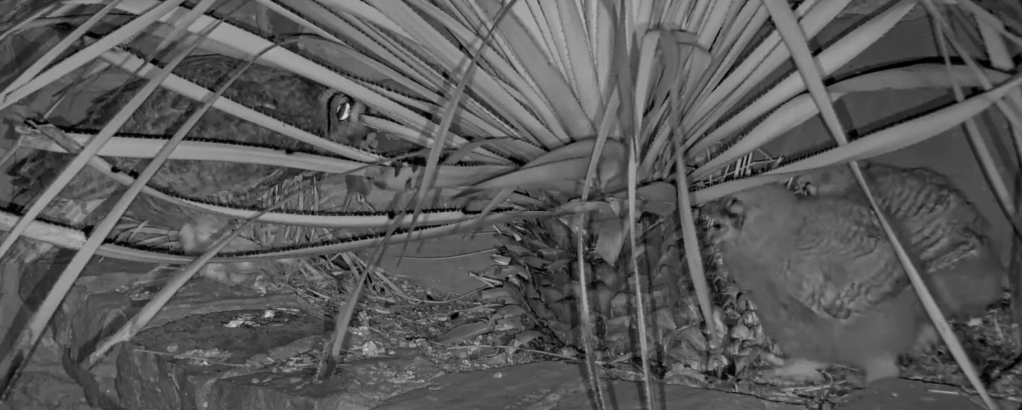
You may have noticed that I have not talked about dad. I know male owls bring meals to mom when she is on the nest and other observers have seen dad in nearby trees. One night I saw an owl fly in on the left side of the sotol and drop off a rodent and leave without tearing it into pieces and feeding the chicks. Mom usually flies in to the front of the nest area, so maybe this was dad. That time I just saw the chicks peck at the rodent a bit, since they had not quite learned to rip things apart. At a later date I saw the chicks having a tug of war with a small rodent. And last night I saw a rodent being dropped off from the side and that may have been dad.
If you look close you can see a tail and hind legs of a small rodent the adult is carrying.
The story is not yet over. The babes have not fledged yet. It will be pretty soon and you can still watch them by going to:
Wildflower.org/visit/athena-the-owl
In the meantime I will be a bit obsessed still and worry about them and see owl images in such things as my back fence.
Fence Owl
The real owl images were taken from screen shots on my Ipad or from my Nikon of screen images.
I am so thankful for the Lady Bird Johnson Wildflower Center and the Cornell Lab of Ornithology for offering this opportunity.
Last month I was expecting Spring and actively looking for signs of the early anemones. I looked for them everyday in my front yard. On February 18th I saw the first ones!
AnemonesA Host of Anemones At The Lady Bird Johnson Wildflower Center (February 2024)Purple Anemone At The Wildflower Center
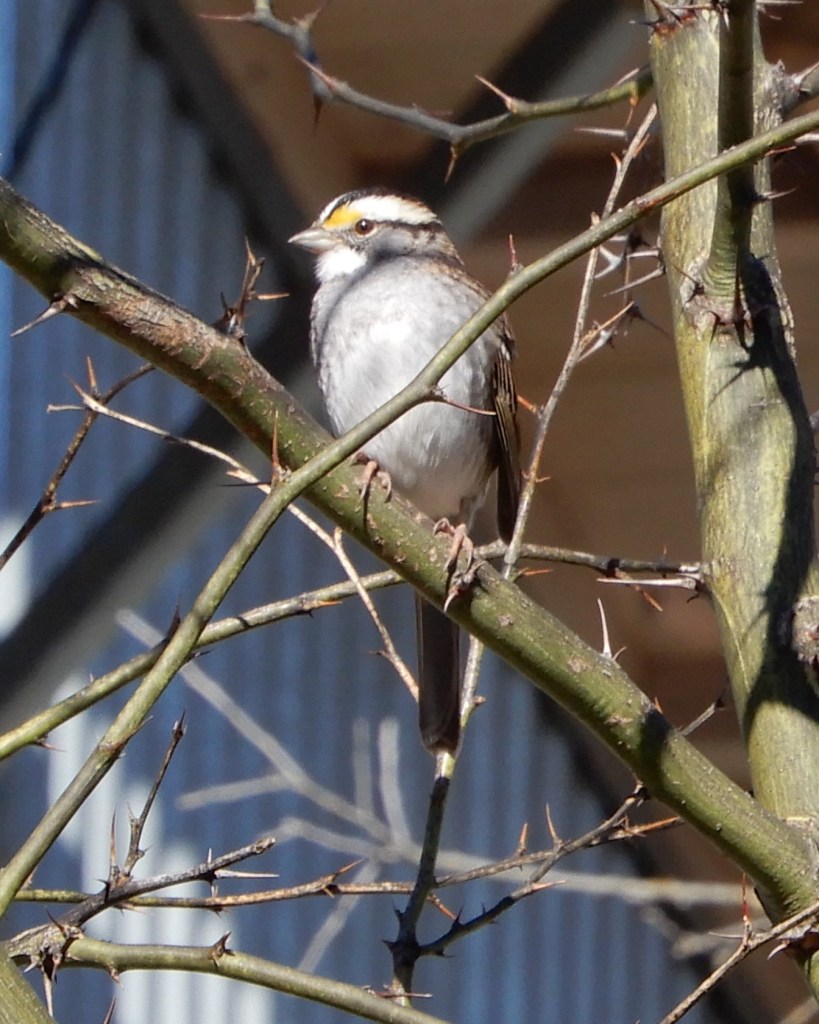
The first day of Spring is celebrated in North America on the Spring Equinox, I am celebrating Spring now because so much fresh life is emerging all around. Green shoots are coming up from the ground and sprouting from tree branches. And there is the blooming of flowers…from the pinky purple buds on my redbud tree to the purple spiderwort blossoms popping out every day. The days are getting longer and warmer. Birds are becoming more vocal and active. Some will soon leave to breed farther North (white throated sparrow seen below), while we welcome other species home from their wintering grounds in the South. I am guessing some of you have already seen some purple martins (early Spring arrivals). Other critters are emerging on sunny days (lizards, snakes, insects)
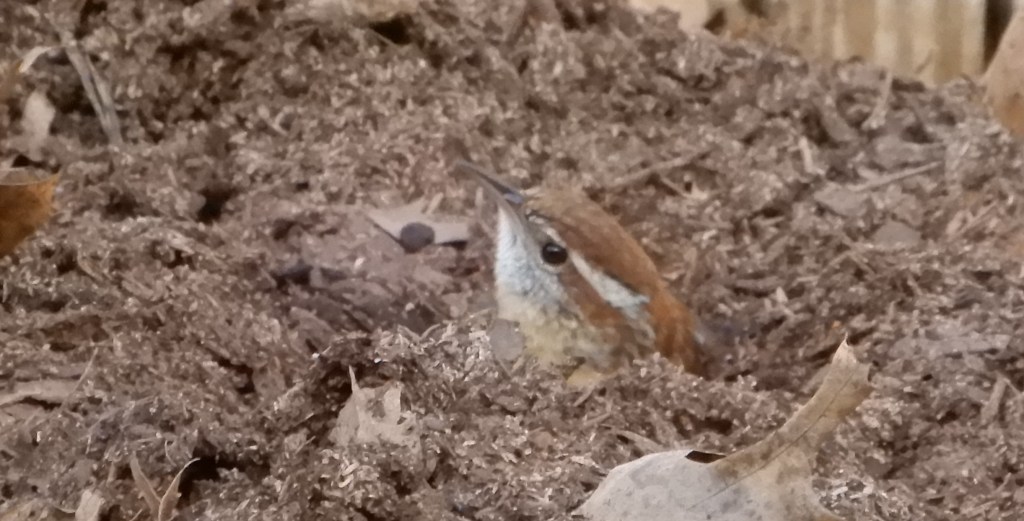
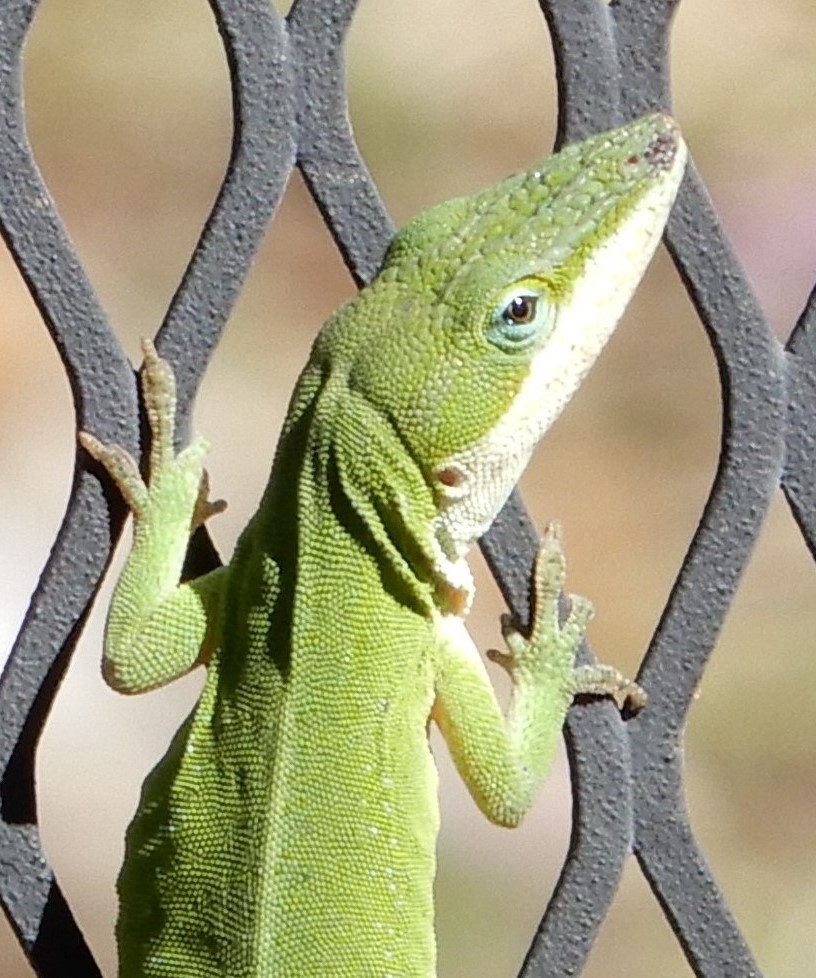
White Throated Sparrow At Wildflower Center (ready to fly North to spend the warmer months)Carolina Wren Wondering What Their Significant Other Is Up ToSignificant Other Taking A Dust Bath In Potting Soil In Our Raised Garden BedAnole Sunning On My Porch Glider
I am embracing them all in my heart and soul, these little joys of Spring.
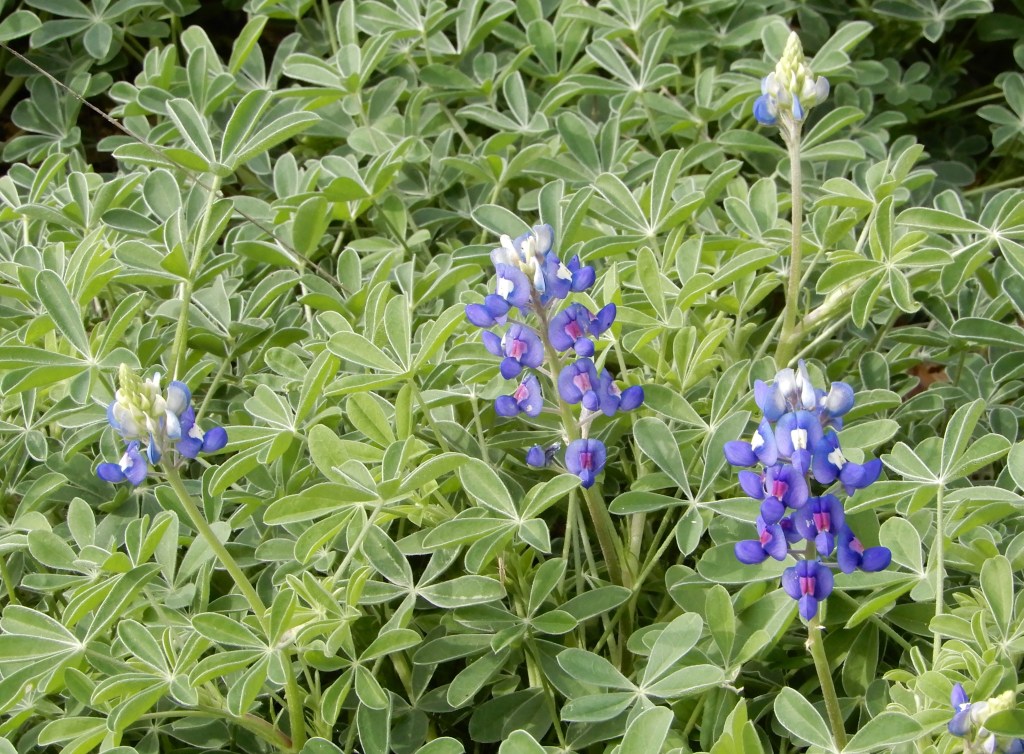
And, No, I didn’t forget! The Blue bonnets are starting to bloom!
Lady Bird Johnson Wildflower Center (February 2024)
I am getting old. I have seen many Springs, but these days I often wonder how many more I will see before I pass from this life and dissolve into the great mystery. I push these thoughts away before I move into despair and fear. I am determined to concentrate on the joy to be found every day…especially the abundant little joys found in the Spring. Some of these little joys are the early flowers. Specifically, I am talking about the little anemone flowers that bloom before most other flowers. I have looked in my front yard and in the nearby greenbelt, but no luck so far.
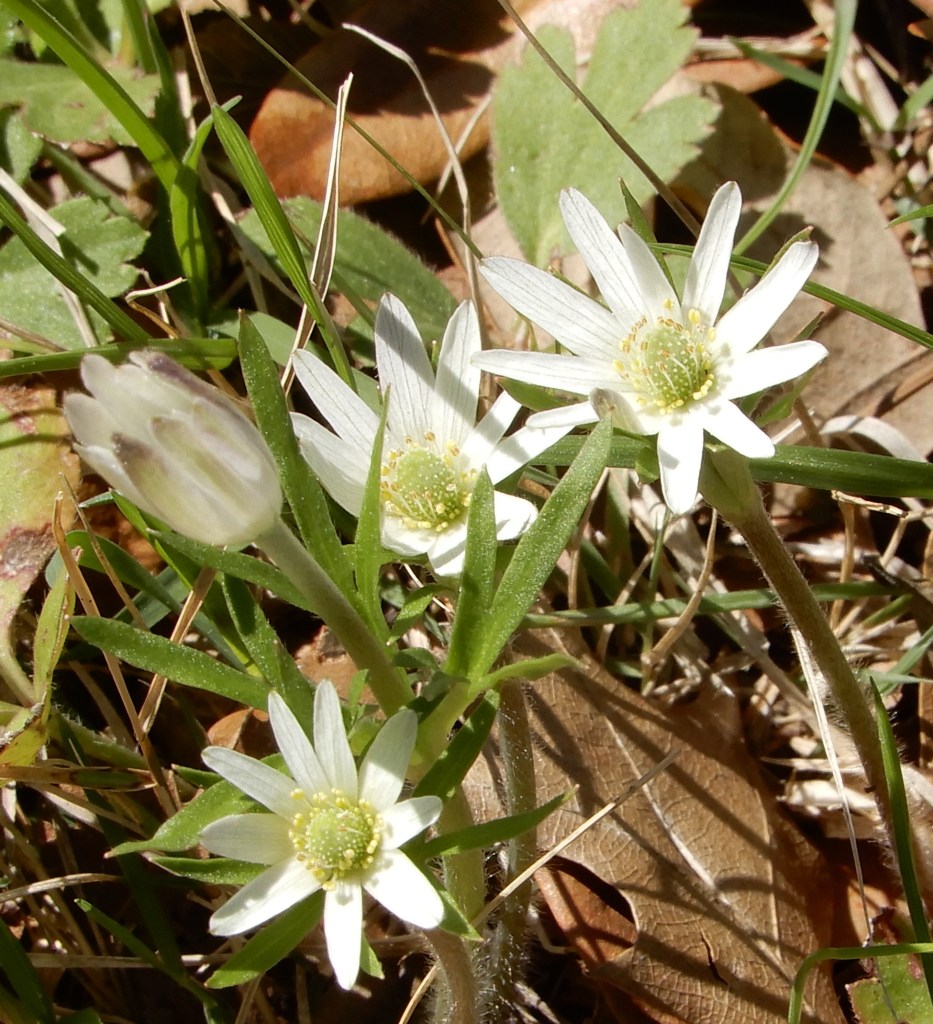
Here is what I am searching for:
They can be white, pink, purple, or blue. The flower heads are on a tall, slender stalk up to a foot high. Anemones are perennials and are in the family Ranunculaceae (Buttercup). They occur in prairies and woodlands from January through April.
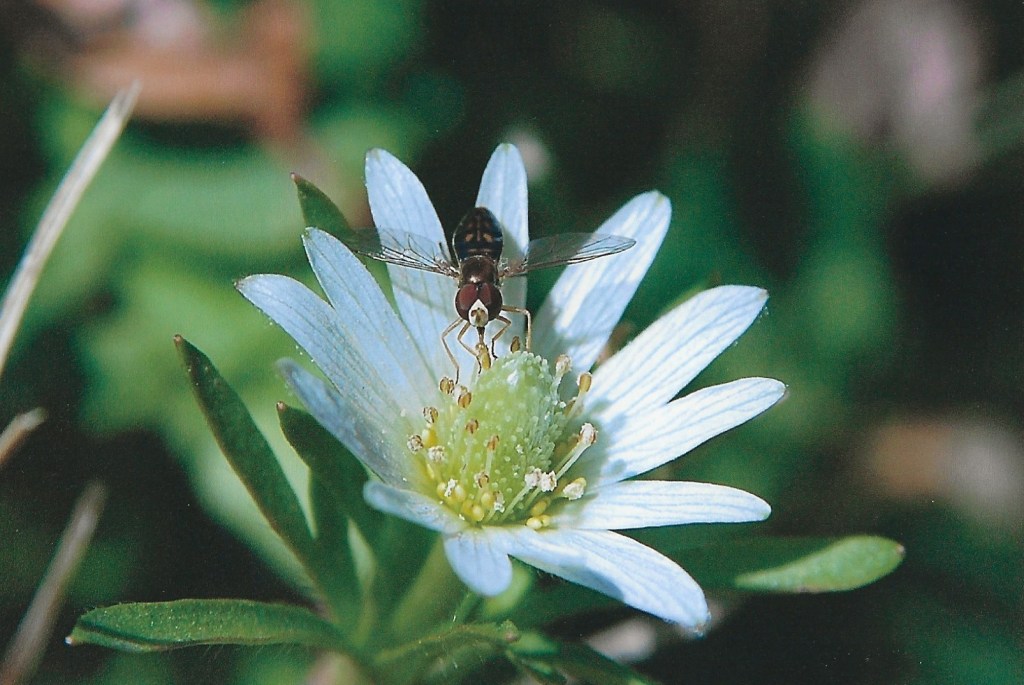
Flower Fly On Anemone
We have at least 4 species in Texas and I don’t know if the ones I have seen in past years are the Carolina Anemone (Anemone caroliniana) or the Ten-Petal Anemone (Anemone berlandieri).
Fun Facts:
What look like the petals are actually sepals…don’t ask…I need to learn more.
The “petals” close up at night or during low light days.
Although Indigenous peoples used parts of the plant as medicine in healing wounds and others made a tea from it, the plant is considered toxic (neurotoxin).
The word anemone is from a Greek word meaning wind. Some say the spring breezes cause the flowers to open. Others noticed them swaying in the wind.
There are about 150 species of related anemones in the world in both the southern and northern hemispheres.
Folklore associated with the plants range from those who say anemones are the “lilies of the field” in the New Testament to them representing blood in Greek mythology. In China there is an anemone that is associated with death. My favorite story is that when it rains, fairies sleep in the closed up petals.
I will keep looking every day and when I see my first anemone, I will smile and welcome another Spring.
Sources-
Wildflowers of Texas by Geyata Ajilvsgi
Legends of Texas Wildflowers by Elizabeth Silverthorne
Wildflowers of the Texas Hill Country by Marshall Enquist
I missed my slow walk this morning. I missed my slow walking friends, but right now it is too hot for me to be outside.
The Lady Bird Johnson Wildflower Center is visited by thousands of people each year. Young and old, locals and tourists, the people come to view the flowers and other native Texas plants. Trails wind around the 284 acres and people can move at their own pace. There are fast walkers that get their steps in and medium walkers moving from one patch of spectacular floral colors to the next. There are parents pushing strollers and kids running around the lawns in the children’s garden. And then there are the groups of very slow walkers. They can be seen in groups of 6 or more, huddled around a flowering bush, taking turns to get the best angle to get a good shot with their close-up camera lenses. Some carry binoculars that they point at the trees and grassy fields. These women and men are participating in the weekly Fauna Survey, finding, identifying and documenting all the non-plant life that call the Wildflower Center home.
The Fauna Project is a weekly survey event led by Val Bugh (check out her website: http://www.austinbug.com). She has been at this since 2010 and has amassed quite a record of the bio diversity contained within this site. Her special area of expertise is entomology. The walking is slow because there is so much to see. At least every other plant will have a little insect on it doing something: eating another insect, mating, hunting, etc. Each survey is different. Here are some of my photos taken on the surveys so far this year.
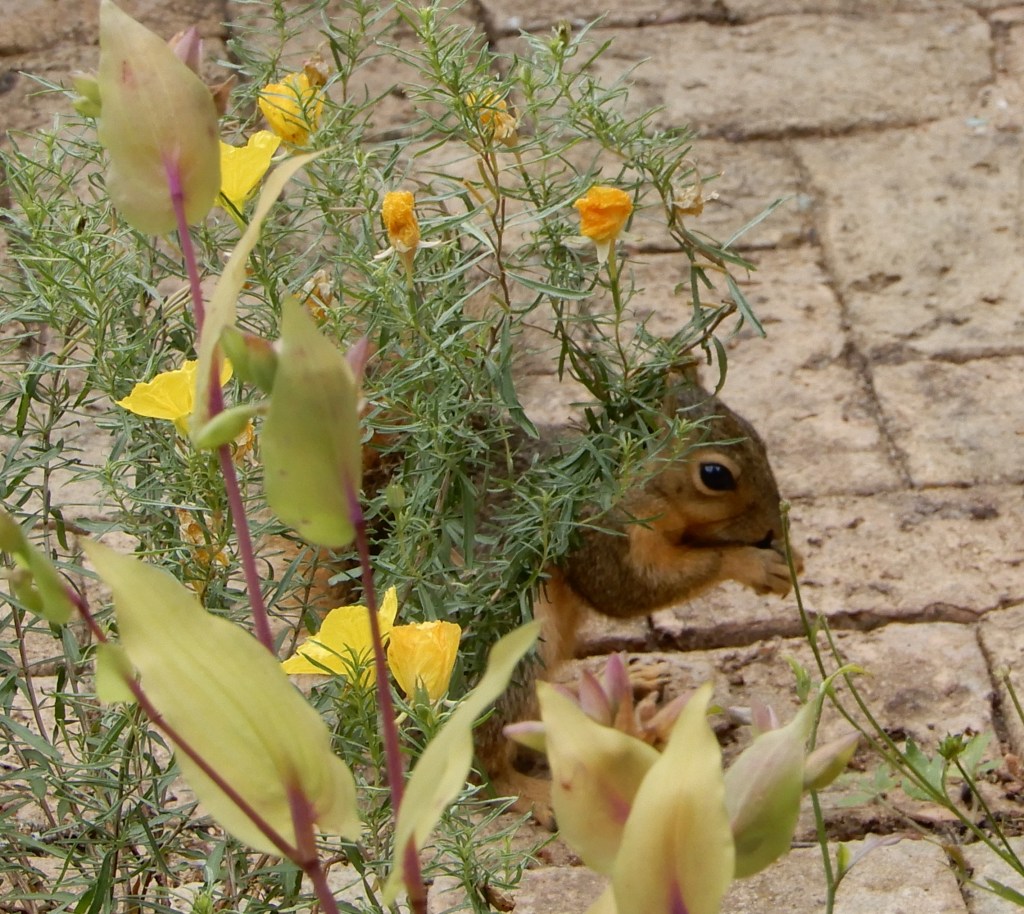
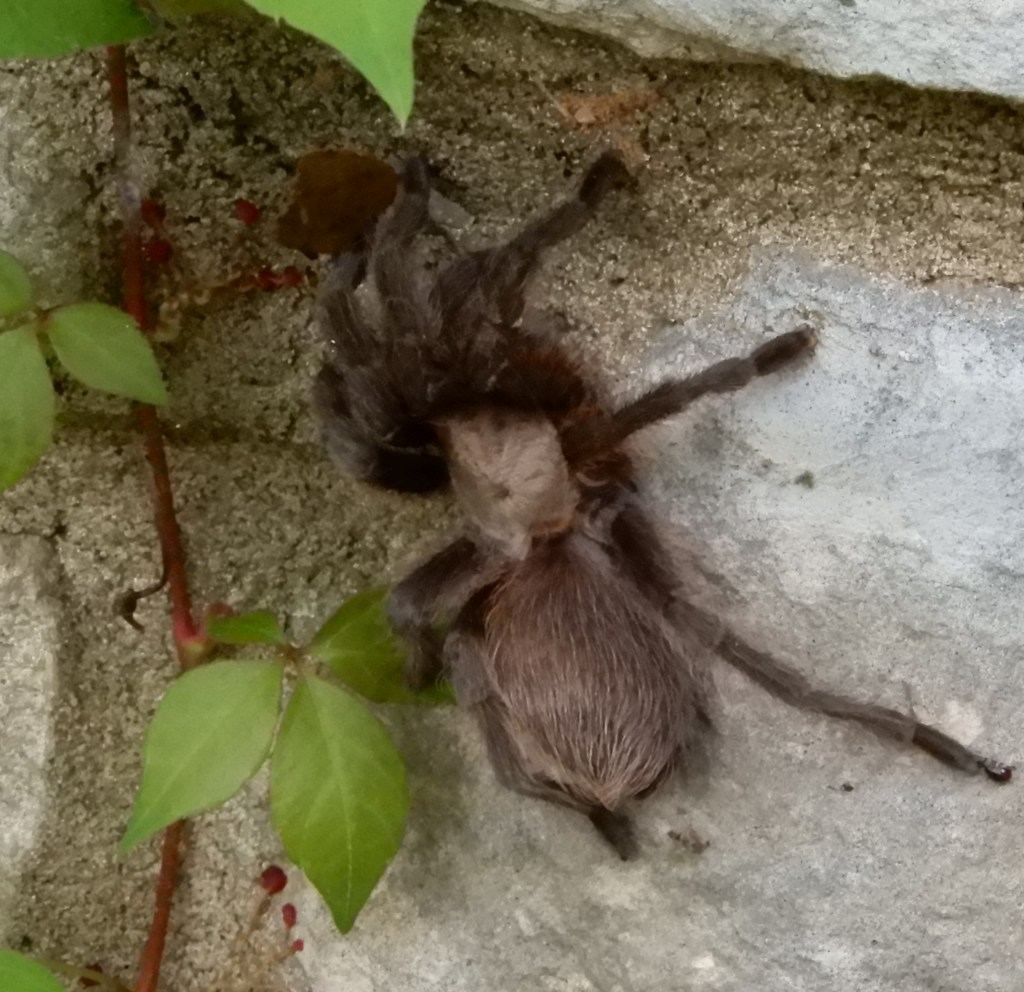
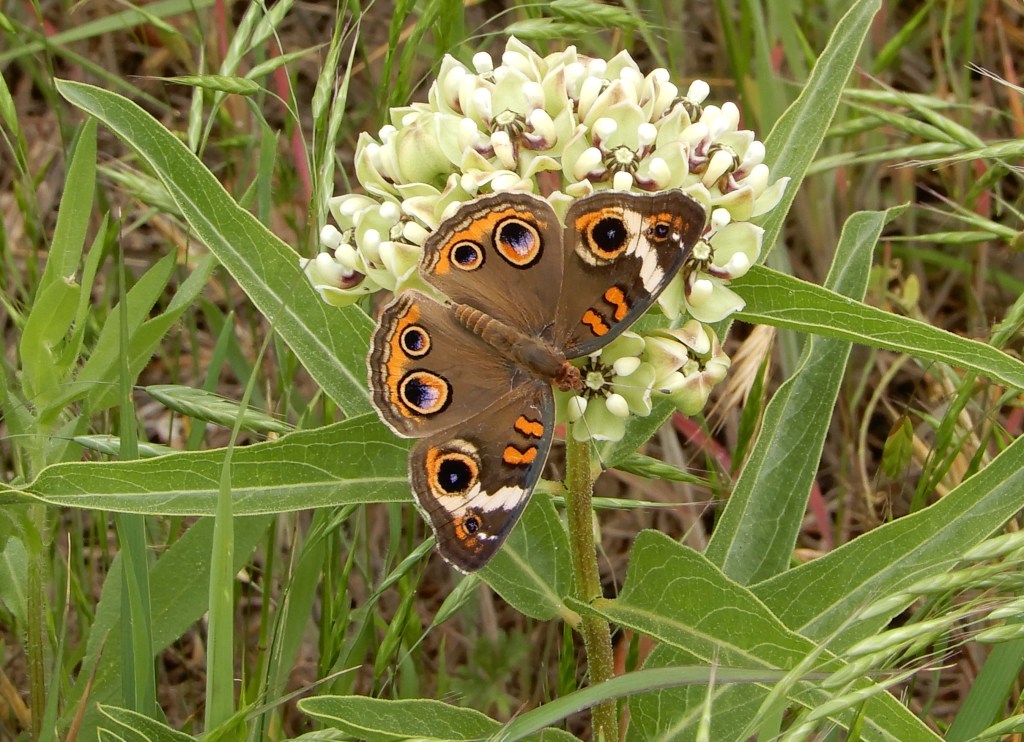
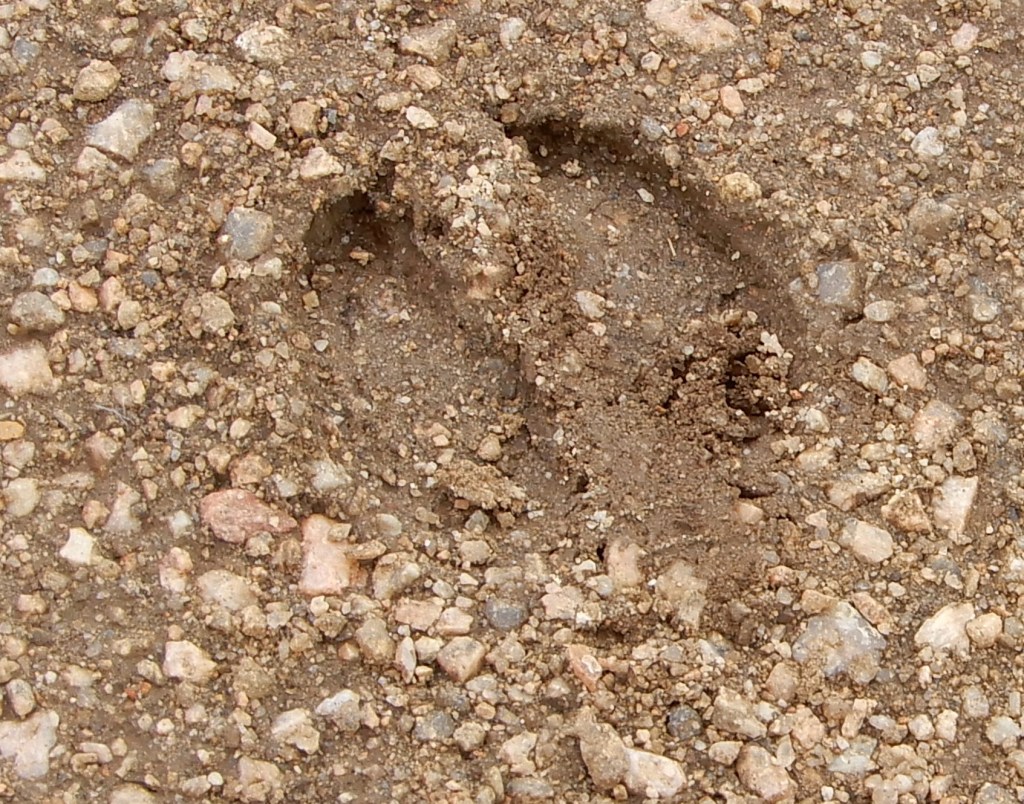
Red Eared Slider Turtle (February)Robin (February)Leopard Frog (March)Ribbon Snake (March)Great Horned Owl Mom On Nest (April)Fox Squirrel (April)Tarantula (April)Buckeye Butterfly On Milkweed (April)Juvenile Great Horned Owl (May)Texas Spotted Whiptail (May)Beetles On Thistle (May)Dragonfly (May)White-tailed Deer Print (May)White Eyed Vireo (May)Texas Spiny Lizard (June)Beetle (June)
So, get out and do a slow walk. You never know what you might find.
According to their website, the Lady Bird Johnson Wildflower Center is home to at least 1,800 insect species (93 of these are butterfly species), 148 bird species, and 15 mammal species.
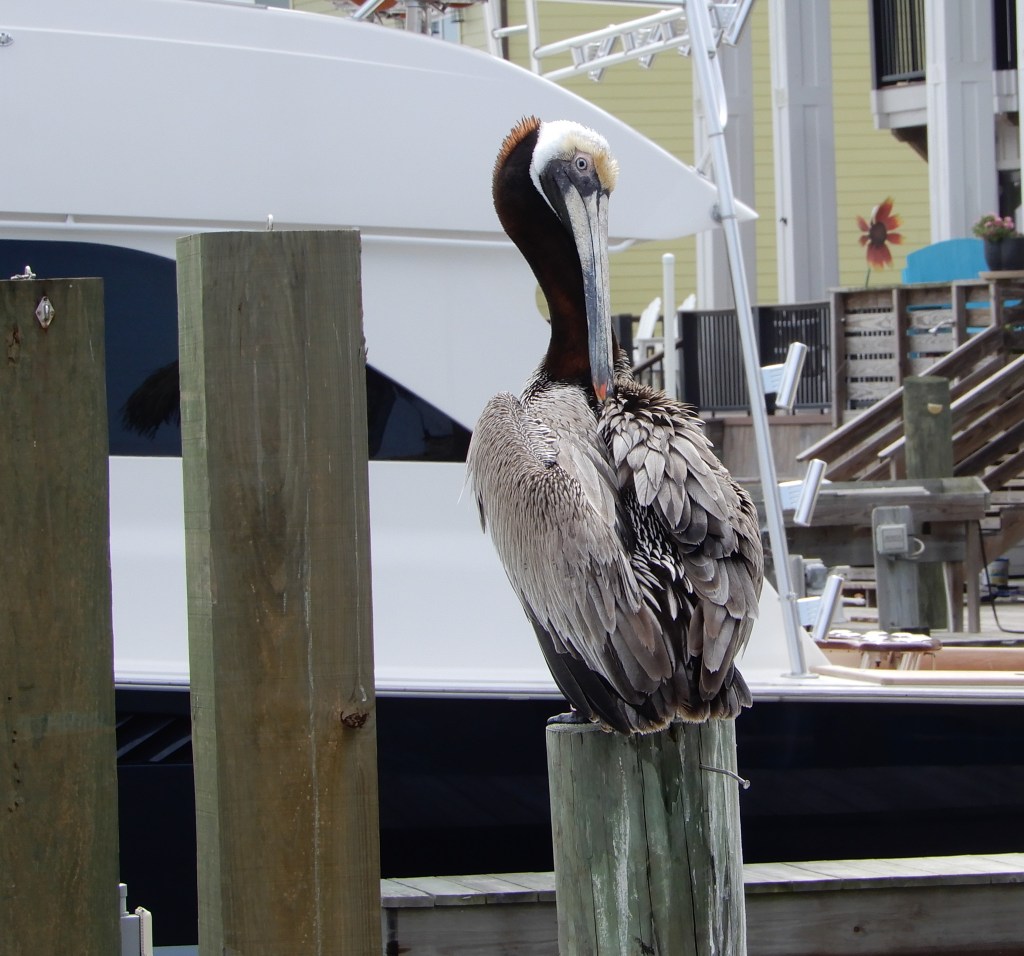
Last month I shared my trip to the Texas coast. It was a much longed for getaway scheduled after the crowds of spring break and before the crowds of summer. It was just coincidental that this visit was during the peak of the spring bird migration. Ordinarily the Texas coast is a wonderful place to look for birds, but the numbers of different birds during migration make this a special time. And we happened to visit during a fallout…this is when bad weather conditions temporarily prevent the migrating birds from traveling on to their breeding grounds. I got a good look at many wonderful birds from rose breasted grosbeaks to indigo buntings to orange colored orioles. However, most of the photos I actually got were of birds that can be seen year around.
There were large birds…
Brown Pelican
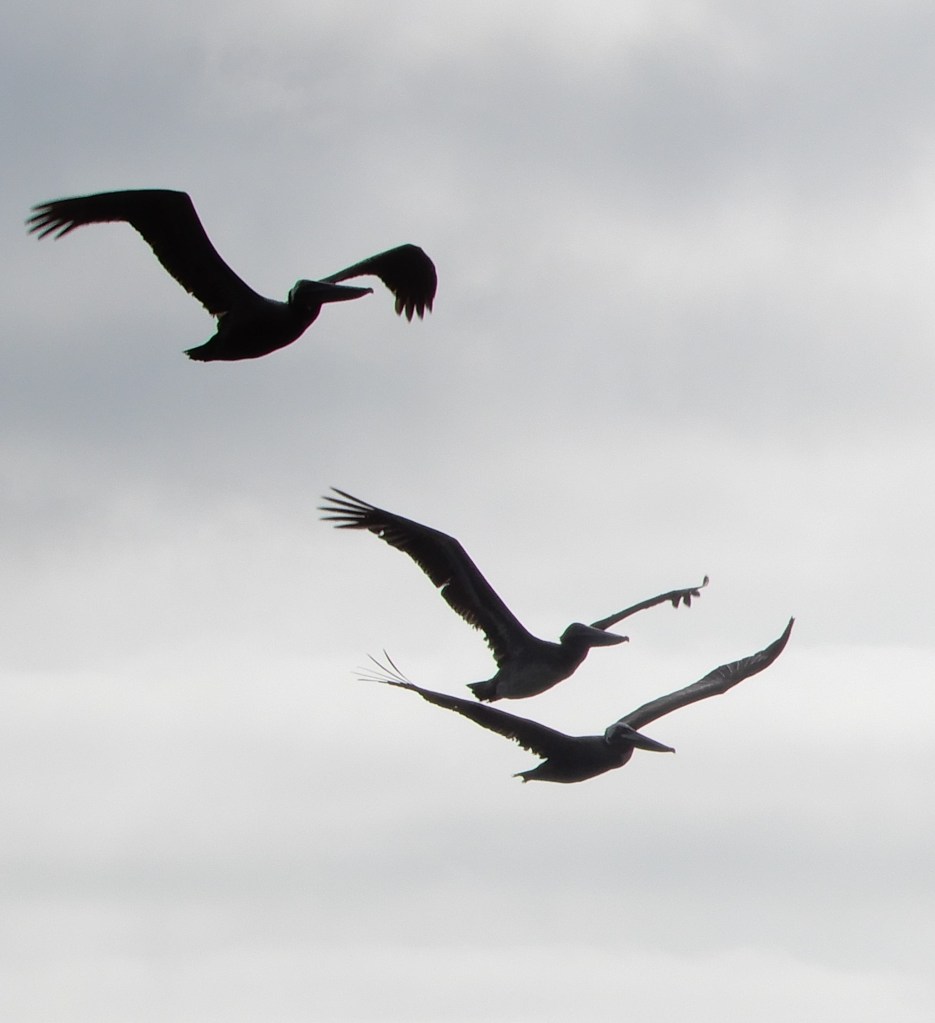
Birds flying…
Brown Pelicans
Birds flying in large groups…
Brown Pelicans
Birds with long beaks…
Tri Colored Heron
Colorful birds with short beaks…
Indigo Bunting
Delicate shore birds…
Stilt
And other types of flocks…
Birders at Leonabelle Turnbull Birding Center
Port Aransas has so many places to see birds from the beach to the ship channel to designated nature preserves. Birders can walk for a mile or so on some sturdy boardwalks at The Nature Preserve at Charlie’s Pasture and Leonabelle Turnbull Birding Center. A fun and short walk is at Paradise Pond, a small wetland tucked behind the Restaurant San Juan.
Lots of beautiful birds seen and perhaps a trip during Fall migration is in my future.
*Bonus bird seen on the way home- Wild turkey flew across the highway just north of Kenedy, Texas
My part of Texas is awash in wildflowers right now. In the past month I have taken numerous trips to Austin’s Lady Bird Johnson Wildflower Center to walk and to marvel at the bounty of Spring. So much beauty to ooh and aah over, especially our Texas Blue Bonnets.
Texas Blue Bonnet
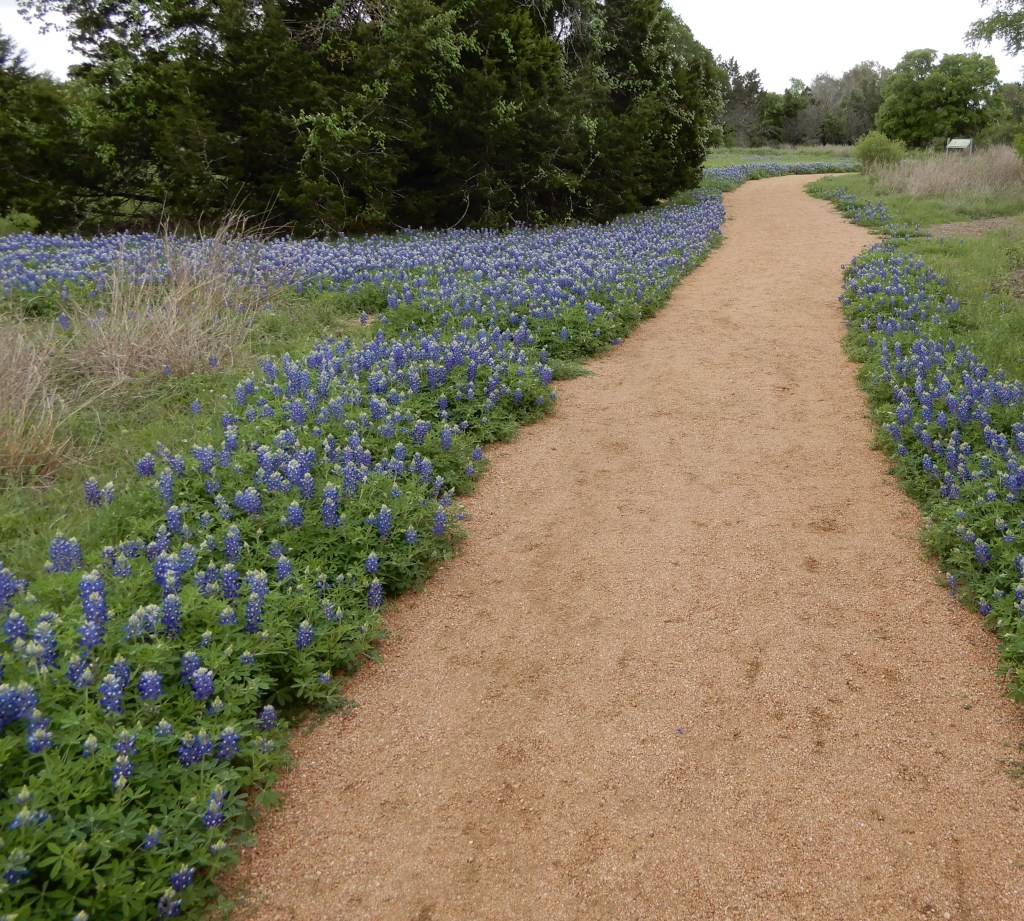
On some of the outer trails my eyes are drawn to the large patches of blue. I am reminded of our ubiquitous Blue Bonnet paintings.
Trail At Wildflower Center
Go to an art gallery showcasing Texas landscape art and you will find paintings of Blue Bonnets…Longhorn cattle in Blue Bonnets…barbed wire fences and Blue Bonnets…old trucks and Blue Bonnets. These have been popular for years and they sell well. People ooh and aah over them. Somewhere there is probably a painting of a T-Rex in a field of Blue Bonnets.
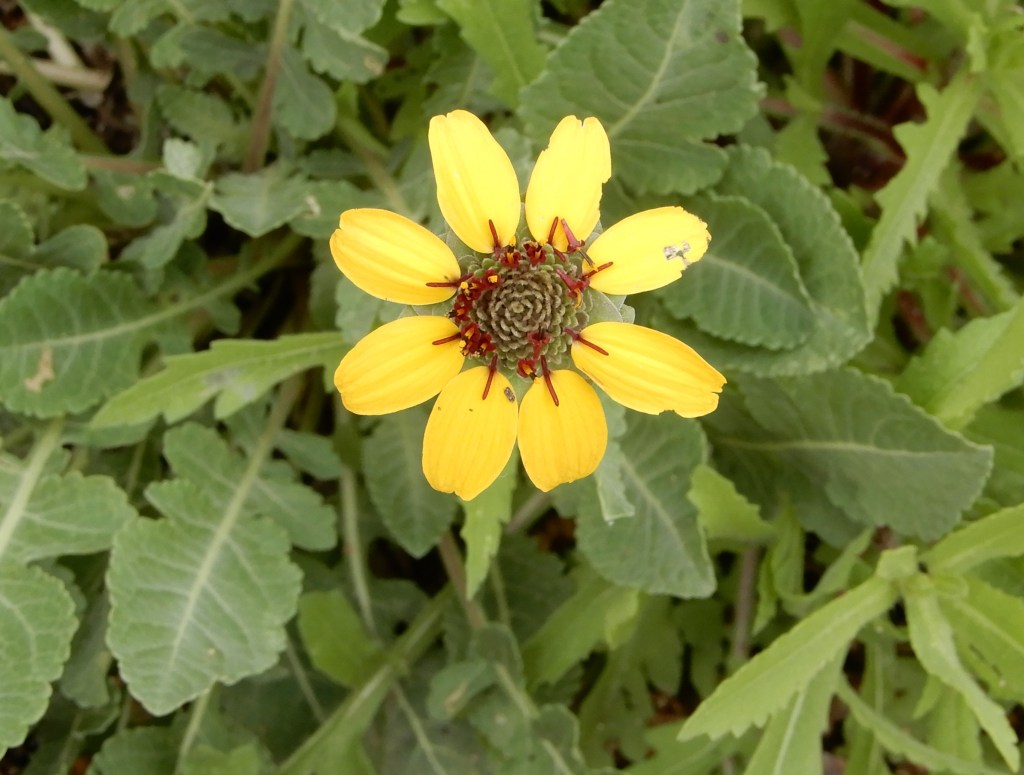
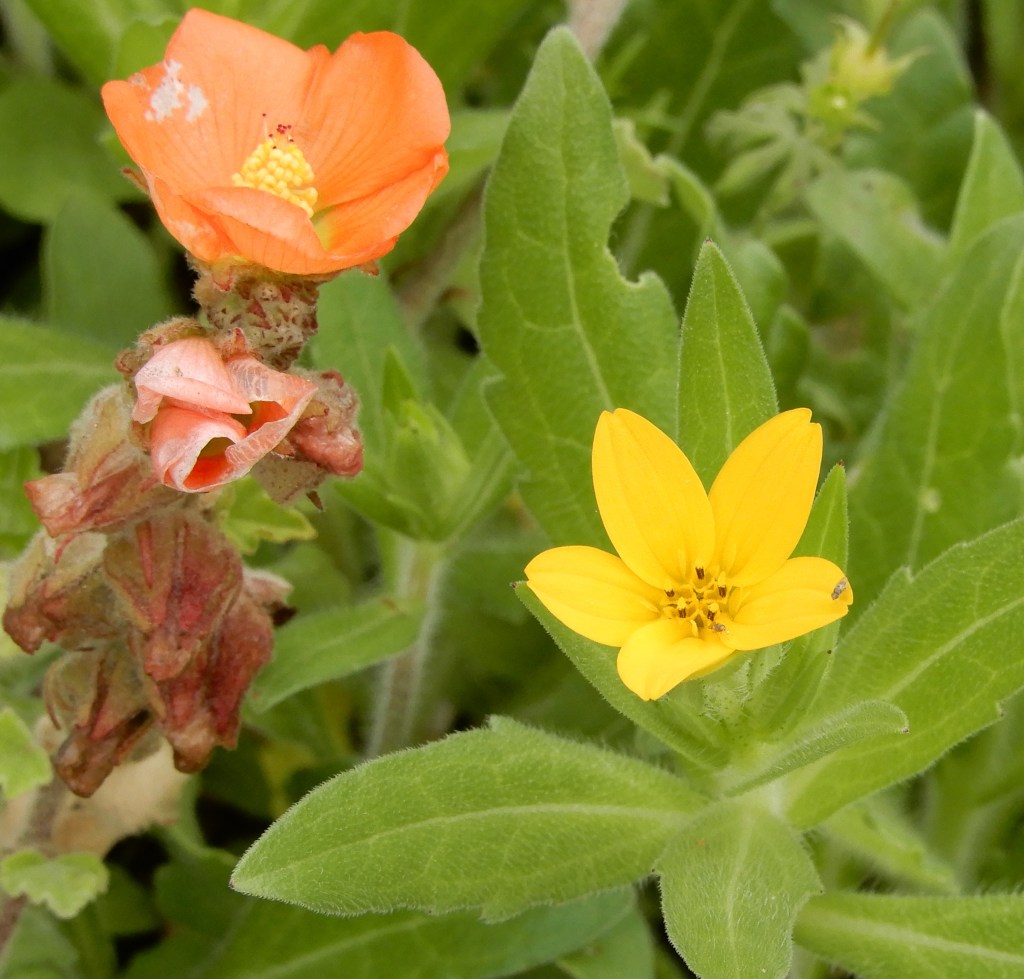
And then there are the photos. People trample swaths of these flowers to pose their children and dogs next to them. The Wildflower Center does have a couple of designated areas where visitors can pose with the Blue Bonnets without destroying them. I have done this myself with family and friends. They are pretty, but this kind of gets boring after a while. I seek out the other flowers sprinkled among and near the blue ones. The real Texas landscape has many kinds and colors of flowers. Every color you can imagine.
Tansy Aster (?)Chocolate Daisy (leaves smell like chocolate)Orange Mallow and Texas Yellow StarTexas Paintbrush With Other FlowersTexas Paintbrush and Blue Bonnets
Variety is the spice of life. Each living creature adds to the beauty of the world. I like to think of each human as an individual flower with a unique beauty. What if, in our urban and suburban landscapes, we celebrated the diversity of the people we see as we walk through our towns and shop in our stores? What if we oohed and aahed at the beauty of each person? It might be a bit weird if we did this out loud, but we can do this inside ourselves. And maybe we would greet them with a smile and the world would be a better, more loving place…at least for that one day for those people…the admired and the one admiring.
(I was going to subtitle this month’s blog “Pollyanna on her soapbox with pretty pictures”…I do believe each of us who model this sort of love for our fellow creatures can influence others. )
Texas Paintbrush and Blue Bonnets
*(All photos taken by the author at the Lady Bird Johnson Wildflower Center except for the last photo which was taken at McKinney Falls State Park)





























 Natural Musings