Our backyard is an eclectic collection of growing things. There are our natives, the giant Bur Oak, delicate Redbud trees, and various bushes and flowers. And there are our non-native plants like the Crepe Myrtles and the Rose of Sharon bush…both of these are part of my late mother’s legacy. Part of me wants to go totally native in our yard plants, but I don’t want to get rid of the ones I got from my mom.
And my husband enjoys having a yard of grass to mow. Our grass is a combo of native buffalo grass and St. Augustine. We planted the buffalo grass. The St. Augustine has migrated from a neighbor’s yard and now covers much of the yard…except for various weeds.
Weed- “a plant that is not valued where it is growing”-Webster’s Ninth New Collegiate Dictionary
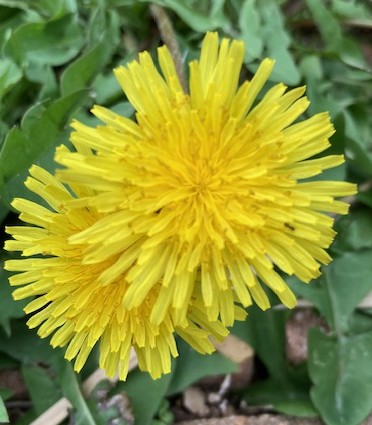
Late Winter Dandelion Flower
In late winter the Dandelion and Sow Thistle flowers are often the only thing blooming and are a source of food for bees and numerous other insects. So, I like to let them be.
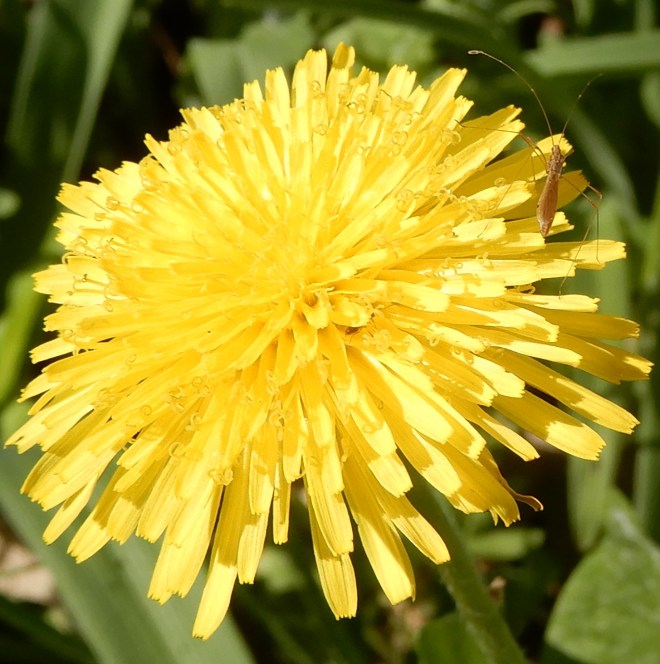
Unknown Type Of Insect On Dandelion Flower
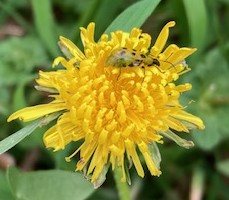
Cucumber Beetle On Dandelion Flower
My husband and I “consult” on what can be mown and what I want to let grow. Something new this year are the little red flags placed around areas I want let alone, mostly the bunches of native purple Spiderworts that are all over now. They are descendants of a couple of plants my mother gave us years ago. I have written here before about how wonderful it is to see them come up each year, a part of her legacy that lessens my lingering grief.
Anyway, beyond the red flag areas, my husband had some other plants to ask me about. One was an old Sow Thistle plant. It is growing just off our back porch in the path of our brick walkway causing us to step around it. Seeing that the flowers were gone, and it having gone to seed, I said “Sure, go ahead and mow it down.”
I was thinking that having lost it’s flowers it had lost it’s usefulness.
We had the mowing conversation while sitting on the porch enjoying a warm February day. The upcoming mowing would be the first of the season.
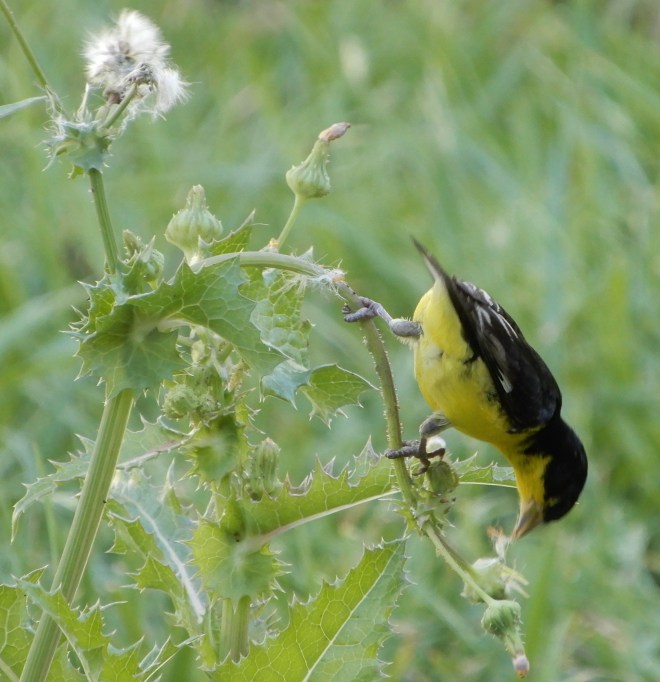
Suddenly, a little bird landed on the plant in question.
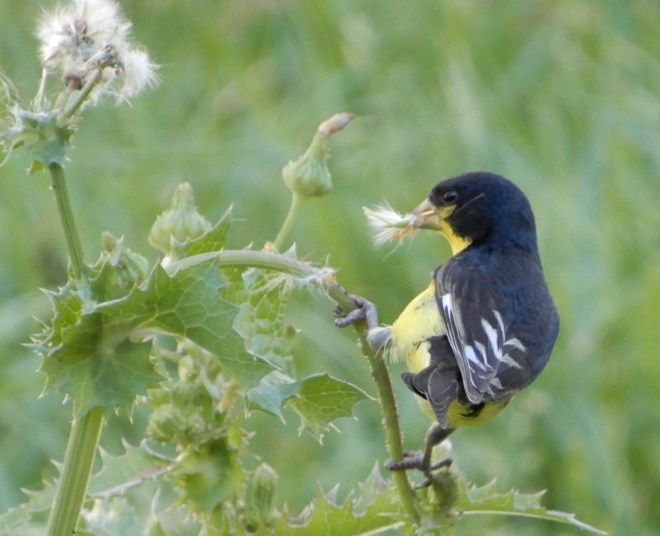
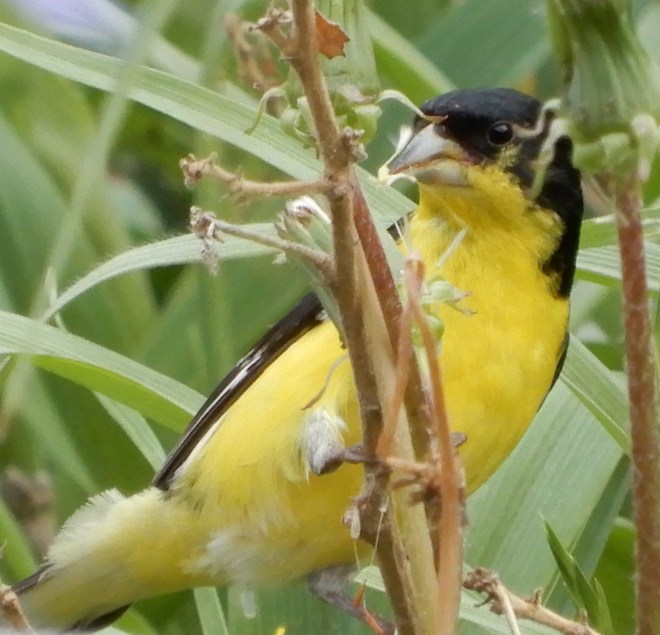
Lesser Goldfinch Male On Sow ThistleLesser Goldfinch Eating Seeds
Okay…So, I had forgotten about birds liking the seeds. The plant would stay for awhile longer in our yard as a nice little food source for these critters. And the plus here is that we were only about 6 feet away from this little guy and got to enjoy his beauty.
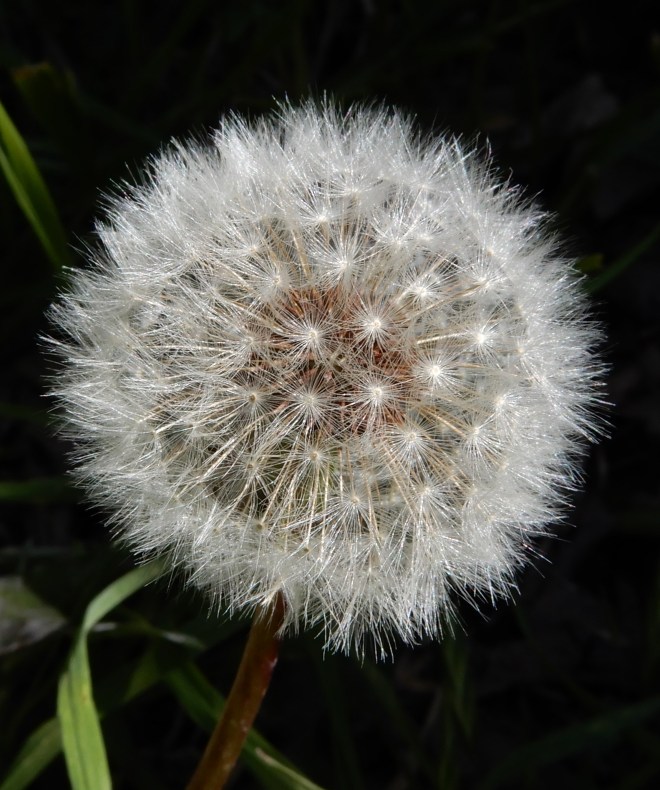
Here is another weed shot:
Can you imagine never, ever getting to pucker up and blow this bundle of seed heads off into the sky, maybe making a wish as you do?
No real subject this month. Just some pretty photos from a trip to the coast in January. So grateful to be able to get down there at least once a year and enjoy the critters and scenery that I can’t experience in my home town.
We stayed at a new place called The Lighthouse Inn at Aransas Bay in Rockport. I recommend it. There is a restaurant on property and at least 2 more within walking distance. The grounds are nice, with a covered pier for fishing or just enjoying some relaxation by the bay.
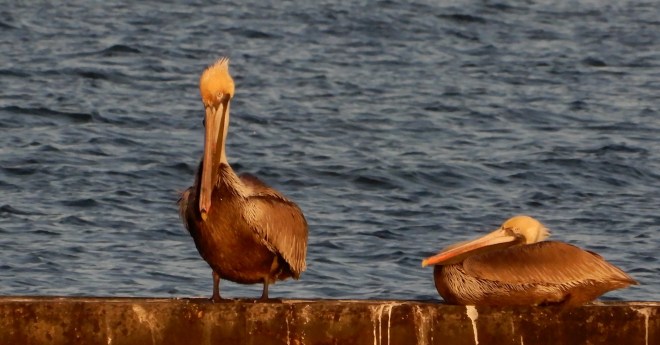
Brown Pelicans Near Fishing pier at The Lighthouse Inn
We saw dolphins in the water, but I didn’t get photos.
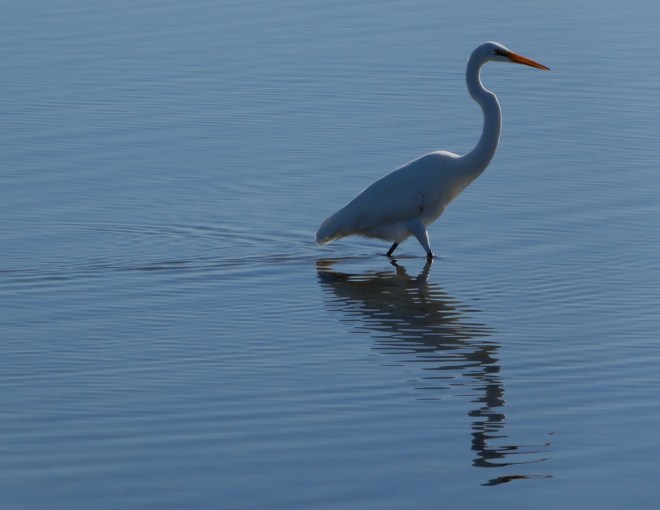
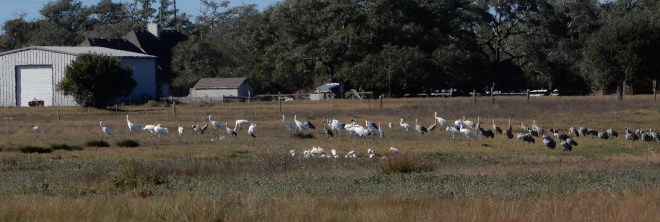
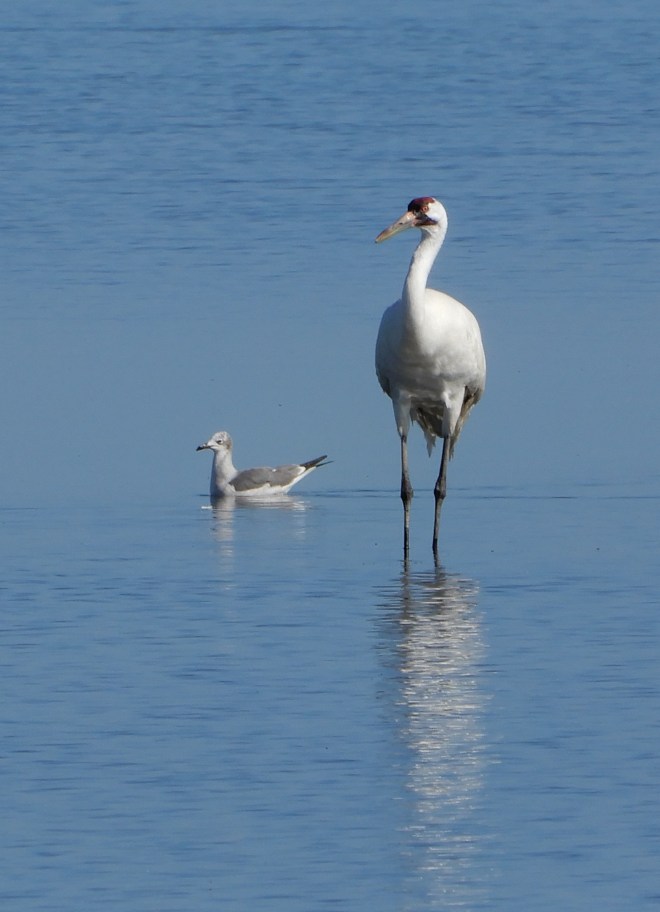
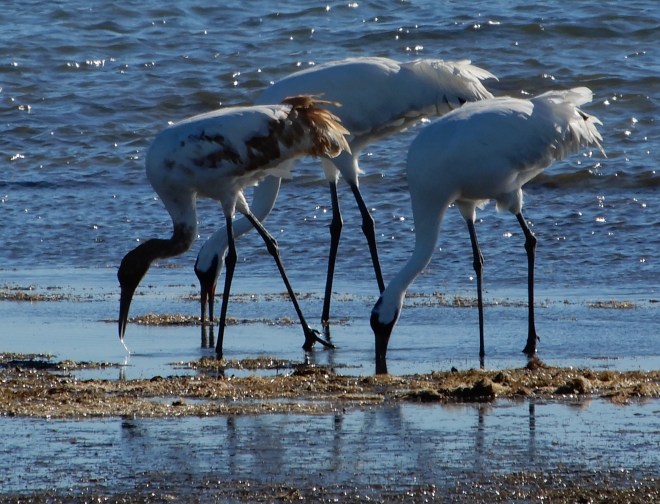
Besides a change of scenery, our main objective of this trip was to see the Whooping Cranes that winter along the coast. They arrive in November and leave in March, so January is a perfect time to look for them. The following photos are from an area just outside of Goose Island State Park.
Great EgretWhooping Cranes, Sandhill Cranes, and Others on private property near the bay and Goose Island State ParkWhooping Crane and Ring-billed Gull
The water in the bay was down and these birds were on a sand spit. This is the closest I have ever been to the Whoopers.
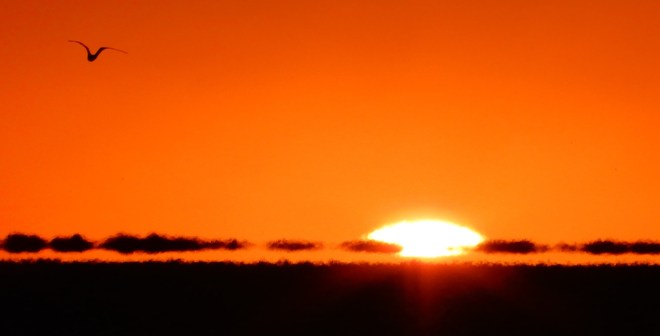
Whooping Crane Family On Sand Spit In Bay Across Road From Private Property With The Other WhoopersSunrise Over Aransas Bay
Some people travel the world to see specific birds. I am lucky to have to only drive 191 miles to see these once endangered birds.
“Why are you up so early, before everyone else in the family?” A young mom says to her 3 year old.
The 3 year old replies: “To See What Stuff Are!”
This was told to me by my mother many times throughout my life. I was a curious child and continued wanting to know what was going on around me. What were mommy and daddy doing when I was not around? I can remember sneaking out of bed and watching t.v. with them ( I was undetected behind a chair!). Maybe it was/is a sort of “fear of being left out.”
When I was 8 my maternal grandparents gave me a transistor radio. I listened to music and news and talk radio. I remember being at a sleepover at a friend’s. We were in a tent in her backyard and she was sleeping and I was listening to my little radio with an earpiece. I found the Christian radio programs being broadcast from over the border in Mexico. Hell fire and damnation sermons that fascinated me and were so different from my Unitarian church services. Hey, I could even send in some money and buy a piece of the cross Jesus was crucified on…not sure I am remembering that correctly.
As I grew older I wanted to know what was going on in other places. My brother and I got walkie talkies. I was excited to learn that not only could we talk to each other from the next street, we could pick up some police radio chatter! This is how I learned that someone was shooting people from the University of Texas tower. I went into the house and told my mother and some visiting friends what was happening. We turned on the t.v. and watched a live photo of the tower.
A year or two later we were visiting some friends of friends. The dad of the family introduced us kids to a shortwave radio. So cool! We could hear people talking all over the world. I wanted one and finally got one at Christmas or on a birthday. I would spend an hour or two tuning the dial. I would hear ham operators chatting with each other, morse code…which I briefly attempted to learn…and broadcast channels like the Voice Of America, Radio HCJB from Ecuador, and Radio Havana, Cuba. I listened to all sorts of languages, often having no clue to what language it was.
I got rid of my last shortwave radio about the time it could be accessed over the internet. And then only checked out the stations a few times. I have no idea how to do that now. Instead, I have discovered live streaming on You Tube! Lately, I have spent a lot of time checking out a few regular feeds to watch the anti ICE protests in U. S. cities. One or two of the reporters seem to be unbiased journalists. Others are pretty open on their point of view. I mostly watch the liberal leaning ones, but sometimes check out the right wing feeds.
Imagine a bear in a cave, supposedly hibernating, but actually watching You Tube on her Ipad…that is me. Last night I was up late watching a fire someone had set near a detention center in Los Angeles. But, I can only stand so much of people chanting and yelling F*** ICE and watching people being dragged from cars or houses and being shot.
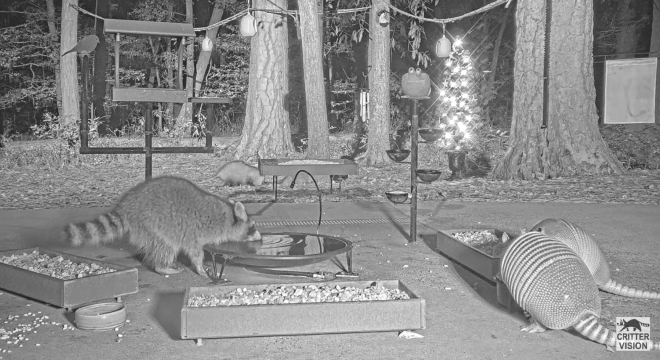
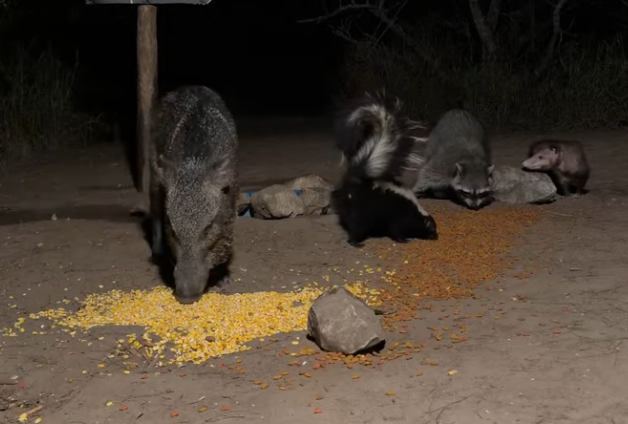
So, I tune into live bird and animal feeder streams from all over the world. I have watched live (and sometimes old clips) views of jackals and gnus at a watering hole in Namibia; hummingbirds in Costa Rica; Pandas in China (in captivity); badgers in Denmark; and birds coming to snow covered feeders in upstate New York and Canada.
A recent discovery is live feeders in South Texas and in South Carolina.
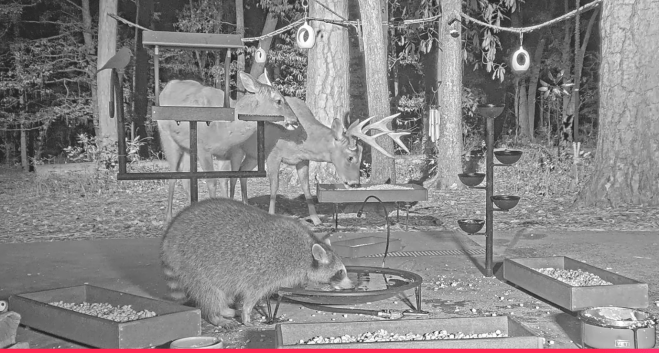
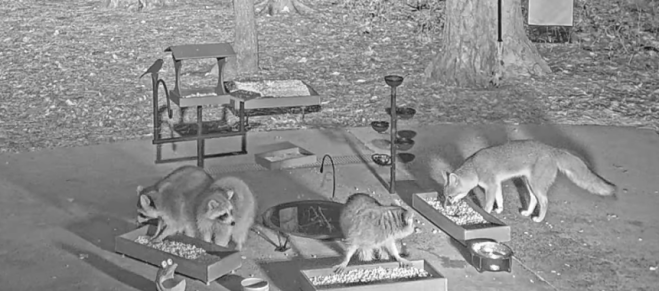
You Tube Feed South Carolina-Deer and RaccoonRaccoons And Fox-South CarolinaRaccoon, Armadillos, and Opossum (in background) -South CarolinaJavelina, Skunk, Raccoon, and Opossum-South Texas Feeder
I have seen some tussling (usually within the same species) and growling and other threatening behavior between species. But, mostly they are feeding right next to each other…aware of their differences…but tolerating each other as they eat. I know these feeders do not replicate their lives in the wild…but it does make me think that maybe different people can get along better and even be kind to each other and share resources…?
Meanwhile, I will go check out videos of the venerable Monks and their Walk for Peace day 98.
*photos taken off You Tube from my Ipad
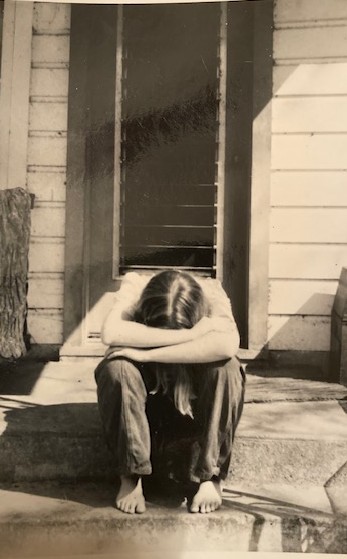
*Teenager with head down taken by Barbara Downes
Youtube.com
South Carolina Crittervision Critter Cam: Do a search for this on Youtube…I think this is going 24/7
Blue Indigo Trails Camera in South Texas-do a search on Youtube.com…they may only be streaming at night
On the 10 o’clock news I hear the weatherman say “And today in San Angelo it hit 100 degrees” and i see the name San Angelo on the big televised map of Texas. I have seen this name for years, but it meant nothing to me. I had never been there. I didn’t know anyone who lived there. And then one day, on Facebook, I saw a post about the San Angelo State Park. The poster had gotten some nice bird photos there. It was Spring, and I thought: “Road Trip.”
San Angelo is 205 miles to the northwest of Austin. We drove through rolling hills and interesting towns, the elevation gradually rising with each mile. The state park is on the outskirts of San Angelo. It has 7,677 acres and is a fairly new state park, having opened in 1995. There is a north shore area and a south shore area with a large reservoir made from damming up the Concho river. Check out the website for more information:
Here are just a few of the other things we saw during our all day visit:
Texas Longhorn Cattle
American Bison
Blooming Mesquite
Prickly Pear Cactus And Daisies
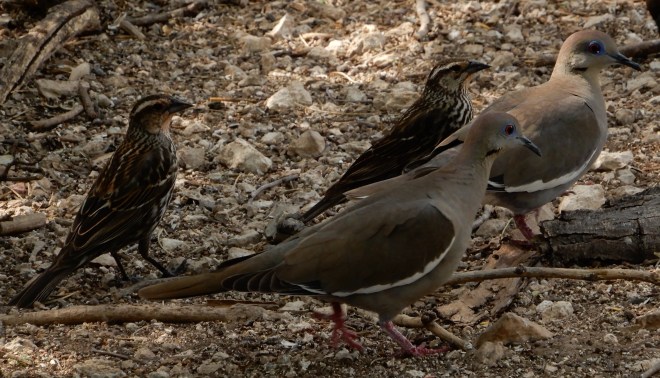
Female Red Wing Blackbirds and White Wing Doves Up Close At The Bird Blind
Turkeys
Scissortail Flycatcher
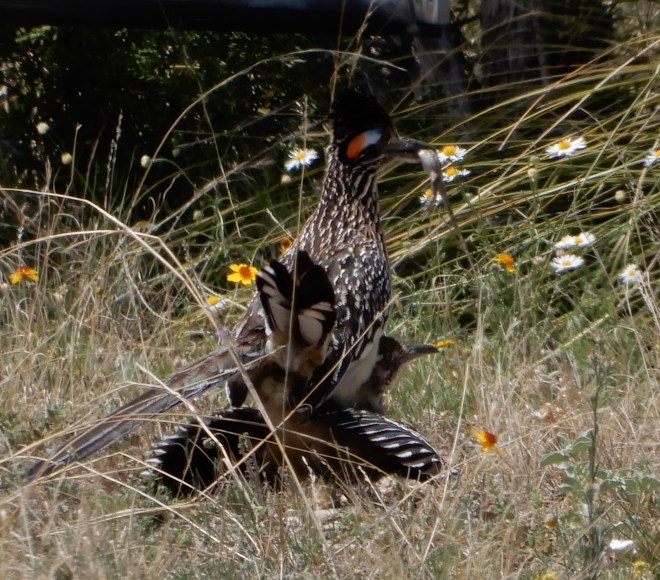
And as we neared the park exit…
Road Runners Mating…note the lizard in the male’s beak. When they separated he still had the lizard…maybe to attract another mate?
We also saw deer and ground squirrels and a fox. And we saw other unidentified birds that I didn’t get shots of. This is a wonderful place and I recommend it to all who love spending time in the great outdoors. Now, when I see the name on the map, it will bring back the happy memories of all that I saw.
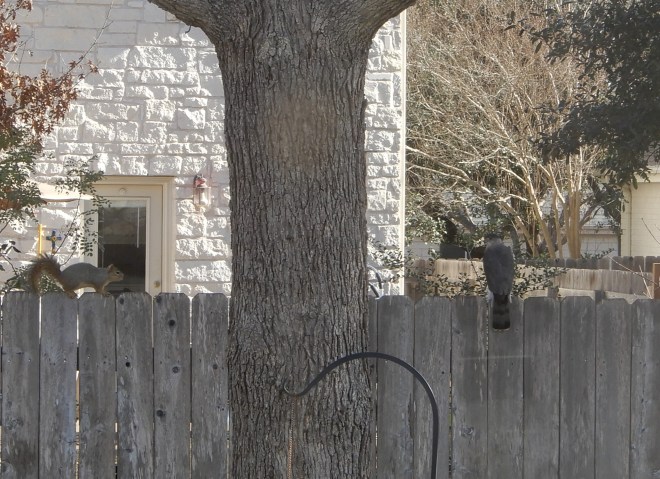
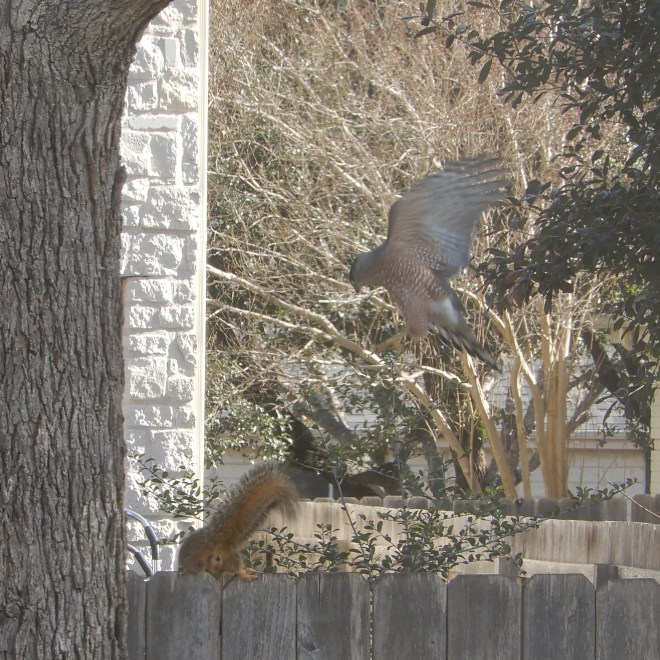
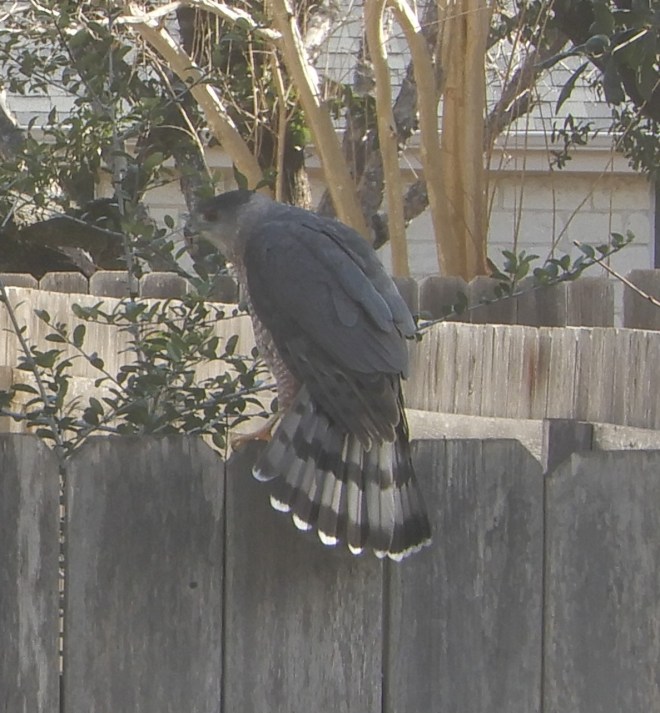
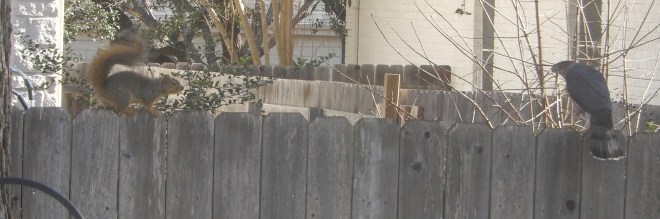
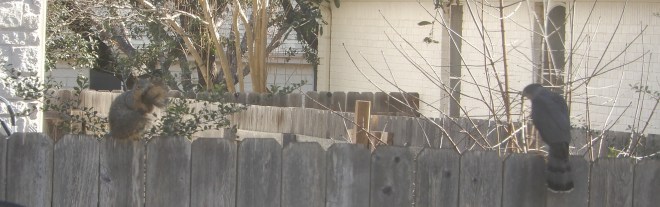
While we were eating breakfast yesterday a bit of drama played out in our back yard. I like to face the windows to the back yard just so I can watch yard critters while I eat. My husband spotted a Cooper’s hawk sitting on our back fence…in the same spot I had seen it at dusk the day before. I got my camera and took a few photos through the one window without a screen (removed for just this purpose, to be able to focus my camera). A squirrel appeared moving along the back fence towards the hawk. I was about 45 feet away (that is what my husband’s range finder says) and just had my little Nikon Coolpix A900. But, I think I captured the scene.
Eastern Fox Squirrel approaching Cooper’s hawk on the Squirrel Highway
Squirrel Moving Closer to Hawk (see the tail behind the tree?)
Squirrel displaces Hawk
Hawk flies into nearby neighbor’s tree and then:
Hawk is back. It briefly spread both wings and it’s tail out, perhaps to look bigger. I didn’t get the shot before the wings closed back down. I think the squirrel was down in the bush behind fence at that point.
Squirrel is back!
Standoff!
Squirrel nonchalantly grooming it’s tail while hawk watches.
After this, the hawk flew to a side fence and then flew off out of the yard as another squirrel approached on a perpendicular squirrel highway. Blue jays had been squawking in the background but never got very close to the action.
Neither my husband or I had ever seen this kind of squirrel behavior before. Usually, when a hawk is around the squirrels are frozen against a tree trunk/branch or nowhere to be seen. The first batch of baby squirrels start being born in January and so maybe the squirrels are being more protective of the area? The squirrel was a male squirrel and so maybe just defending territory? The hawk is probably hanging around to get at the fat white winged doves that come to our feeder and may not prey on the squirrels. If the hawk attacked the squirrel I think both would give a good fight.
I had been hoping to come up with a fun political metaphor for this little drama we witnessed, but so far I have not.
I find much joy in observing small bits of interaction from the non humans around us. I hope some small joys of your choice come to you today and every day in 2025!
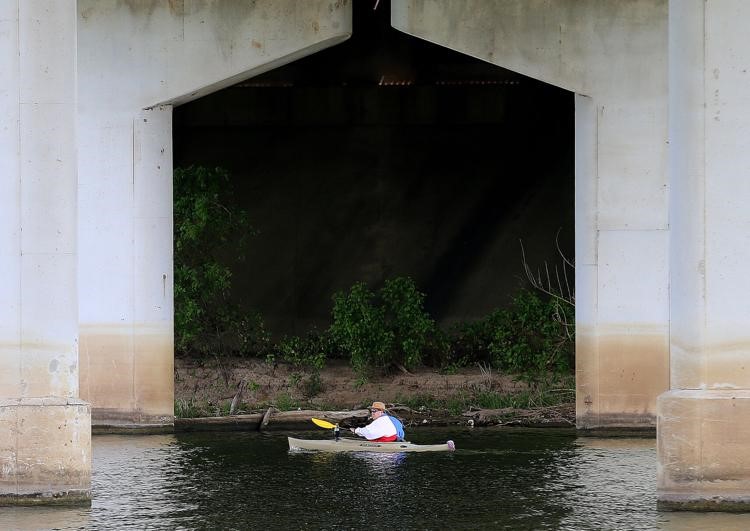
(original photo by Jerry Larson and used with permission of Jerry Larson and the Waco Tribune-Herald)
Who is this sun glassed adventurer?
He is my baby brother, Robert Richard Downes, kayaking on the Brazos River. The photo also adorns the cover of one of Robert’s books entitled Hello to a River, which chronicles his canoe and kayaking trips.
Texas is home to some wonderful rivers that have inspired many adventurers. My brother is one of those. He drew inspiration from several generations of outdoorsmen and women in our family. I remember canoe trips we took in my father’s canoe starting when I was 5 and my brother was 4. That canoe was inherited from my dad’s grandfather and currently sits on saw horses in my back yard. Robert tells of his journeys on Texas waterways (and a few others). His book includes the writings of our father, John Richard Downes, who kept notes about the canoe trips he took on the Texas Colorado river. I contributed one short piece about me meeting my father at the end of his last canoe trip to bring him and canoe home.
Each trip down a river will be different. The traveler might encounter sudden storms, miserable heat, mosquitos and unexpected currents. But, along with the unpleasant, there is the pleasant: the helpful people met along the way; the sightings of birds and other creatures; the time spent with one’s own thoughts. The lone traveler becomes the philosopher.
This book is a fun and readable true story that will fit nicely on the bookshelf next to Robert Graves classic Goodbye To A River. And this is a good gift for lovers of Texas rivers and nature.
Here are Robert’s Other Books:
A collection of essays about the author’s adventures in Texas, Mexico and other Latin American countries. Gift this to anyone with an interest in foreign travel and Texas.
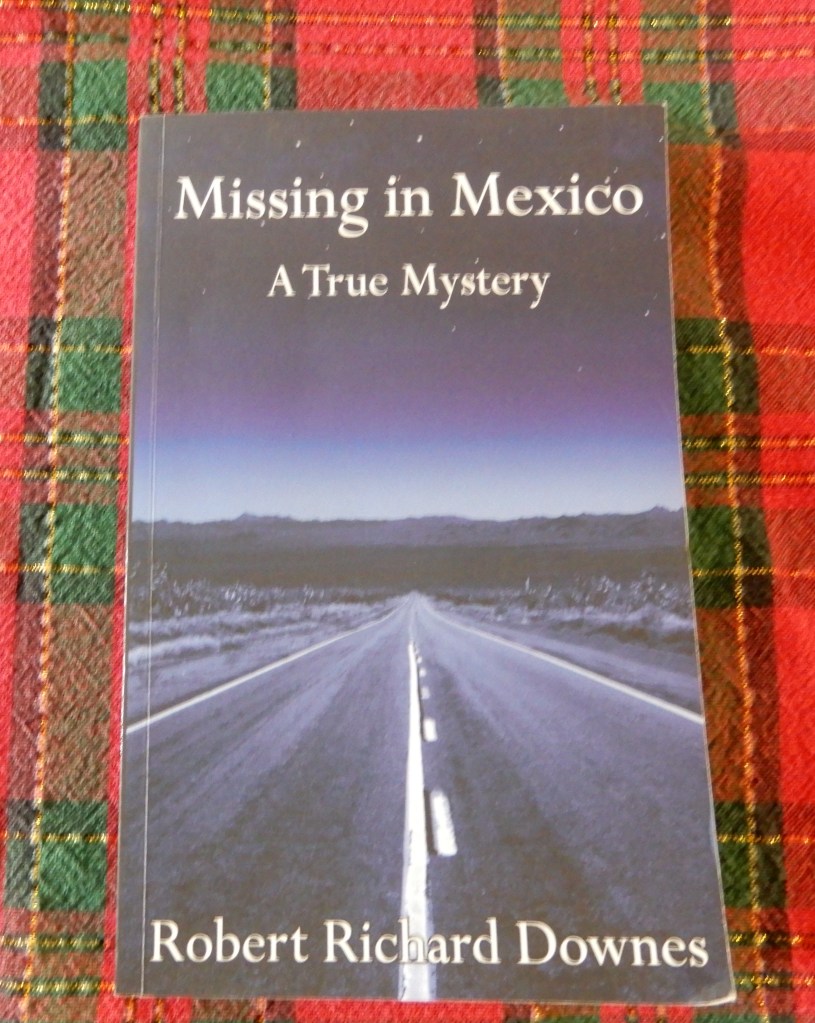
This is a true crime mystery about a case my brother worked on when he was employed by the U. S. State Department in Mexico. It is about the disappearance of American professor Nicholas Schrock while he was traveling to a summer teaching job in Guadalajara. Great details about the investigation and a good look inside of the everyday work of our government employees.
This latest book is a departure from Robert’s past work and is a fictional spy tale. Here is the opening line: “It all started innocently enough, at least to an outside observer, but appearances can be deceiving.”
These books are available at Amazon.com and BarnesandNoble.com. (search for his full name “Robert Richard Downes” because there is another author with a similar name)
Here is the “About The Author” bio at the back of his latest book:
Robert Richard Downes is a retired Senior Foreign Service Officer with over 37 years of federal service, the majority served overseas with the U. S. State Department. He lived and worked in Australia, Germany, Guatemala, Mexico, Nicaragua, Thailand, and Venezuela as well as studying in Austria, Germany, and Hungary. After leaving the State Department, he returned to his native Texas where he fills his time reading, writing, kayaking, and volunteering for local charities and international organizations.
Once upon a time in Austin, Texas, maybe in the Spring of 1955, a little tow-headed baby girl was visiting the Texas Memorial Museum with her parents. As they entered the building, the little girl looked up, pointed, and blurted out “PISH!” Her startled daddy and pregnant mother followed their little girl’s pointing finger and saw a large, framed fossil of a fish mounted over the doorway to an exhibit room. The baby girl only knew to say a few words and they didn’t realize that fish was one of them. This incident became a family story that her parent’s would tell over and over throughout the years, much to the little girl’s delight.
A few years after, maybe 1962 or 1963, the little girl’s elementary school class visited this same place and she saw the fish fossil with new eyes. And her new eyes saw many other delightful sights.
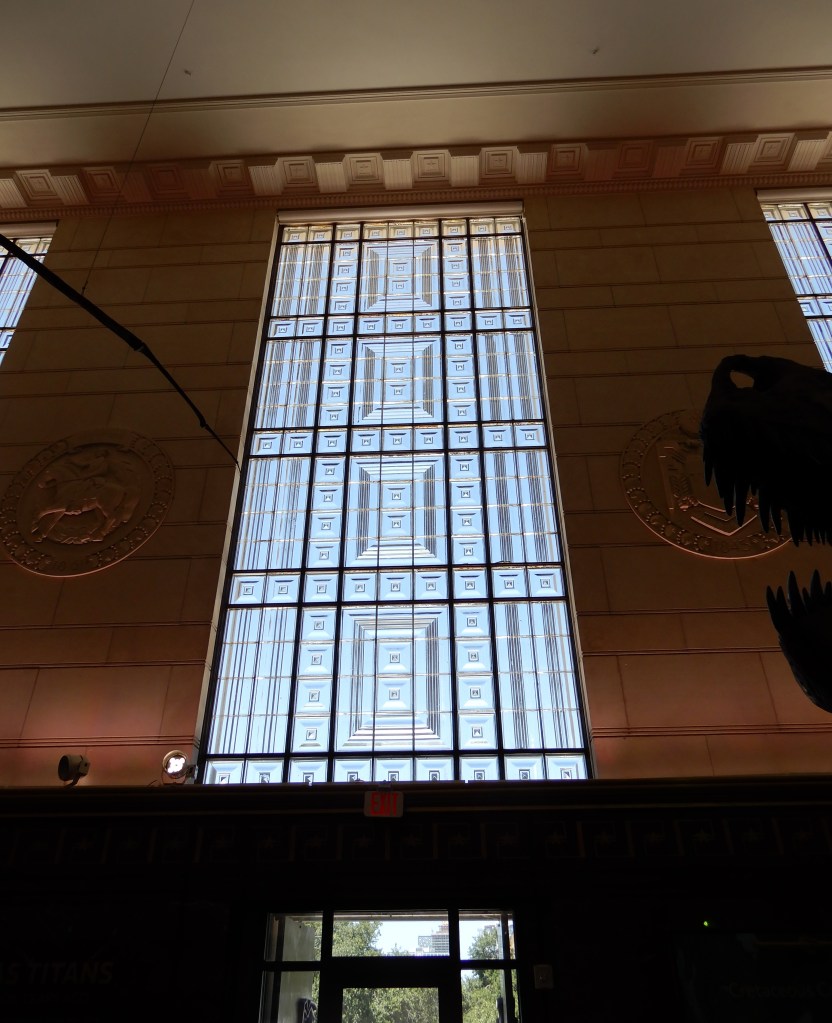
Beautiful Windows Grace The Main Entry Floor-Second Floor (seen as you enter museum)
Pterosaur Replica Flying Overhead (cast from bone fossils found in Big Bend, Texas)
She marveled at the flying dinosaur over head and was a bit unnerved by the large Tyrannosaurus skeleton across the room. The guide said that it also had been cast from fossil bones found at Big Bend. She knew her parents had been to Big Bend because they talked about that place a lot. Maybe some day she would go there and see where these dinosaurs had roamed.
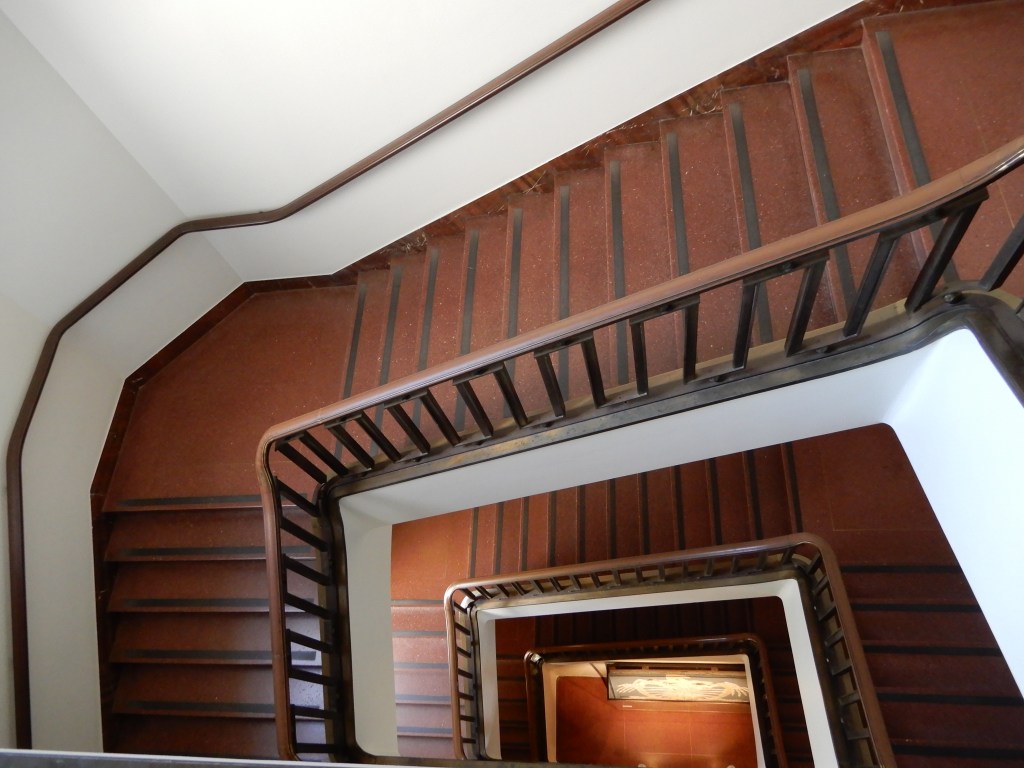
From this floor her class crowded into a hallway and one by one went down the steps to the first floor.
Staircase To Exhibits
Oh My! So much to see here! Meteorites from outer space… fossils and bones galore…
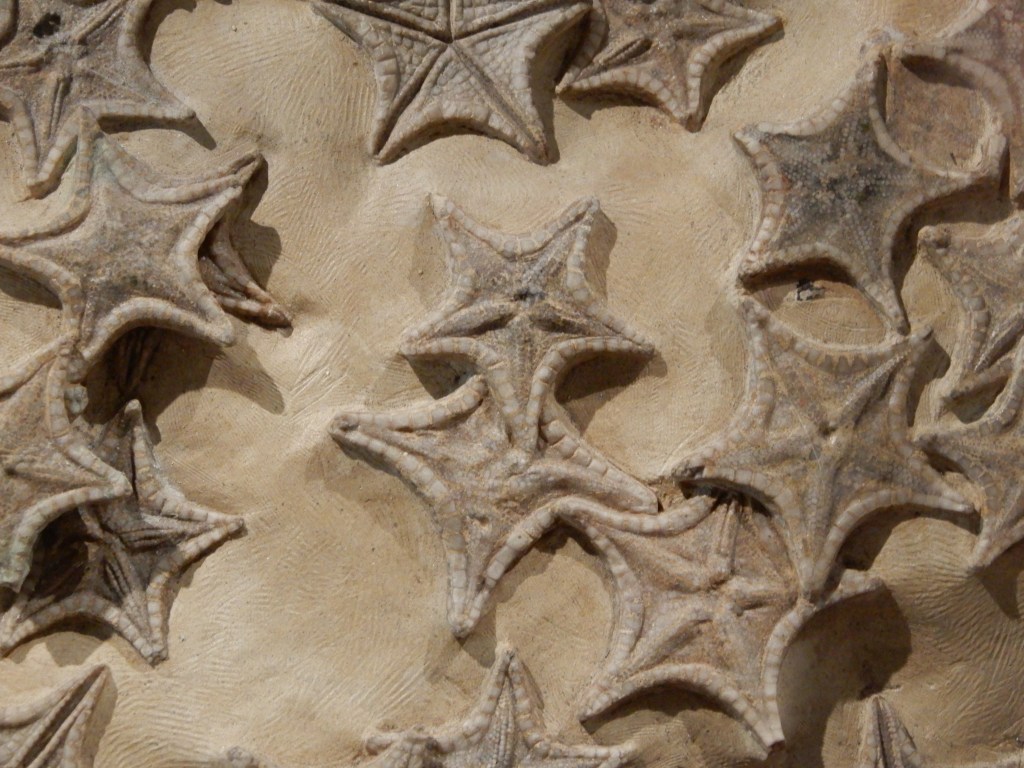
Star Fish Fossils
Label reads:
Starfish
Crateraster mccarteri
Skeletons in Slab
Cretaceous
Travis County, Texas
These had been found right here in her own county! The guide asked them to see if they could find the four legged starfish amongst all the five legged starfish.
Four Legged Star Fish Amongst Five Legged Star Fish
Sea Lily Fossil
The little girl didn’t know what a sea lily was, but she knew they must have been pretty. She remembered all the fossils she had collected on family hikes in the area…mostly snail looking critters that lived millions of years ago. It was hard to get her mind on how far back that was.
Around the corner was more…
Glyptodon
She had seen armadillos before, but never one that was as big as a small car.
And nearby was a giant that used to swim in Onion Creek. Scary to think of…the little girl had been to Onion Creek and seen little fish and frogs…things this creature might eat…this one was big enough to eat her.
Onion Creek Mosasaur (Cretaceous)
Mosasaur and Large Mammal For Size Comparison
Then the little girl and her class trekked up the stairs to the Third Floor. There were animals here that she recognized and knew were still around.
One Of Many Dioramas Depicting Texas Wildlife
Beetles, Butterflies, Moths
The little girl would remember this class field trip as one of the best ever fieldtrips. Better than the bakery where they got to sample fresh baked bread and better than the Coca Cola bottling plant.
Years later, when the little girl became a grown woman, she took her own little girl to visit the museum. She showed her the fish fossil and told the story.
Now the woman is an old woman. She recently visited the newly refurbished, repaired and reopened museum. Now, it is called The Texas Science And Natural History Museum. Some of it has changed. There is no longer a framed fish fossil over a doorway. But, much has stayed the same. During this visit she did not take the stairs. She and her husband chose the elevator.
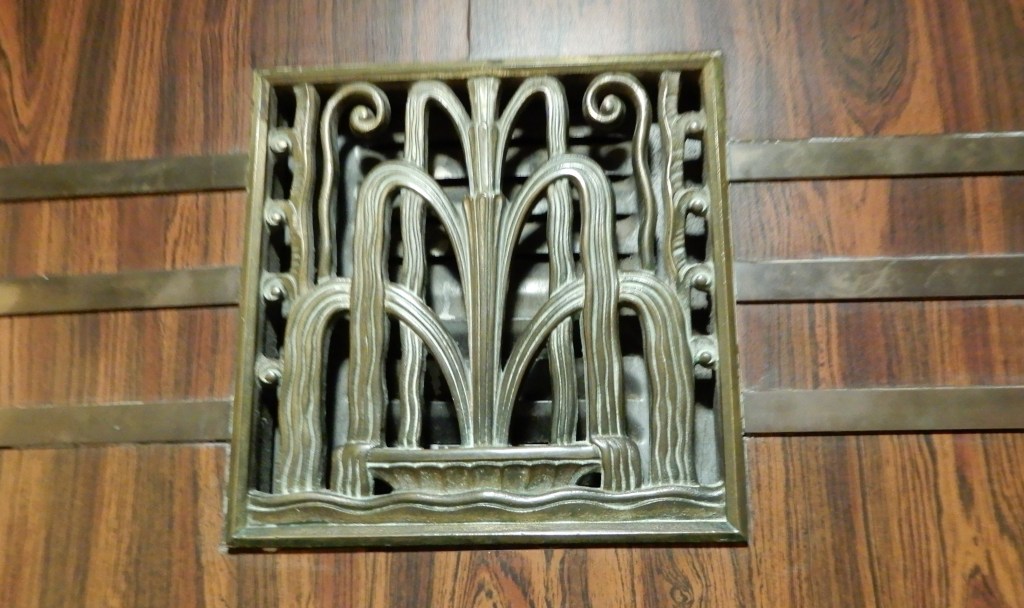
Decoration Inside The Elevator (circa 1930’s)
She knew the building was old, but didn’t realize that it was built during the Roosevelt administration and that many of the fossils were found during excavations under WPA (Works Projects Administration) sponsorship. Thank You FDR!
The woman hopes everyone gets to visit this small, but mighty museum that tells some of the story of the natural history of Texas.
————————————————————————————————————————-
*If you are in Austin on Sunday September 22nd you can visit the museum for free on Austin Museum Day. There is a parking garage adjacent to the museum.
Museum website:
sciencemuseum.utexas.edu
*Photos by B. McCreary
*some info from museum Visitor Guide and some internet surfing
In April and May I shared with you a Great Horned Owl family’s behavior and the development of two chicks. For this month’s blog I want to share some more families.
Some families feed and nurture their young.
Grackle Parents With Fledgling Grackle Begging For Food In Background
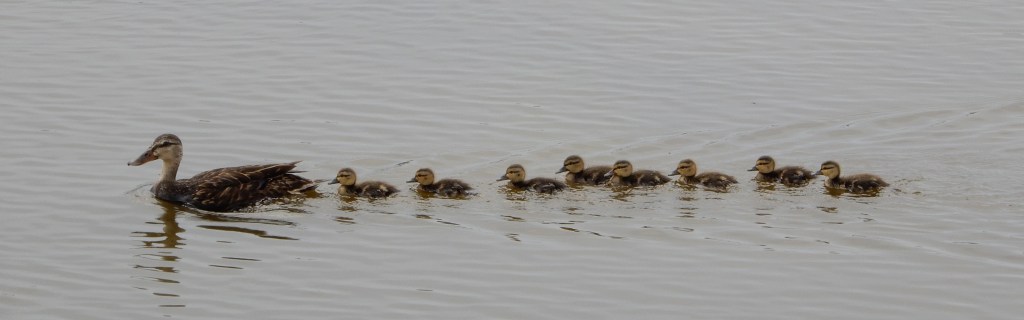
Some families lead their young.
Duck Mama With BabiesDon’t Leave Me Behind!
Some parents hide the young to protect them from predators.
This Doe And Fawn Could Not Be Seen From A Nearby Trail. (This shot was through a window up above the area)
Some parents protect their young in other ways.
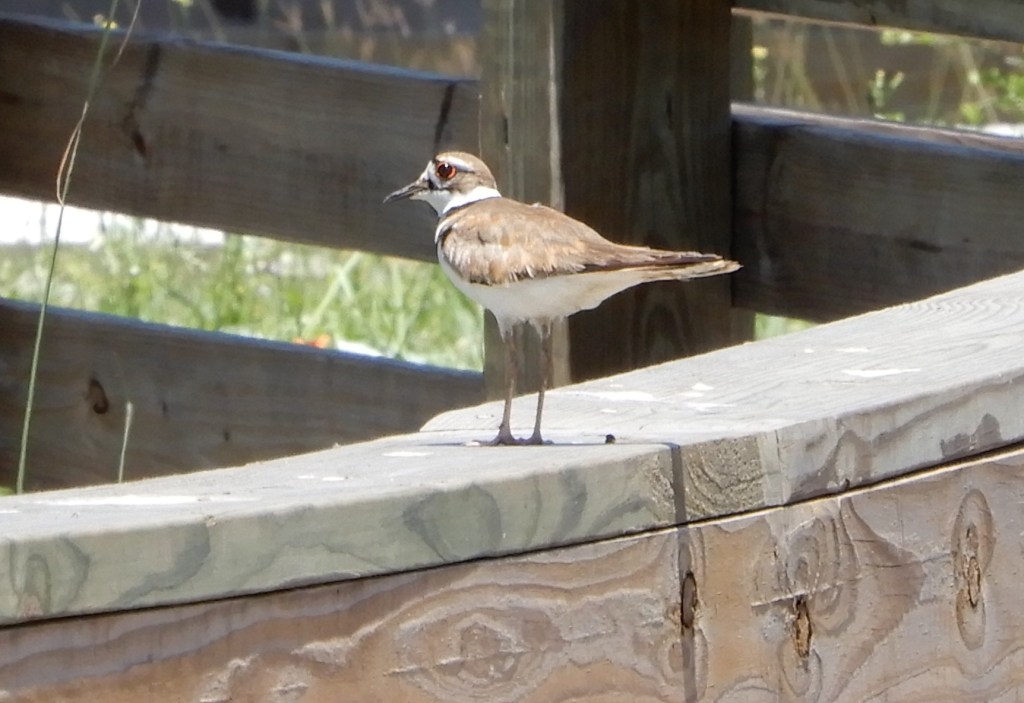
Killdeer ParentKilldeer Parent Distracting A Possible Predator (Me) By Feigning An Injury
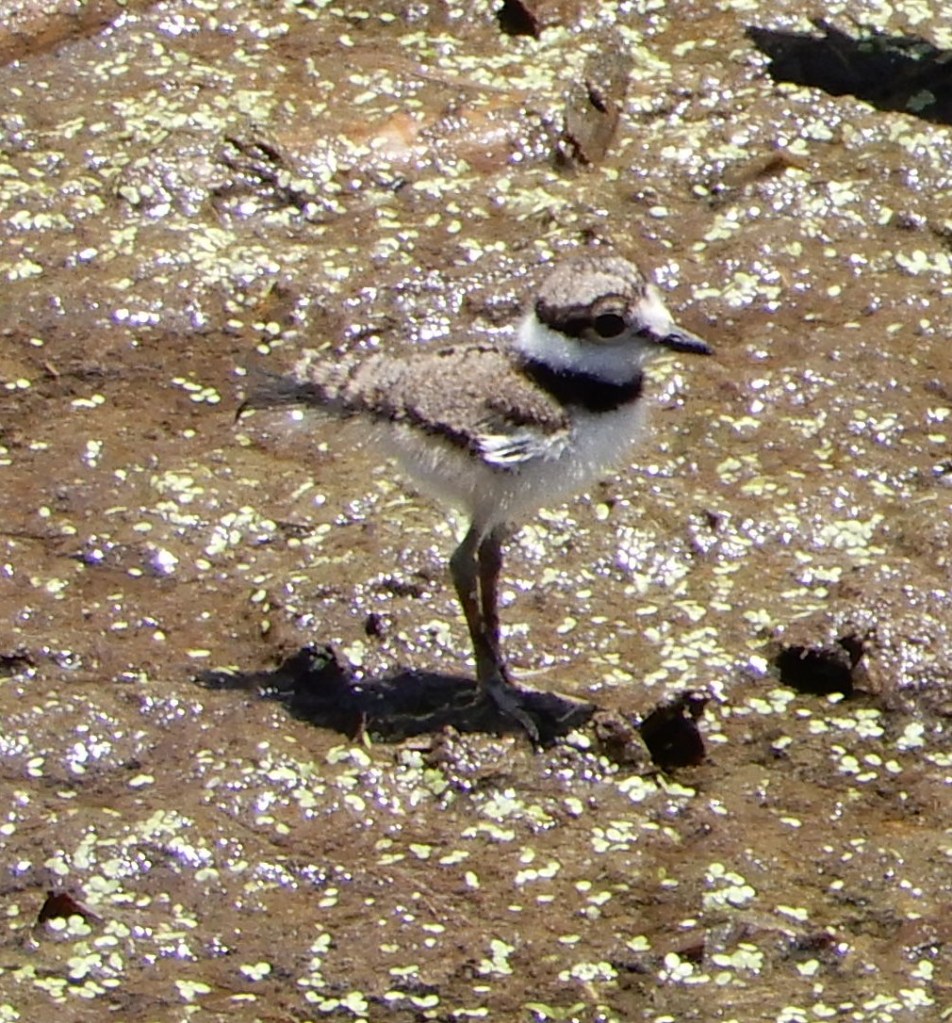
Who are they protecting?
Baby Killdeer Chick In Marsh Below Boardwalk
And let’s not forget the sibling relationships. Some siblings irritate each other.
Sibling Squirrels Jostling For Space
Some siblings get along with each other.
Sibling Squirrels Sharing Space
(Bird photos were taken at Aransas Pass; the Doe and Fawn photo was taken at the Lady Bird Johnson Wildflower Center; Squirrel photos were taken in my back yard)
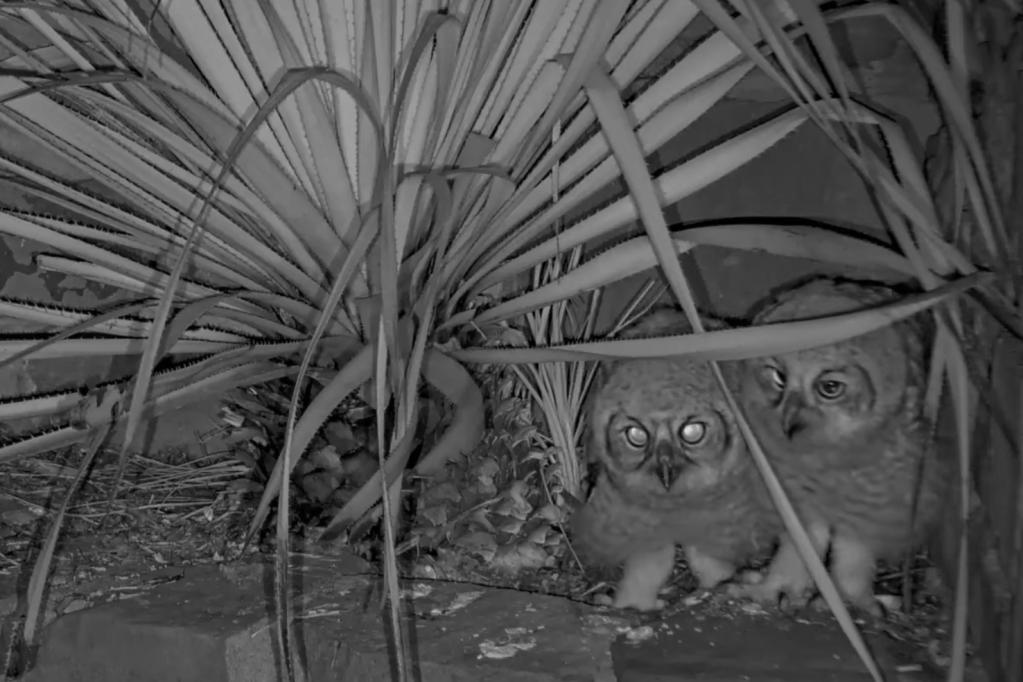
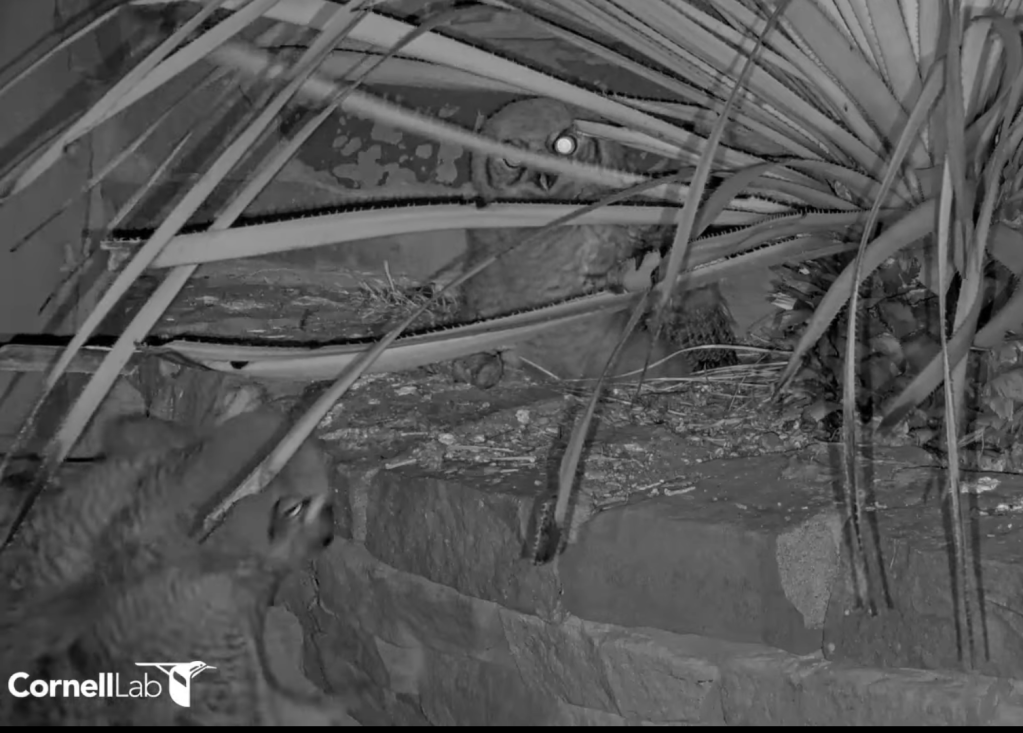
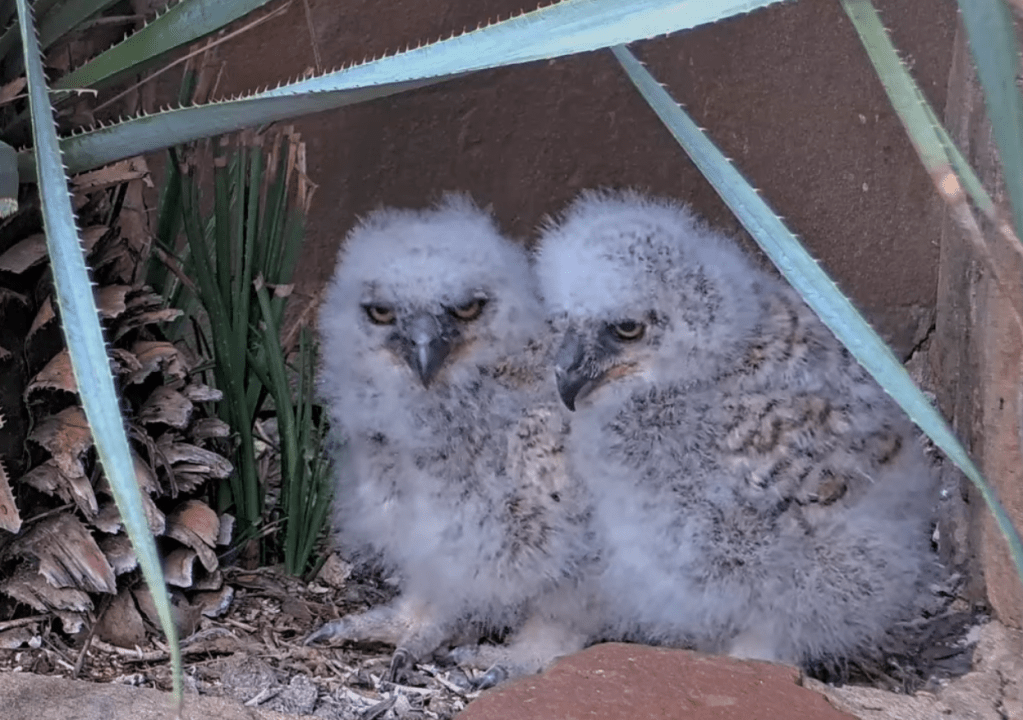
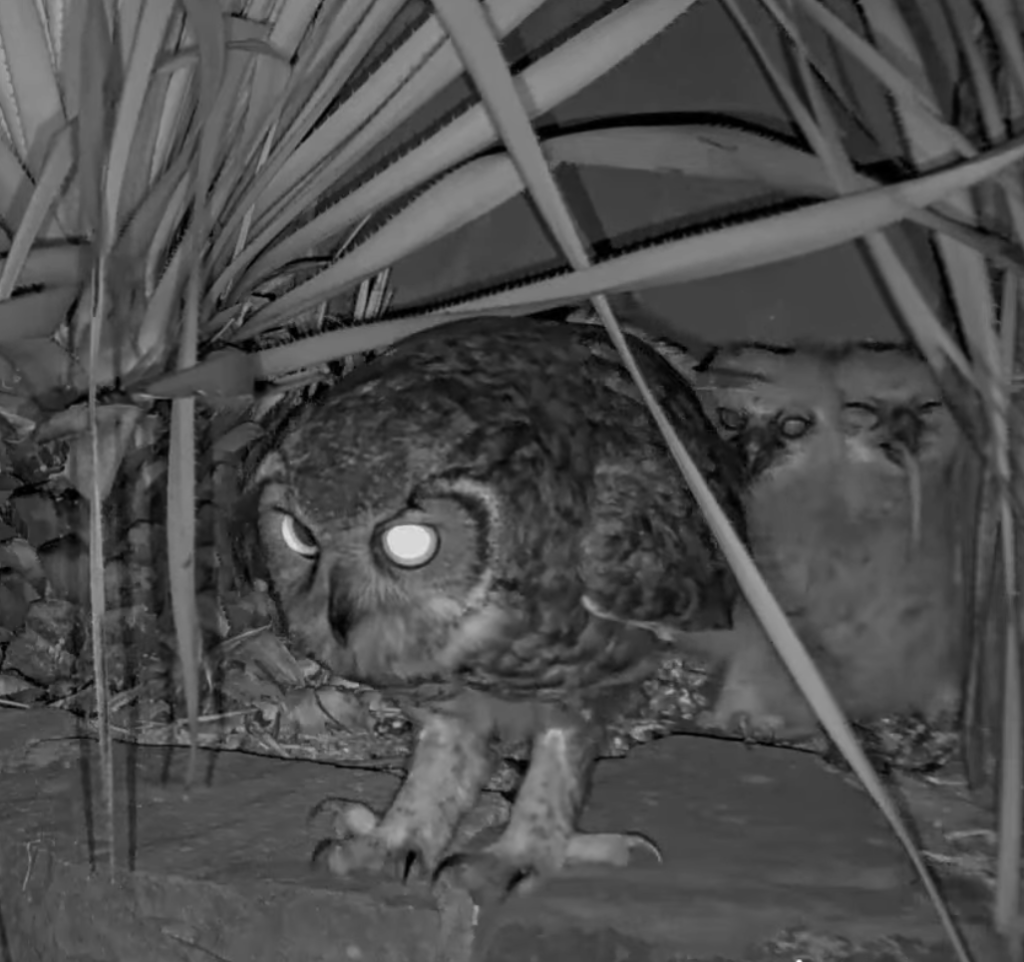
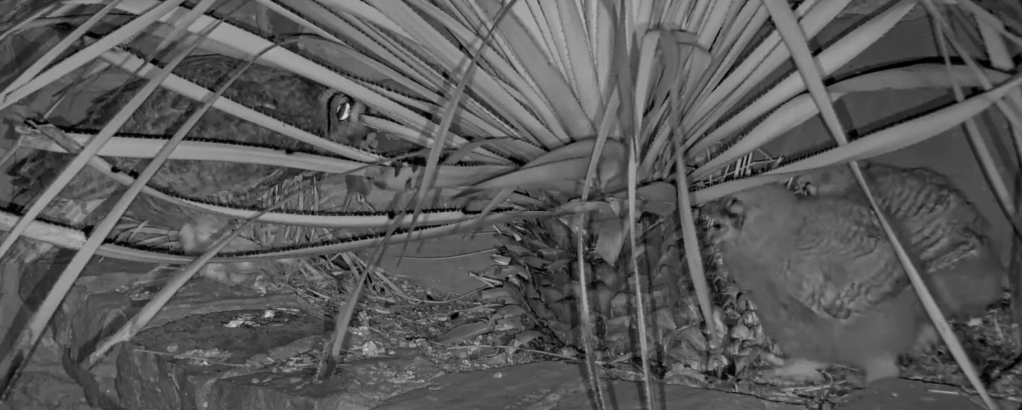
Last month’s blog told of the Great Horned Owl Family that took up residence at the Lady Bird Johnson Wildflower Center in Austin and my obsession with them. My obsession continued into May. Most mornings I would tune in to the live owl camera (courtesy of the Cornell Laboratory of Ornithology) to see how the two owlets were doing. And in the evening, while watching t.v., I would set up my iPad nearby so I could check on them periodically. I learned to take screen shots off the iPad.
I also volunteer at the Wildflower Center. When I was out there I made it a point to go look at them in person, roosting in their nest in a nook up above the archway that leads into the central courtyard.
Back in March the question was whether or not Athena, the mother owl, would return to nest at the Wildflower Center as she had since 2012. Fast forward to May and everyone is anticipating the eventual fledging (leaving the nest) of the owlets. The big question was “when would they leave?” “Would it be tonight”?
It was a waiting game, but not boring. The chicks continued to grow and behave in new ways. I was amused by their cuteness and concerned about their well being.
May 1st- Wet Chicks
May 4th-Waiting For A Meal
Sometimes the nights would be peaceful and the sounds of frogs and chuck will’s widows (night bird) could be heard along with the burble of the nearby water feature and the gentle cheeping of the younger chick.
But, at other times, event noise would keep the little ones alert. Sometimes the owlets appeared alarmed at the sudden shouts of wedding guests cheering on the newly weds after the reception.
I am old enough to remember when rice was thrown at the bride and groom as they left the guests. Later, rice became birdseed. And now, the guests blow bubbles at the lucky couple.
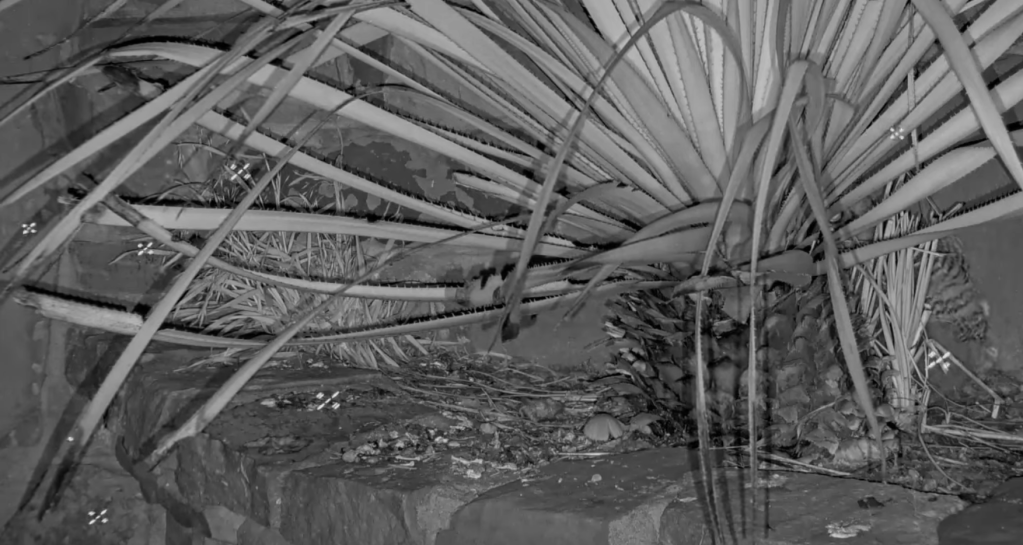
May 4th- One Chick Seen Behind Plant As Bubbles Float Upward Past The Nest Area (the bubbles are the little x shapes)
The parents were most excellent owl parents and continued to feed the chicks and watch over them.
May 7th- Parent Bird Has Just Fed The Chicks
The owlets would move around in the nest between parent visits. They would groom themselves.
They would jump, and flap their now mostly feathered wings. They would chew on old carcasses.
They would wait.
May 12-Mama Can You Hear Me? (the younger bird was often cheeping)
May 13- Where Is Our Food?
They flapped more and more and got closer to the edge of the nest area…usually staying on the plant side of the stone ledge. But, sometimes sitting just on the lip of the ledge. And then it happened.
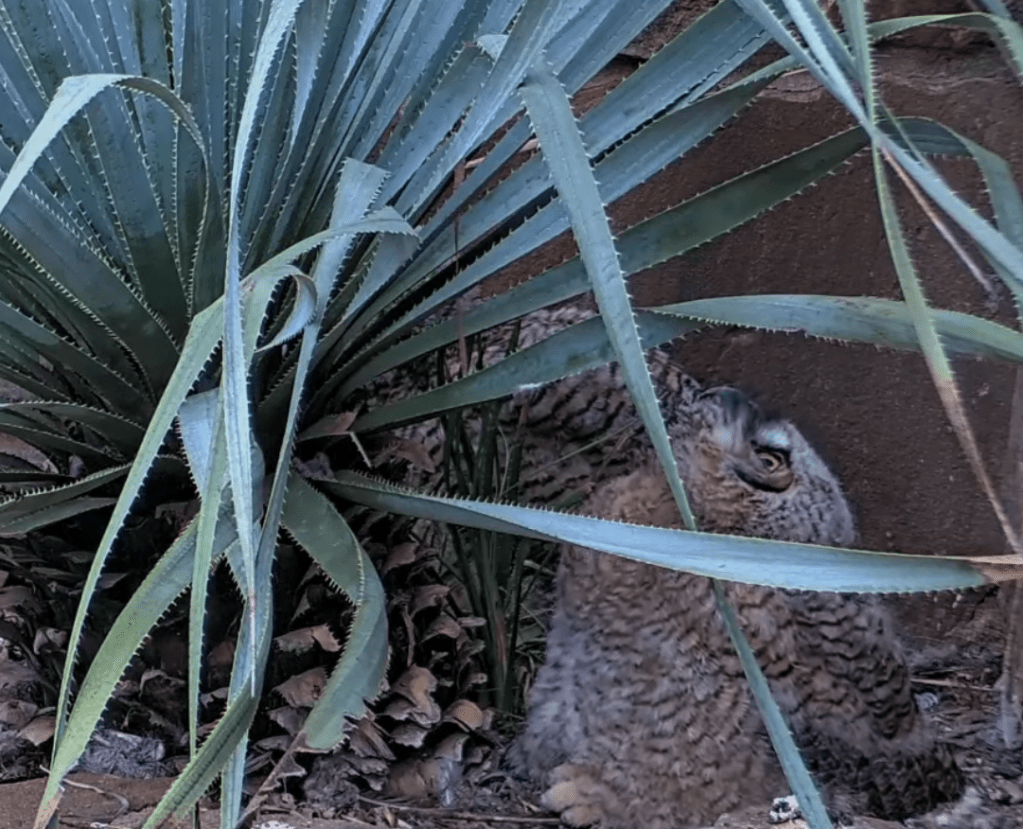
May 14th- Older Chick Loses Balance. Tries To Grip Ledge And Disappears Downward. Junior Is Looking Elsewhere.
The Senior Chick has accidently fledged. Some of us were watching live as this happened. I saw the bird practicing flapping and I think I even said out loud “Watch out! You are going to fall!”
May 14-Junior Dozes By Himself After Other Chick “Fledged”
May 15- All Alone The Next Morning
The Senior Chick was spotted in a nearby tree the next morning and was being fed and attended to by adult birds. That was a relief to hear.
There was a lot of activity on May 15th. The remaining chick was peeping and moving around in the nest and flapping. In the evening the parent birds were returning to the nest every few minutes with small bits of food (maybe crickets?). It is thought that they were encouraging the younger owlet to go ahead and fledge. It would be easier to continue to feed the youngsters if they were in the same location. At one point I saw the owlet flapping on the edge and then he backed up as if he realized how close he was to the ledge. But, then went to the ledge again! It was like he was trying to get up his courage.
May 15- Camera Goes Wide Angle In Anticipation Of Fledging- Athena and youngster
May 16- I visit the Wildflower Center for a volunteer shift and see the owlet up in the nest on the left side of the plant, on the ledge and cheeping.
May 17-Junior Flapping On The Edge
I start to wonder if anyone is taking bets on when the remaining owlet will fledge. He looks ready, but apparently he is not. There is an event that night. It is the evening “Members Only” opening of the animatronic dinosaur exhibit (Dinosaurs Around The World, May 17-July 17). The roar of a nearby dinosaur can be heard periodically, as well as a toad croaking in the pond.
May 18-In the evening there is a party event (probably a wedding) and the little owl was panting some and moving around nest area. Music and toads could be heard. At 10:54 p.m. the owl was sitting on the left side of the nest area, waiting. All of a sudden a loud human yelling began and photo flashes illuminated the area, including the nest area. The startled owl moved behind the plant as the wedding party finished their business. He was back out a half an hour later and I captured this photo.
May 18- My Last Shot Of Junior (taken 11:28 p.m.)
May 19- 7:20 a.m. He fledged! The camera was again at wide angle. He flew to a wall by the nearby pond and then went into some plants behind the pond. Then a parent bird showed up on the edge of the pond and flew off with a carcass in it’s talons, as if it was saying “Follow me!”
I missed them immediately! I am grateful that I got to witness this part of a life cycle. One of the wedding songs I heard played in the background one time was Louis Armstrong singing “What A Wonderful World” and that pretty much says it all.
Others have spotted the birds in trees on the property and they are well cared for by the parent birds as they learn to fend for themselves. Only time will tell if we get to witness this miracle of life next year.
Check out the Cornell Website at :
Allaboutbirds.org
And the Lady Bird Johnson Wildflower Center at:
Wildflower.org
And for some excellent photos of Athena and her chicks and other life at the Lady Bird Johnson Wildflower center check out photographer Bill Boyd’s photos at:
The anticipation was almost painful. Would she or wouldn’t she? Beginning in the Spring of 2012, a pair of Great Horned Owls (Bubo Virginianus) have been visiting The Lady Bird Johnson Wildflower Center to nest and raise their chicks. For the first time ever, the Cornell Lab of Ornithology set up a camera near the place that the female nested so they could record the behavior of the owls. And the best part would be that it would stream all day and night. She and her mate and chicks have been well photographed over the years. This live camera would capture even more of the behavior at the nest and would be available for people around the world to observe something few have seen. But, would she even come back this year? She did!
On March 1, 2024 Athena laid an egg in her nest above a stone archway near a sotol plant. On March 5th she laid egg number 2. I tuned in to see her multiple times, but unless she was eating or standing up and moving the eggs, I didn’t find it very interesting. So, I missed seeing her mate bring her meals.
On April 4th, the first egg hatched and I began to tune in quite often.
Athena On Nest April 4th (I did not see hatchling)
On April 6th the second egg hatched-
Day Old Chick Next To Egg With Chip Out (Mom off nest hunting?)
As soon as I saw that first chick, I was hooked on watching and began to tune in several times a day.
Athena In Rain Protecting Chicks (April 9)Athena and Chick (only one visible-April 13)Sibling Chicks
I began to worry about the chicks when she was off the nest. What if something got them? I knew she could handle any predators that might come while she was there.
Athena’s Talons
I enjoyed watching what Athena might bring back to feed the babies. I saw many types of food: snakes, maybe a frog, a large bird (grackle?), small birds, big rodents, small rodents, a rabbit, an opossum. And for the first time I really grasped the concept of owl pellets (regurgitated compressed pellets that contain undigestible bits such as bones, feathers, fur) when I saw big furry chunks being swallowed down by the hungry chicks.
I enjoyed watching the 2 chicks interact when mom was gone. How lonely it would be to be a lone chick.
The camera also has sound and at times I would hear one of the chicks (usually seemed to be the littler one) make a peep. I heard what sounded like an adult owl vocalization (sort of a low pitched peep). During the day I heard other birds, including crows and a hawk that would harass mom or dad when they were in nearby trees. At night I would hear frogs and toads from the nearby pond. I also heard chuck wills widows (night calling birds) several times. People talking and sometimes the screech of children could be heard during the day.
And then there were the night time events with loud music and partygoers whooping it up in the background. You could tell what kind of event or crowd it was by the type of music. I remember hearing “Dancing Queen” and “Baby I’m Yours” and once a young man singing the words “What a beautiful wedding!” The birds didn’t seem to be too bothered unless someone shouted loudly nearby.
April 14
Athena With Snake (tough skin)
Chicks Early Evening Before Camera Goes Into Night Mode (April 22)
Mom Taking Off -Note Tail Hanging Out From Chick’s Mouth (April 23)
Watching the development of feathers was fascinating, as was their changing behavior. The chicks would peck at debris in the nest or the dried sotol leaves. Saw the littler one lunge at something that I could not see. They became more active and alert as the weeks went by. The smaller one seemed to have a sort of little sibling personality…I may be projecting here!
On April 24th I checked in at 8:13 a.m. (yes, I kept lots of notes as time went on) and there were just the chicks in the nest. Usually I would see mom up there in the morning. The chicks were grooming themselves. At 9 a.m. they were resting.
9:22 a.m. – Still no momma
10:22 a.m. No momma
3:45 p.m. No mom!
7:05 p.m. No mom!
Yes, I was worried! Checked in at 8:50 p.m., (bigger chick standing tall and alert); 9:46 p.m. (little chick pecking at stuff), 10:29 p.m., and finally at 10:39 p.m. I turned it off and went to bed worrying about all the things that might have happened to mom.
April 25th at 8:08 a.m. -Yay! Athena is back with her babes and I relaxed. I was identifying too much with these little critters. The day before, I started to experience some emotional flashbacks of fear of desertion and being left behind! As if I was a young child and not an old lady.
You may have noticed that I have not talked about dad. I know male owls bring meals to mom when she is on the nest and other observers have seen dad in nearby trees. One night I saw an owl fly in on the left side of the sotol and drop off a rodent and leave without tearing it into pieces and feeding the chicks. Mom usually flies in to the front of the nest area, so maybe this was dad. That time I just saw the chicks peck at the rodent a bit, since they had not quite learned to rip things apart. At a later date I saw the chicks having a tug of war with a small rodent. And last night I saw a rodent being dropped off from the side and that may have been dad.
If you look close you can see a tail and hind legs of a small rodent the adult is carrying.
The story is not yet over. The babes have not fledged yet. It will be pretty soon and you can still watch them by going to:
Wildflower.org/visit/athena-the-owl
In the meantime I will be a bit obsessed still and worry about them and see owl images in such things as my back fence.
Fence Owl
The real owl images were taken from screen shots on my Ipad or from my Nikon of screen images.
I am so thankful for the Lady Bird Johnson Wildflower Center and the Cornell Lab of Ornithology for offering this opportunity.























 Natural Musings