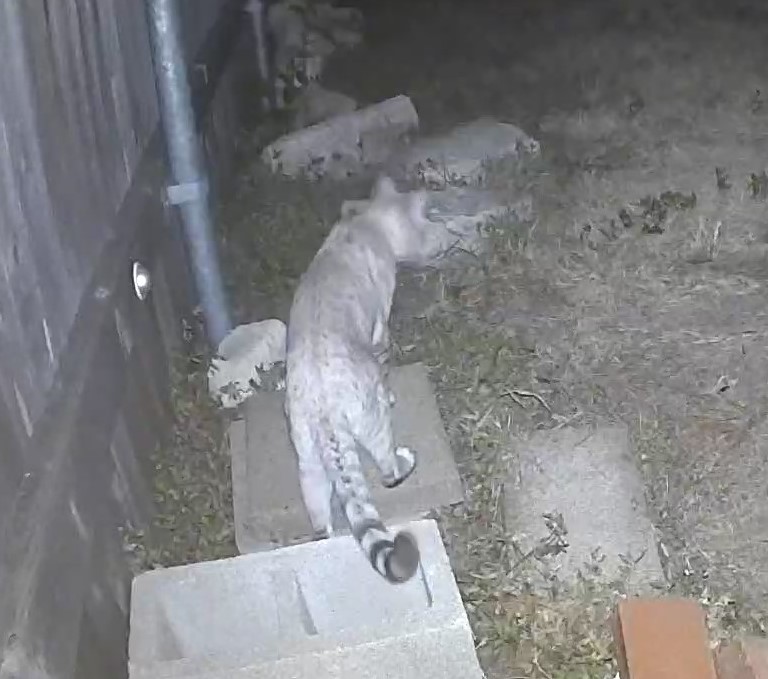
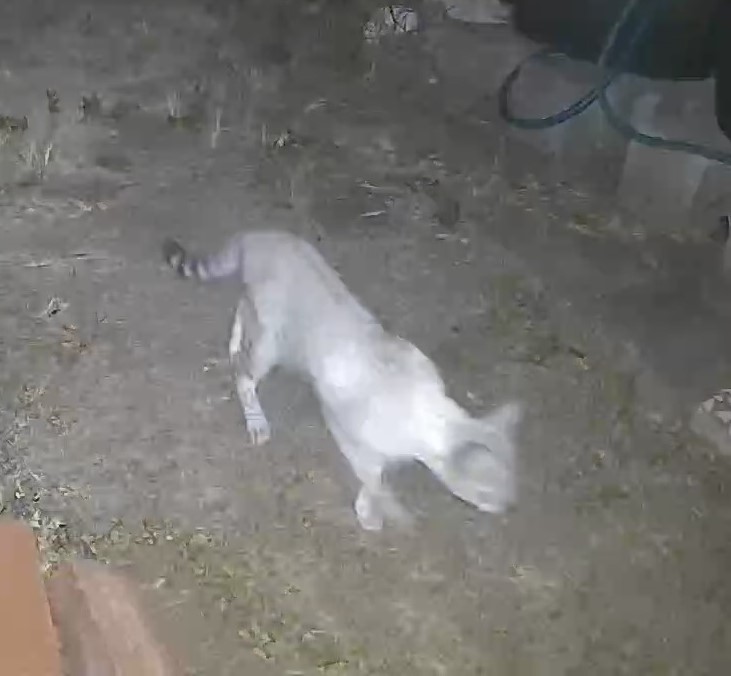
Our security cameras have photographed some interesting critters coming to our yard. We have recorded visits from opossums, coyote, rabbits, deer, rats, an owl, raccoons, a ringtail cat, and rodents. And over the years we have had neighborhood domestic cats appear on film, a few that we recognize as return visitors. But, on the night of August 18th, 2023 around 3:00 a.m., one of our cameras got triggered 3 times and recorded a most extraordinary visitor:
Cat 1 Still and Video
I had been hoping that one day we would record a bobcat or even a cougar. The first thing my excited brain said was “Bobcat!” But, then I realized that the tail was long.
Cat 2 Still and Video
Cat 3 Still and Video
After looking at my North American field guides and striking out, I went to the internet searching for small cats with striped tails and came across the website of the International Society for Endangered Cats (ISEC) Canada (WildCatConservation.org/wild-cats/asia/jungle-cat/ )
According to their site, I think it is something called a Jungle Cat (Felis chaus) native to Africa, India, S. Asia, S.E. Asia, and China.
There is another cat called an African Golden Cat (Caracal aurata) that looks similar.
I haven’t seen any notices of a lost exotic cat. I still need to check with local zoos. I did talk to my local Texas Game Warden and sent him the videos. My best guess is that it was an exotic pet that escaped. Our heat and drought have been intense and I imagine it slurped up some water from our pond and maybe nabbed a toad for dinner.
If any of you have a better i. d. for this critter, please let me know.
It is no news to any of you that this has been a really hot summer so far. Here in my Austin suburb our thermometer reads 100.6. I know it is even hotter in town. Any outdoor activities are pretty limited to evening and morning. No walking in the nearby greenbelt. I can’t even sit in the shade on my porch in the afternoon. We make sure we put out water for our little feathered friends and others. I am sharing a few photos of some visitors to our backyard. They are making my summer enjoyable.
I missed my slow walk this morning. I missed my slow walking friends, but right now it is too hot for me to be outside.
The Lady Bird Johnson Wildflower Center is visited by thousands of people each year. Young and old, locals and tourists, the people come to view the flowers and other native Texas plants. Trails wind around the 284 acres and people can move at their own pace. There are fast walkers that get their steps in and medium walkers moving from one patch of spectacular floral colors to the next. There are parents pushing strollers and kids running around the lawns in the children’s garden. And then there are the groups of very slow walkers. They can be seen in groups of 6 or more, huddled around a flowering bush, taking turns to get the best angle to get a good shot with their close-up camera lenses. Some carry binoculars that they point at the trees and grassy fields. These women and men are participating in the weekly Fauna Survey, finding, identifying and documenting all the non-plant life that call the Wildflower Center home.
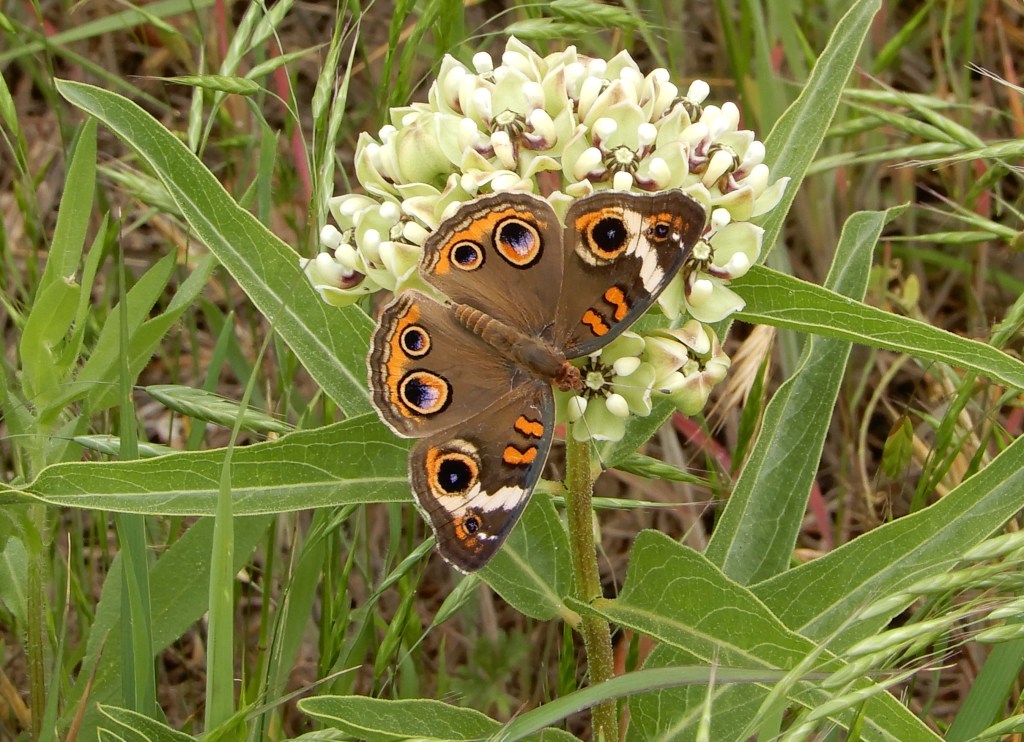
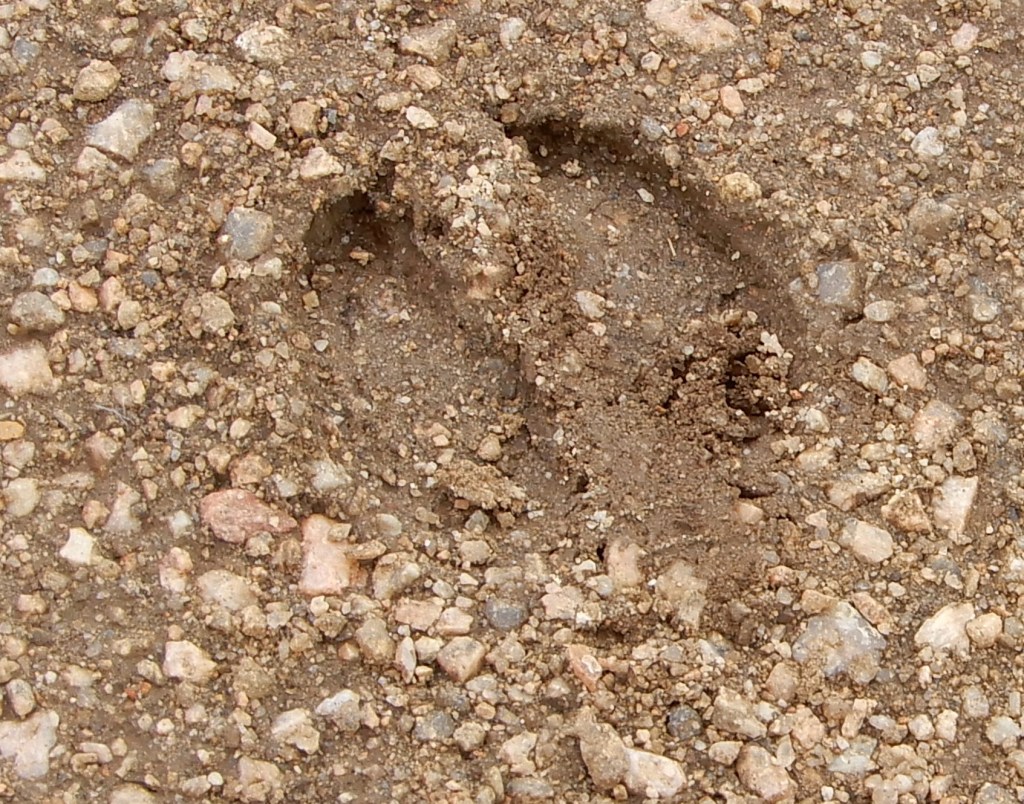
The Fauna Project is a weekly survey event led by Val Bugh (check out her website: http://www.austinbug.com). She has been at this since 2010 and has amassed quite a record of the bio diversity contained within this site. Her special area of expertise is entomology. The walking is slow because there is so much to see. At least every other plant will have a little insect on it doing something: eating another insect, mating, hunting, etc. Each survey is different. Here are some of my photos taken on the surveys so far this year.
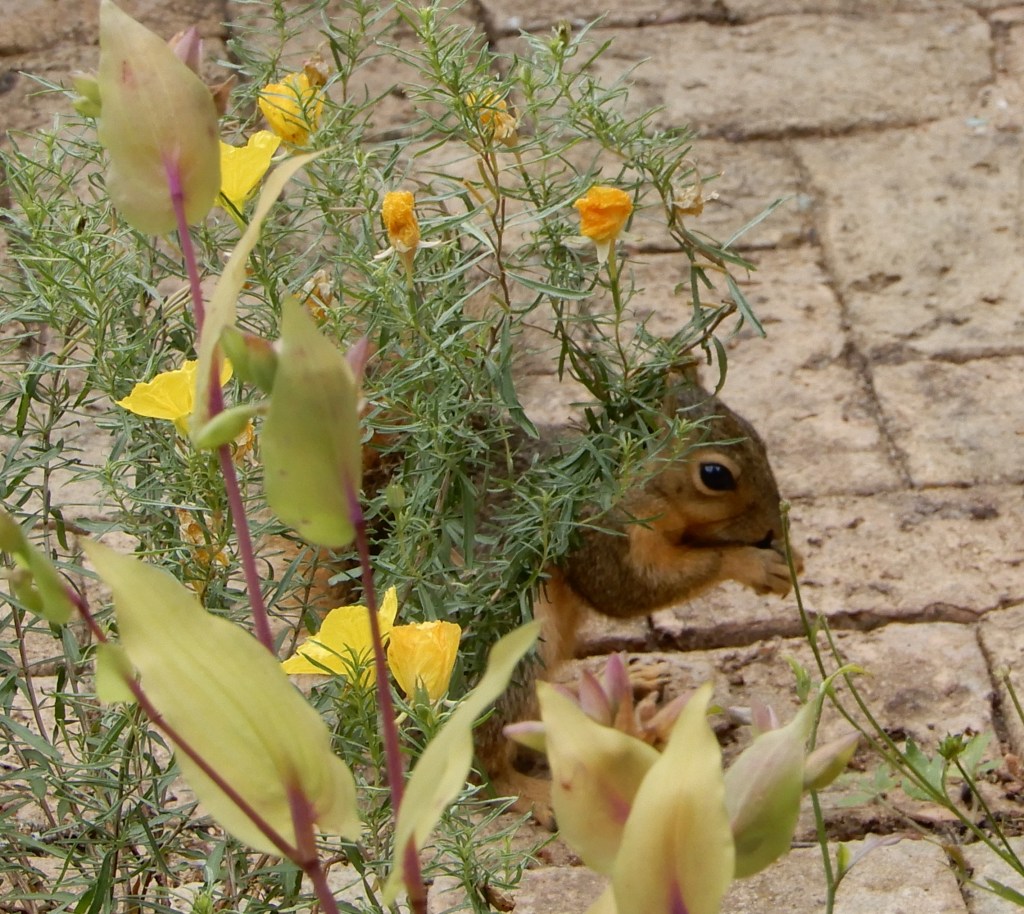
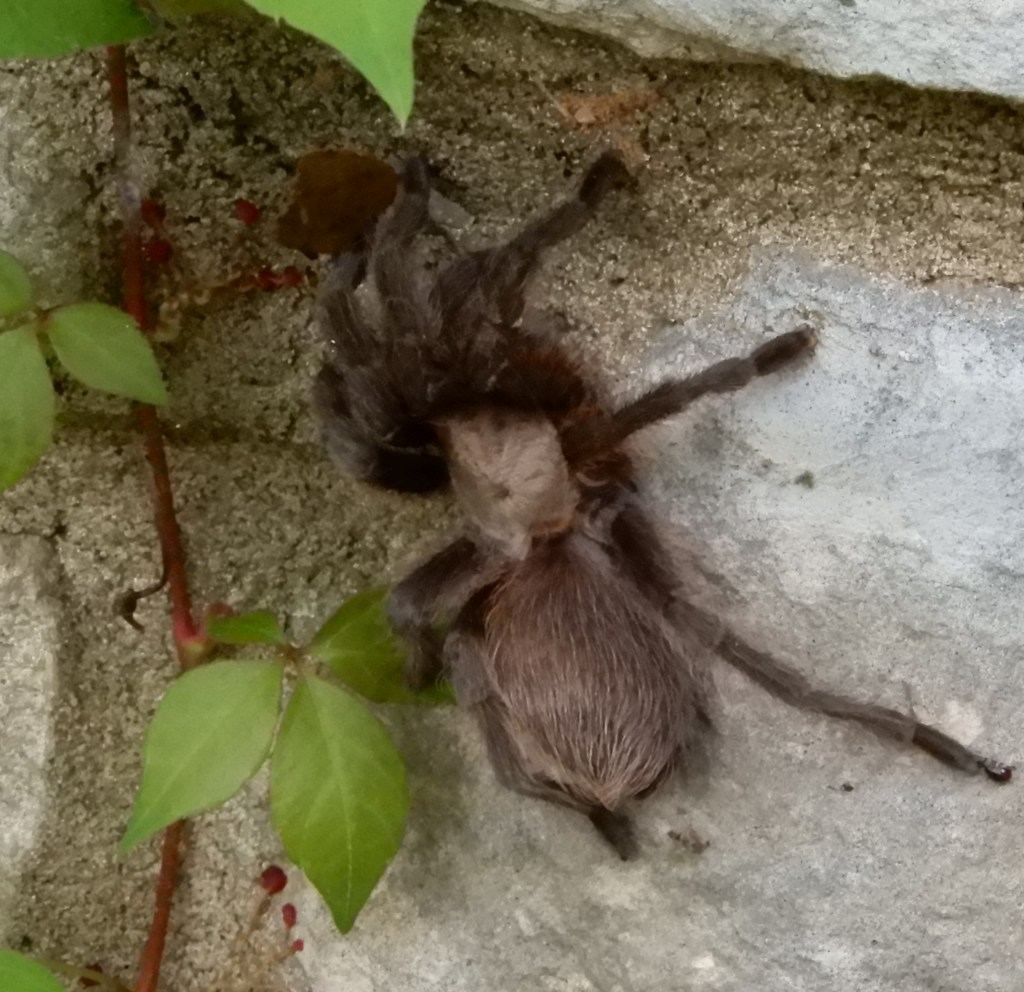
Red Eared Slider Turtle (February)Robin (February)Leopard Frog (March)Ribbon Snake (March)Great Horned Owl Mom On Nest (April)Fox Squirrel (April)Tarantula (April)Buckeye Butterfly On Milkweed (April)Juvenile Great Horned Owl (May)Texas Spotted Whiptail (May)Beetles On Thistle (May)Dragonfly (May)White-tailed Deer Print (May)White Eyed Vireo (May)Texas Spiny Lizard (June)Beetle (June)
So, get out and do a slow walk. You never know what you might find.
According to their website, the Lady Bird Johnson Wildflower Center is home to at least 1,800 insect species (93 of these are butterfly species), 148 bird species, and 15 mammal species.
Last month I shared my trip to the Texas coast. It was a much longed for getaway scheduled after the crowds of spring break and before the crowds of summer. It was just coincidental that this visit was during the peak of the spring bird migration. Ordinarily the Texas coast is a wonderful place to look for birds, but the numbers of different birds during migration make this a special time. And we happened to visit during a fallout…this is when bad weather conditions temporarily prevent the migrating birds from traveling on to their breeding grounds. I got a good look at many wonderful birds from rose breasted grosbeaks to indigo buntings to orange colored orioles. However, most of the photos I actually got were of birds that can be seen year around.
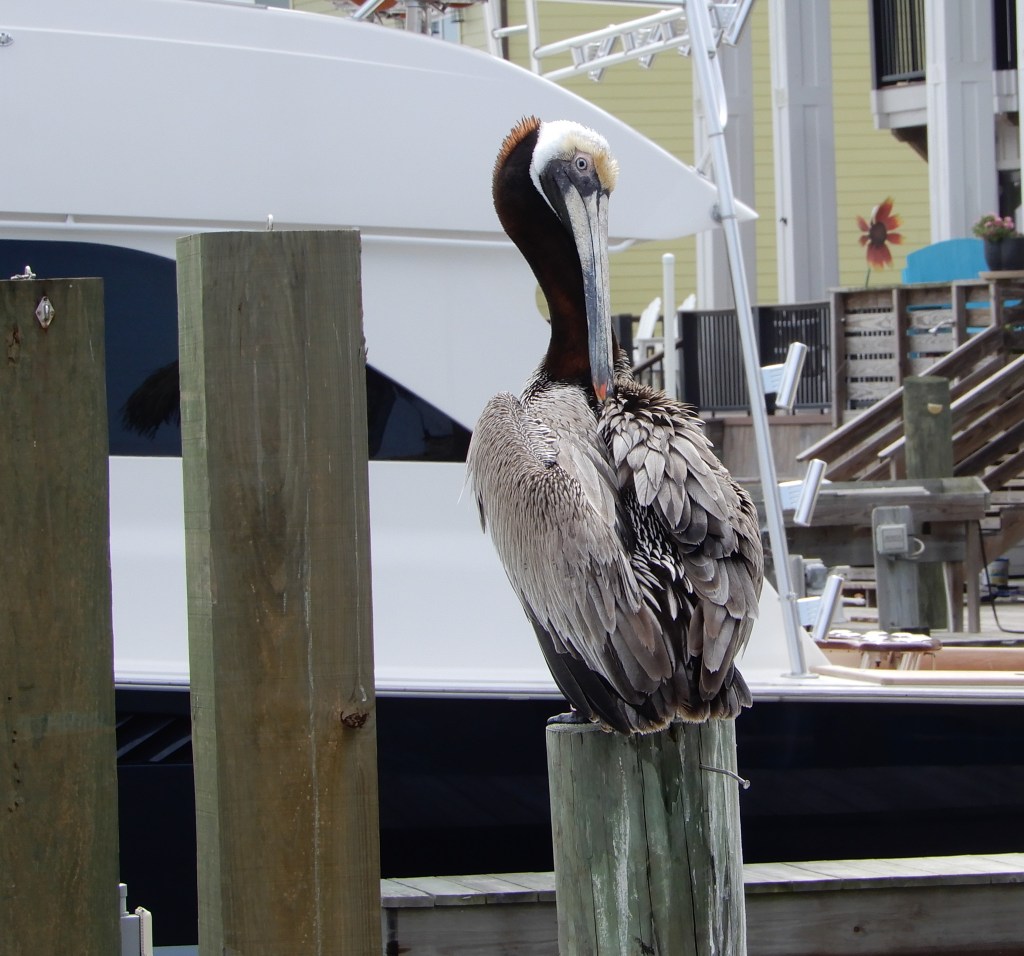
There were large birds…
Brown Pelican
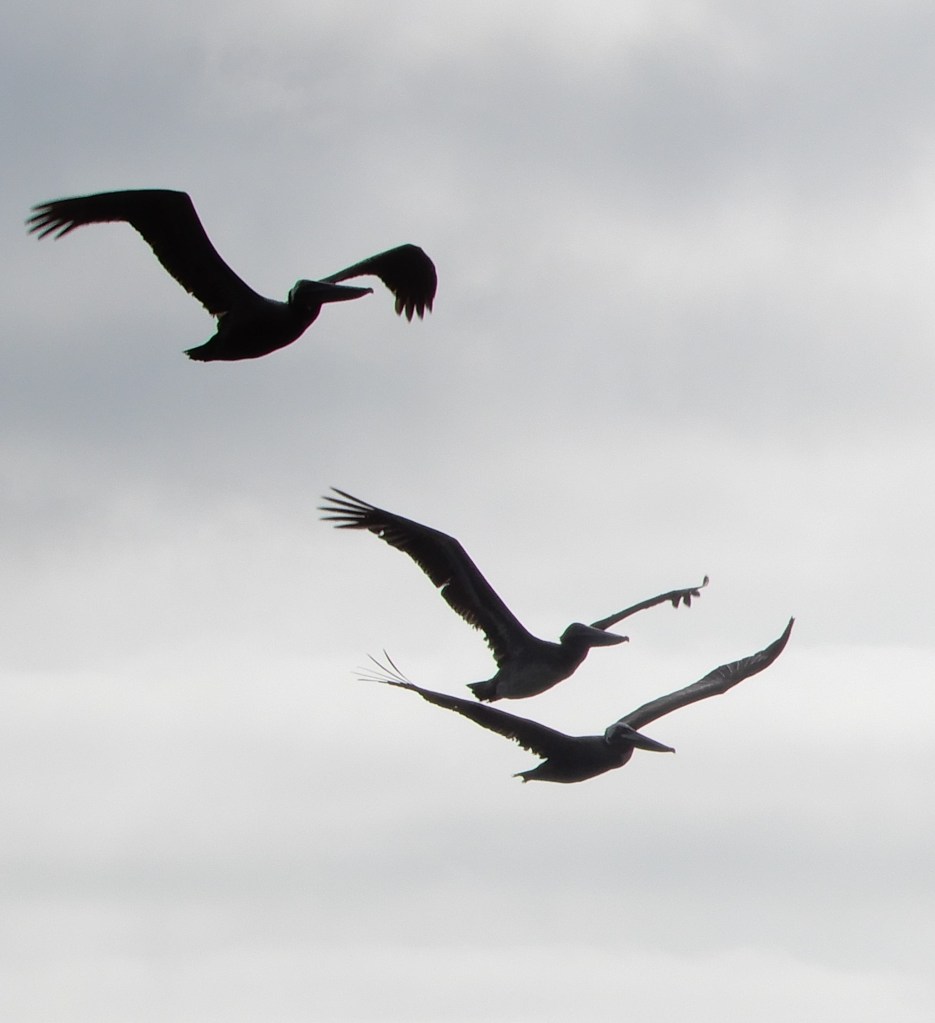
Birds flying…
Brown Pelicans
Birds flying in large groups…
Brown Pelicans
Birds with long beaks…
Tri Colored Heron
Colorful birds with short beaks…
Indigo Bunting
Delicate shore birds…
Stilt
And other types of flocks…
Birders at Leonabelle Turnbull Birding Center
Port Aransas has so many places to see birds from the beach to the ship channel to designated nature preserves. Birders can walk for a mile or so on some sturdy boardwalks at The Nature Preserve at Charlie’s Pasture and Leonabelle Turnbull Birding Center. A fun and short walk is at Paradise Pond, a small wetland tucked behind the Restaurant San Juan.
Lots of beautiful birds seen and perhaps a trip during Fall migration is in my future.
*Bonus bird seen on the way home- Wild turkey flew across the highway just north of Kenedy, Texas
During the Covid lockdown I longed for a trip to the Texas coast. But, we didn’t go anywhere and I felt beach deprived. I am making up for it now. Our first post lockdown trip to the coast was described in my January blog post, where I wrote about our visit to the Rockport area and the Aransas National Wildlife Refuge. Our second trip was this past week.
It is almost 252 miles from Austin to Port Aransas and usually takes us at least 4 -5 hours, depending on stops. We took our usual route from Austin down hi-way 183. But, instead of our usual bypassing of Gonzales, we decided to check out the Gonzales memorial Museum.
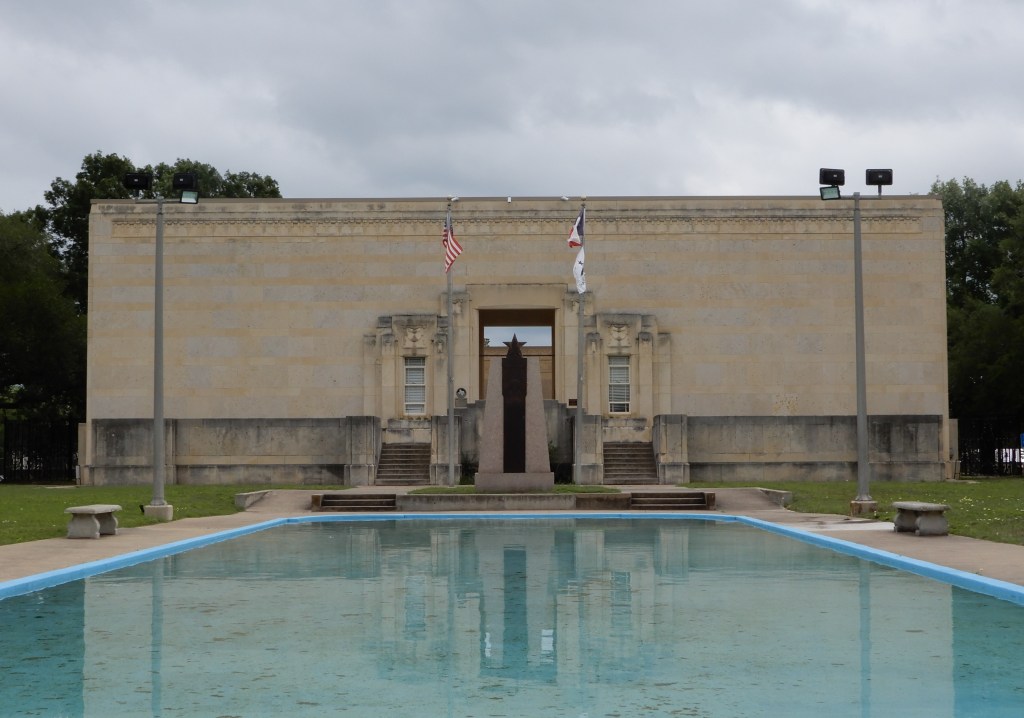
Gonzales Memorial Museum
It is a small museum with stories on the early and later pioneers of this area. But, the main attraction is a small cannon. This cannon was given to the settlers of Gonzales by the Mexican government for protection in case of attack by the indigenous people of the area. A few years later, in 1835, the Mexican government wanted it back. The people of Gonzales refused to give it back and voiced one of our iconic Texas slogans, “Come and take it.” In the Fall of that year, the little cannon fired the first shot of the Texas Revolution. I had never visited this museum before and was surprised how small the cannon is.
Then we headed on down the road to our usual stop in Goliad for lunch. We picked up burgers and fries at Whataburger and headed down the road to Goliad State Park. This is always a nice break to eat, stretch our legs, and do a little nature viewing. There are also several historic sites to visit. This trip we just ate and sat in the park.
Butterfly on Bloom, Goliad State Park
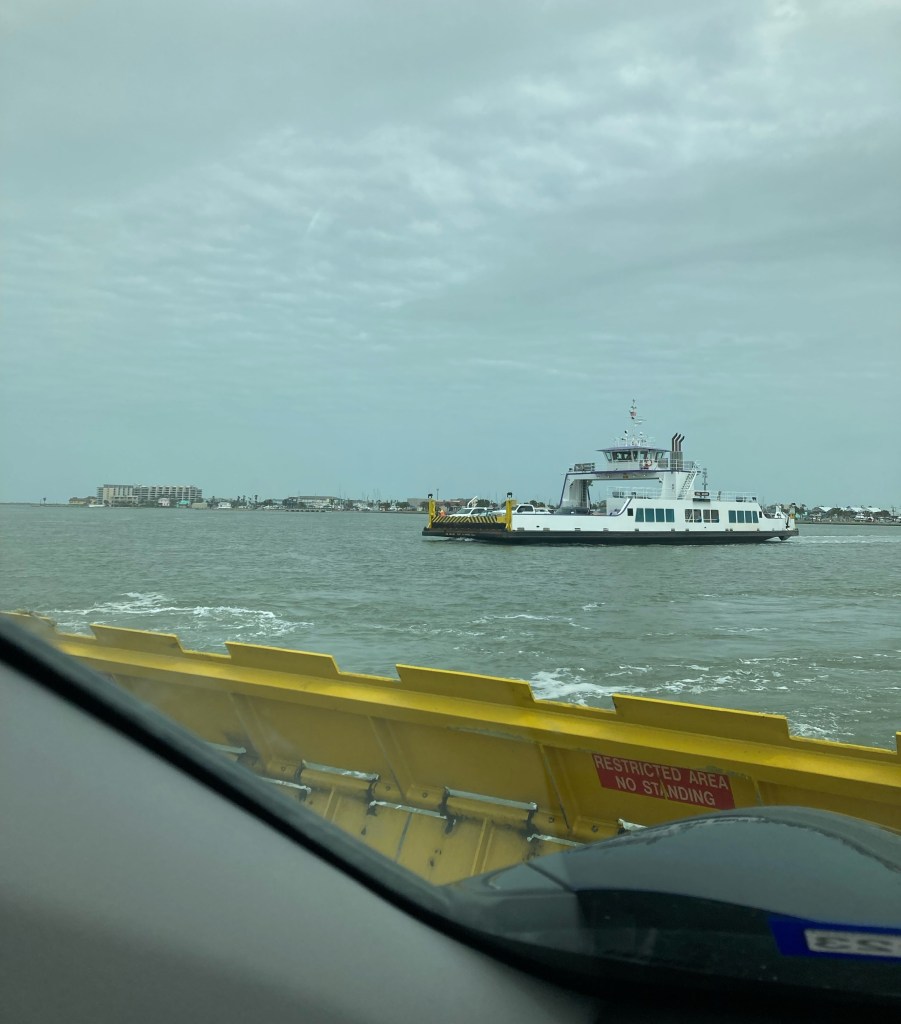
Continuing on, we arrived in Aransas pass and boarded the ferry to Port Aransas.
We picked up supplies of food and drink at the local grocery and headed a few miles down the road to our vacation rental. We spent three nights there. Here are several views from our balcony.
We walked on the beach, but the water was a bit cool. We didn’t go in past our calves.
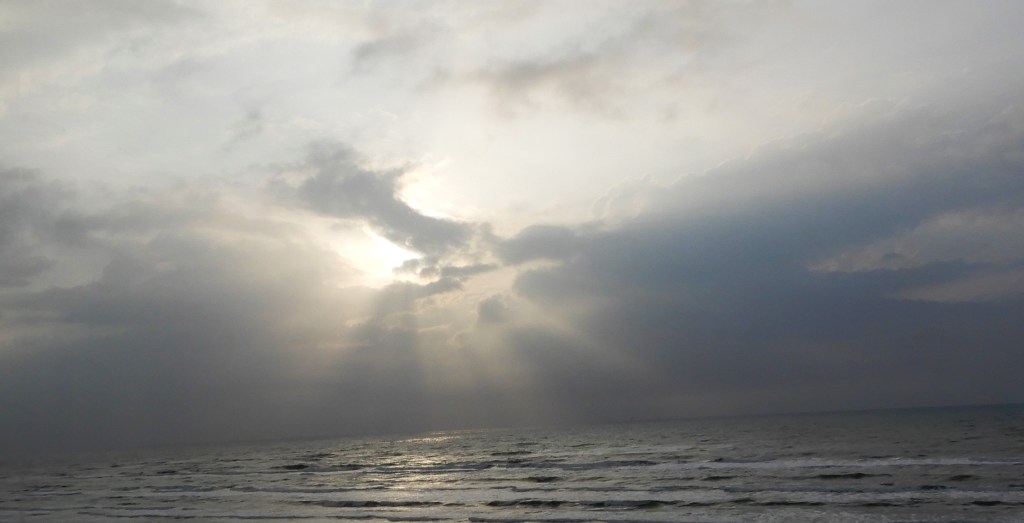
I love the sound of the Gulf surf and the cry of the laughing gulls. I love the feel of moist, salt spray on my face, the soft grit of sand between my toes, and the rush of waves over my ankles.
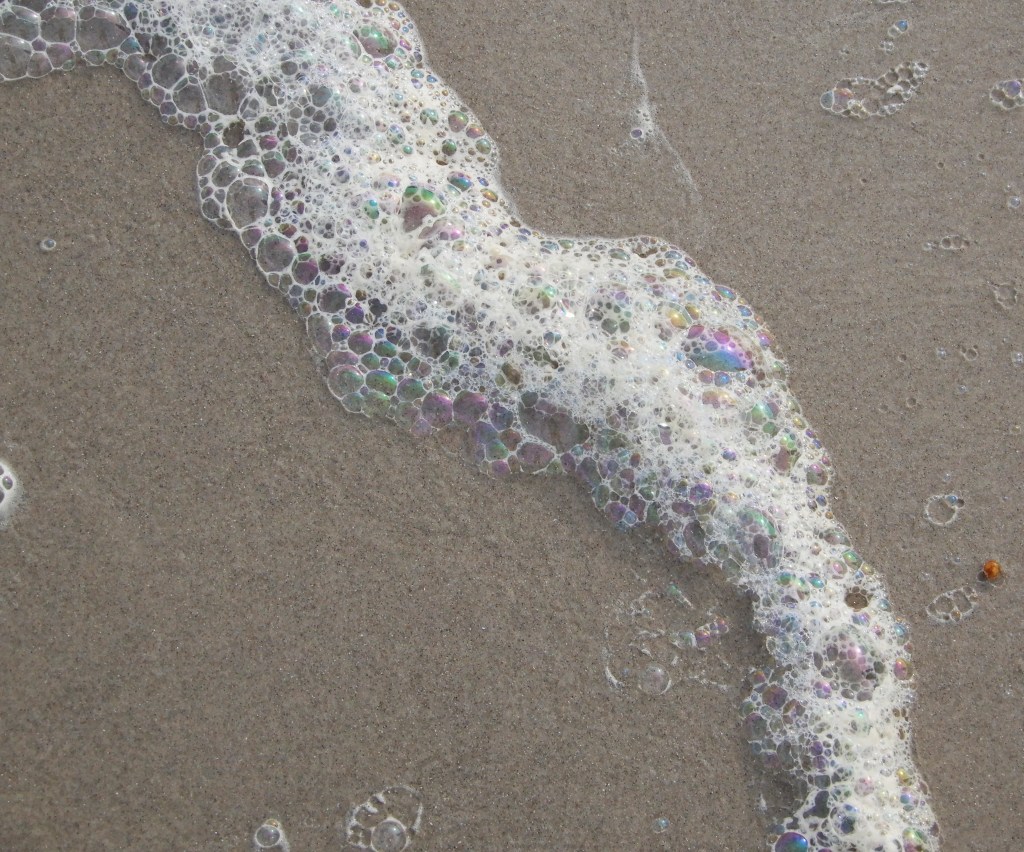
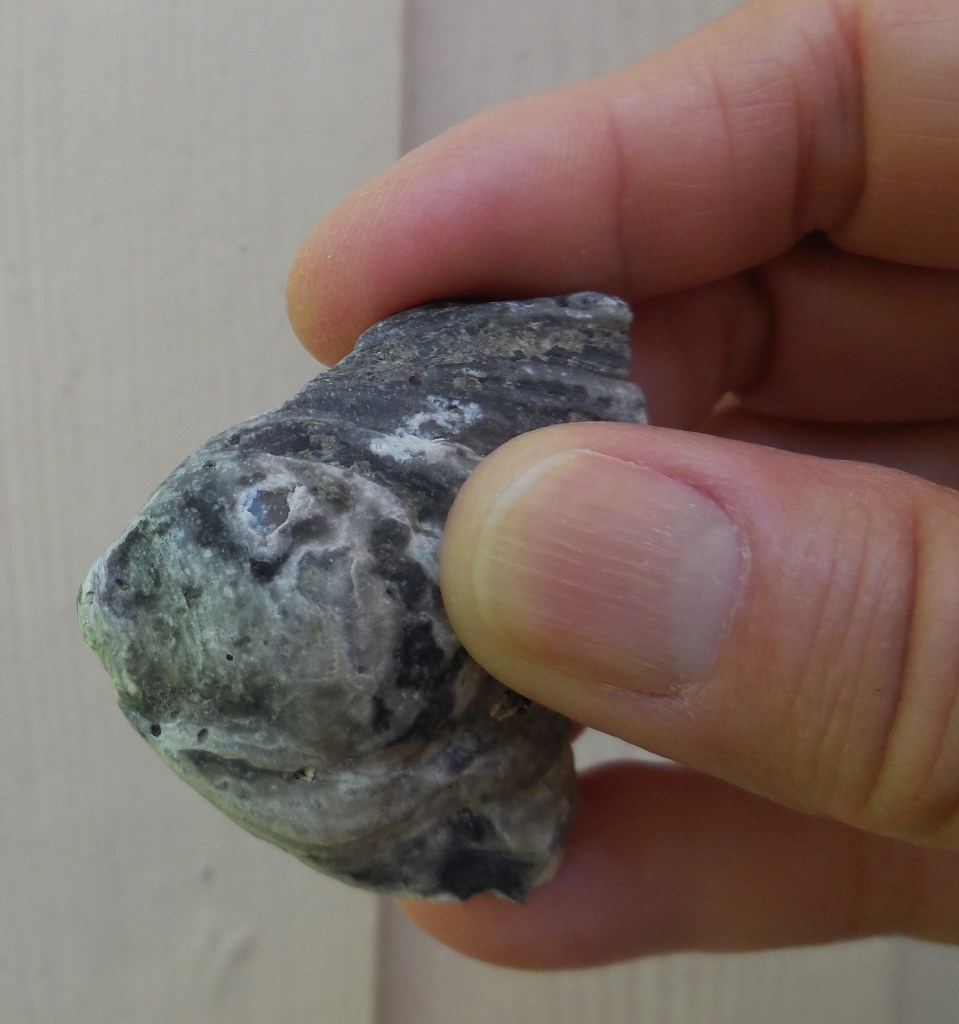
Sea FoamOyster Shell My Husband Found…Looks Like A Fish Head
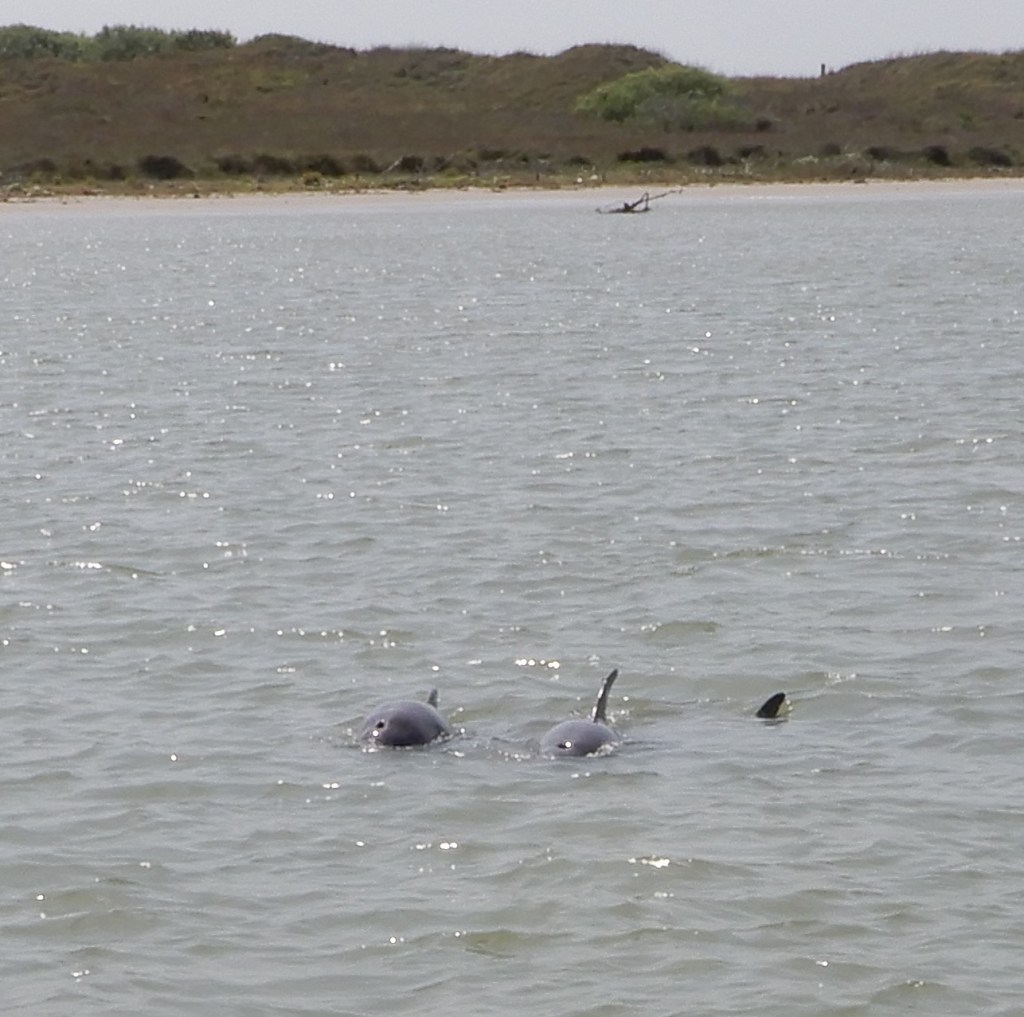
We took a dolphin watching cruise of the channel on The Scarlet Lady.
Dolphin Pod
Along our route was the oldest working lighthouse in Texas. It is privately owned.
Lydia Ann Lighthouse
I highly recommend this dolphin watching cruise. We saw lots of dolphins, birds, ships, and history.
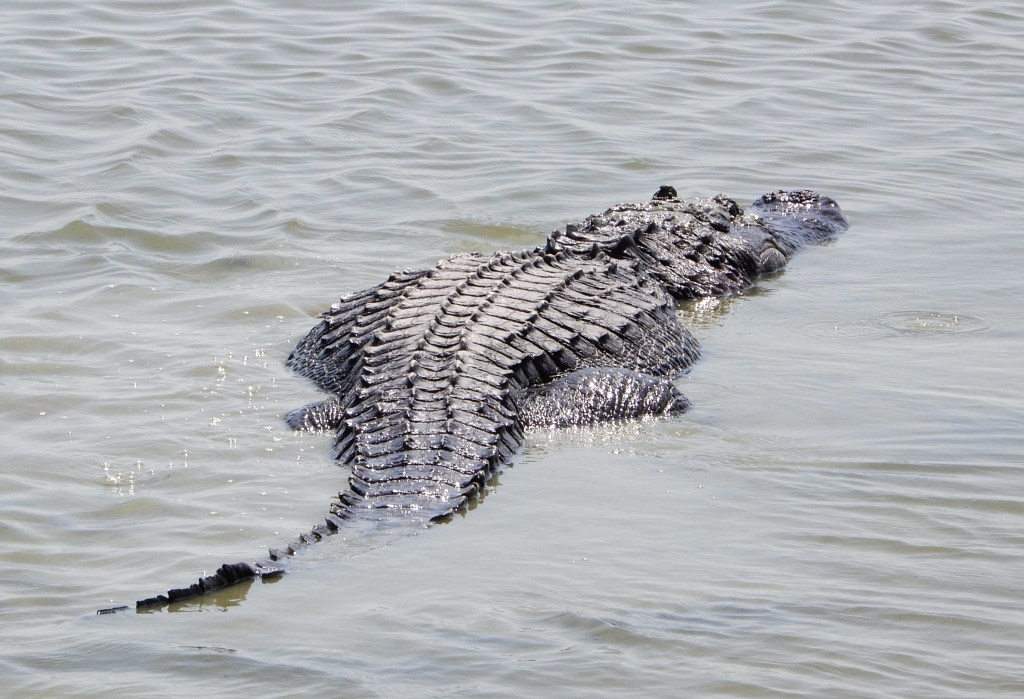
Another highlight of our trip was visiting the various nature trails and birdwatching spots in Port Aransas. A particular favorite is the boardwalk at the Leonabelle Turnbull Birding Center. On our last visit it was closed due to being destroyed during a hurricane. They have rebuilt and it is better than ever. Besides birds, one critter we look for is a large alligator. We don’t always spot it, but we were lucky this trip.
American Alligator
We decided to return to Austin via a slightly different route. We headed down the island to Corpus Christi. I wanted to visit the Selena Memorial at the Corpus Christi Bayfront Seawall.
Texas Historic Plaque honoring the 1966 Farmworkers March. The farmworkers were pressing for better wages and working conditions. They left Rio Grande City, Texas on July 5th and marched 380 miles to the state capitol in Austin. They passed through Corpus Christi on the way and arrived in Austin on Labor day where possibly 10,000 people rallied for the cause.
The memorial to Selena Quintanilla-Perez is not far from the farmworker plaque. There is a statue of her that is made of bronze and a plaque with words honoring her and a sculpture of a white rose, which was her favorite flower. The words “Mirador de la Flor” (Overlook of the Flower) are on the memorial.
This was our final goal and we headed north out of Corpus Christi, exited east and went through Beeville, Kenedy* and Nixon before rejoining hi-way 183 in Luling. We got back to Austin about one hour before a major thunderstorm hit. Good timing.
I am so grateful for a wonderful trip to my beloved Texas coast and for a wonderful traveling companion.
Gulf Morning
Photos taken by B. McCreary
*We stopped for lunch on the way back at a wonderful city park in Kenedy, Texas. Picnic tables, shade, playscape, clean restrooms. Saw an Eastern Bluebird there, mirroring my happiness.
My part of Texas is awash in wildflowers right now. In the past month I have taken numerous trips to Austin’s Lady Bird Johnson Wildflower Center to walk and to marvel at the bounty of Spring. So much beauty to ooh and aah over, especially our Texas Blue Bonnets.
Texas Blue Bonnet
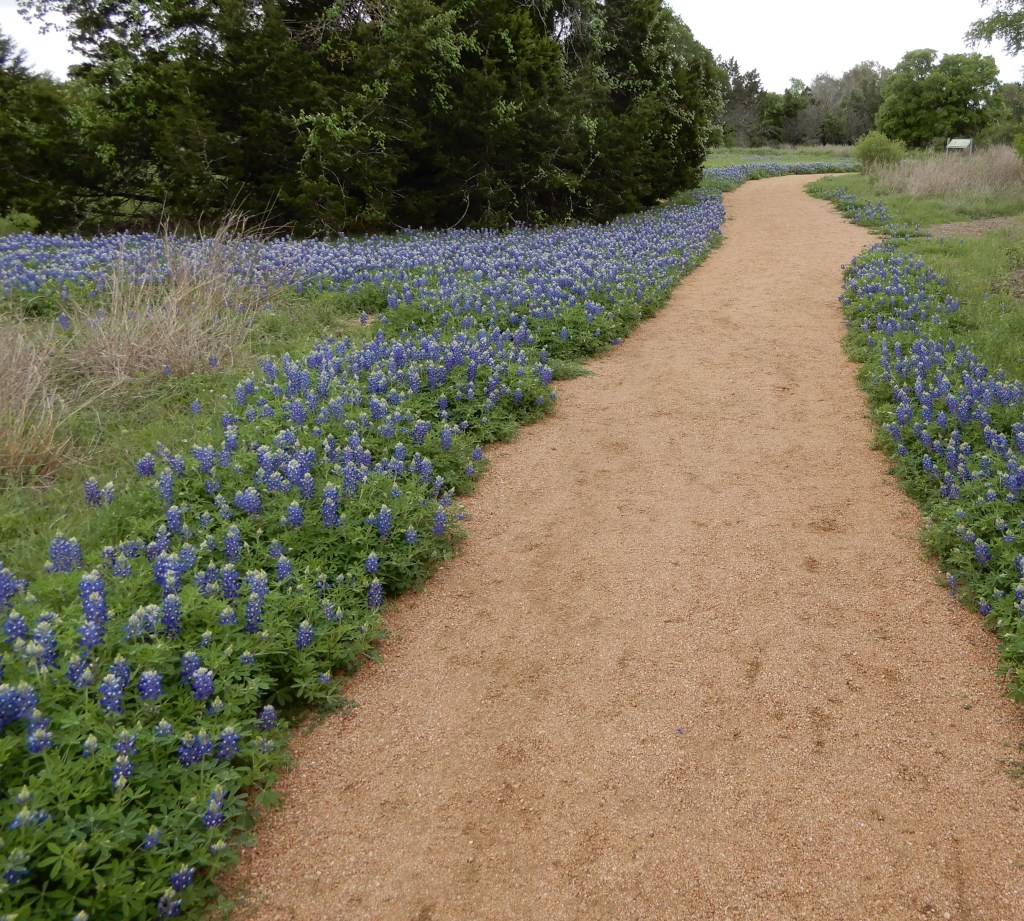
On some of the outer trails my eyes are drawn to the large patches of blue. I am reminded of our ubiquitous Blue Bonnet paintings.
Trail At Wildflower Center
Go to an art gallery showcasing Texas landscape art and you will find paintings of Blue Bonnets…Longhorn cattle in Blue Bonnets…barbed wire fences and Blue Bonnets…old trucks and Blue Bonnets. These have been popular for years and they sell well. People ooh and aah over them. Somewhere there is probably a painting of a T-Rex in a field of Blue Bonnets.
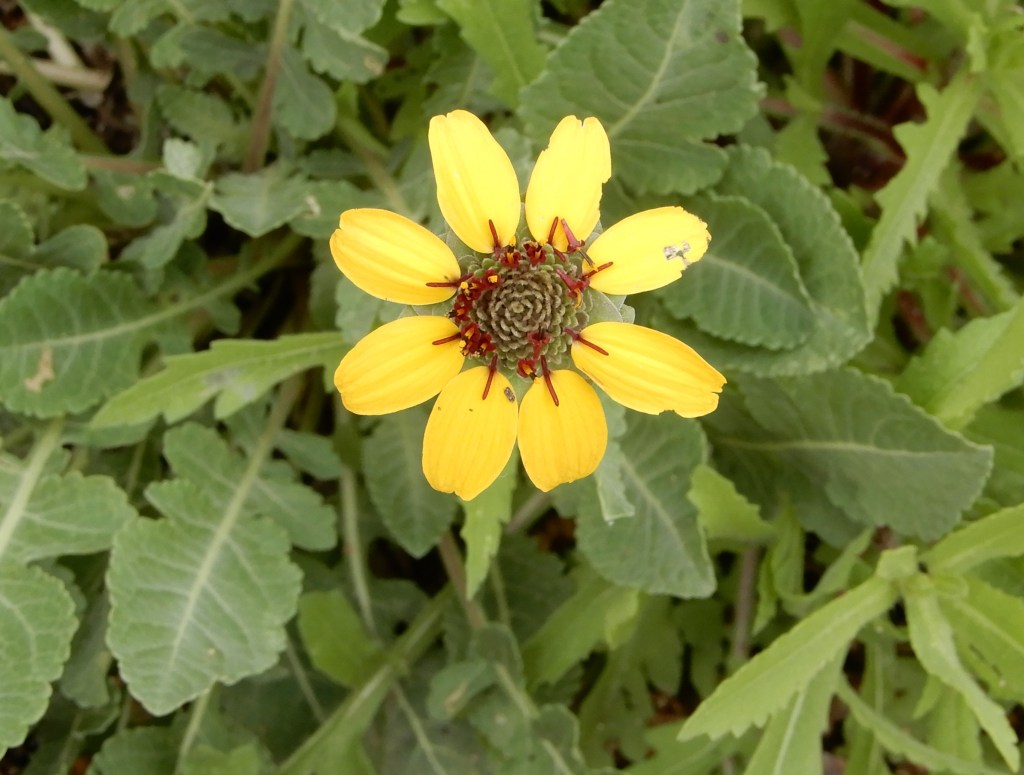
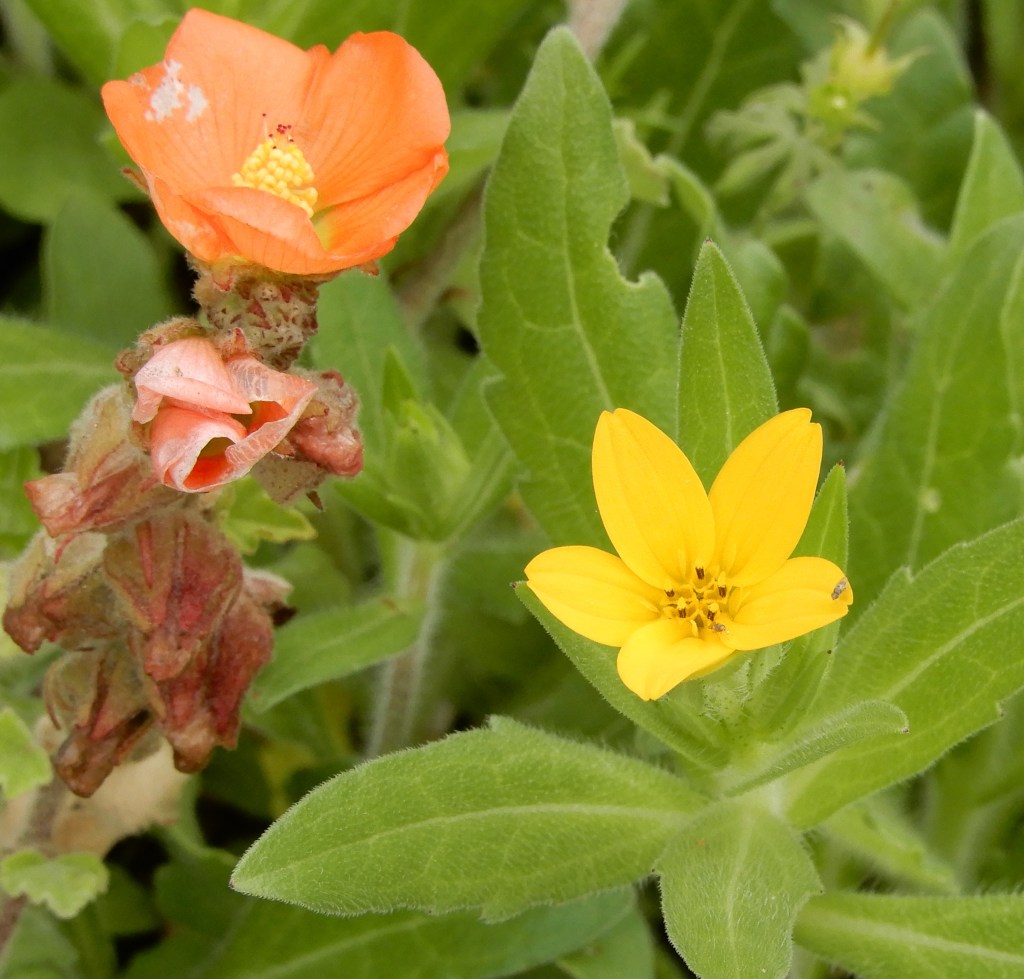
And then there are the photos. People trample swaths of these flowers to pose their children and dogs next to them. The Wildflower Center does have a couple of designated areas where visitors can pose with the Blue Bonnets without destroying them. I have done this myself with family and friends. They are pretty, but this kind of gets boring after a while. I seek out the other flowers sprinkled among and near the blue ones. The real Texas landscape has many kinds and colors of flowers. Every color you can imagine.
Tansy Aster (?)Chocolate Daisy (leaves smell like chocolate)Orange Mallow and Texas Yellow StarTexas Paintbrush With Other FlowersTexas Paintbrush and Blue Bonnets
Variety is the spice of life. Each living creature adds to the beauty of the world. I like to think of each human as an individual flower with a unique beauty. What if, in our urban and suburban landscapes, we celebrated the diversity of the people we see as we walk through our towns and shop in our stores? What if we oohed and aahed at the beauty of each person? It might be a bit weird if we did this out loud, but we can do this inside ourselves. And maybe we would greet them with a smile and the world would be a better, more loving place…at least for that one day for those people…the admired and the one admiring.
(I was going to subtitle this month’s blog “Pollyanna on her soapbox with pretty pictures”…I do believe each of us who model this sort of love for our fellow creatures can influence others. )
Texas Paintbrush and Blue Bonnets
*(All photos taken by the author at the Lady Bird Johnson Wildflower Center except for the last photo which was taken at McKinney Falls State Park)
Back in August 2021 I wrote some free flowing words to describe a trip to the Texas coast in 2013. In August of 2021 Covid was keeping us home and one of my travel fantasies was going to the beach. And it was not just Covid. Our aging, ill dogs kept us home. We finally headed out a few weeks ago, January 10th, for a 2 night stay away. This time our destination was Rockport and further. Our goal was to enjoy nature and see the wintering Whooping Cranes and scatter some of the ashes of both our dogs.
Rockport is only 200 miles from Austin (about a 3 and 1/2 hour drive), but in my pre-trip brain it seemed far, far away. I get anxious before any trip, but once on the road most of my anxiety dissolves. I like to head out the door and get out of town. But, first, we had some delays. I had a dirty windshield and no wiper fluid…trip to store to get that. Had to pull over on the outskirts of Austin to deal by cell phone with a company in another city about being guarantors for my daughter’s first apartment. This took a long 20 minutes of my husband giving them lots of information. Finally, we were headed south on highway 183. Then road work south of Cuero…one lane only with pilot cars guiding us through.
Picked up Whataburger burgers for lunch and ate those in Goliad State park, our mid point break. Got to stretch here and start the birding portion of our trip. Meadowlarks, phoebes, vultures, warblers and little sparrows.
Made it to the Holiday Inn in Rockport where we would spend 2 nights.
The next morning we headed out to the Aransas National Wildlife Refuge. The refuge is 48 miles from Rockport and much of the trip is a drive around plowed, barren winter fields. It was windy that day, not ideal for birding. But, we saw quite a few interesting critters, some from the car and some from walking the numerous trails. Here is the first one I took a photo of:
American Alligator along the Rail Trail
At Jones Lake we saw these beauties:
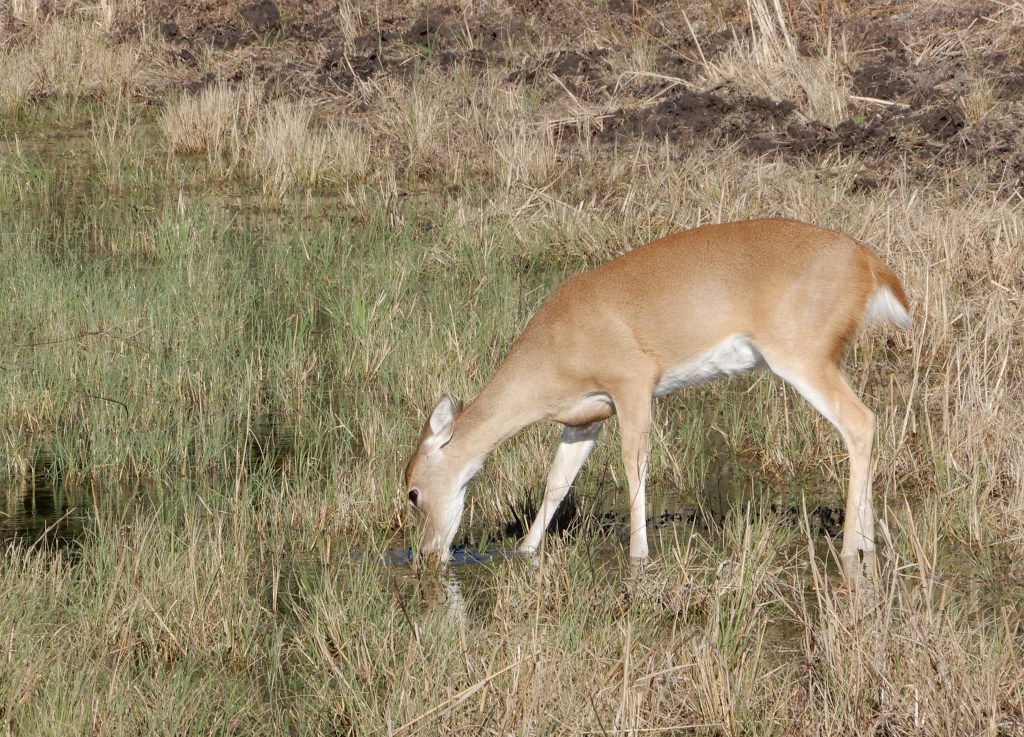
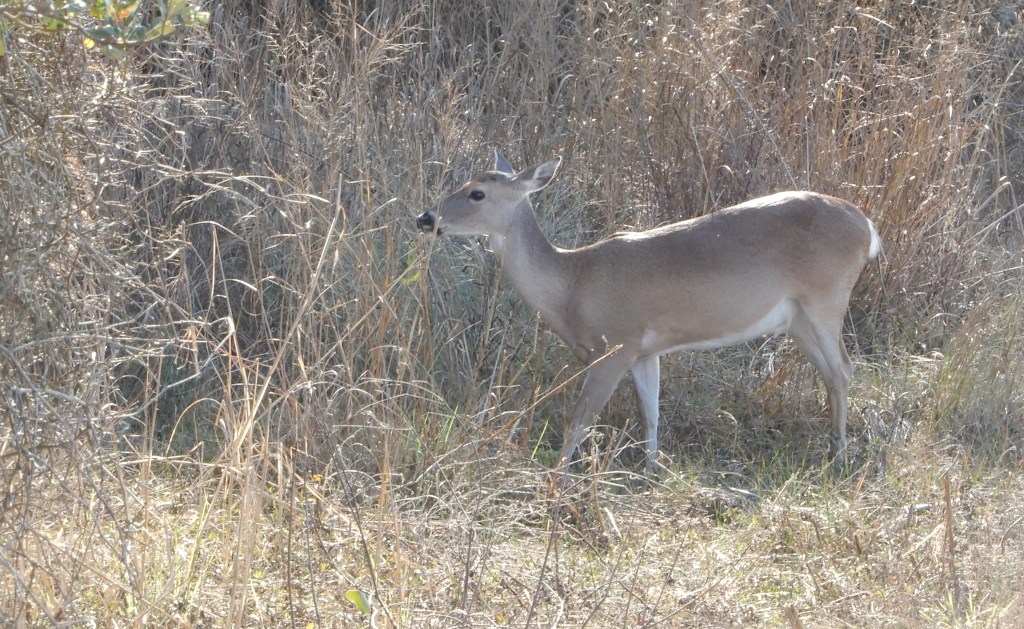
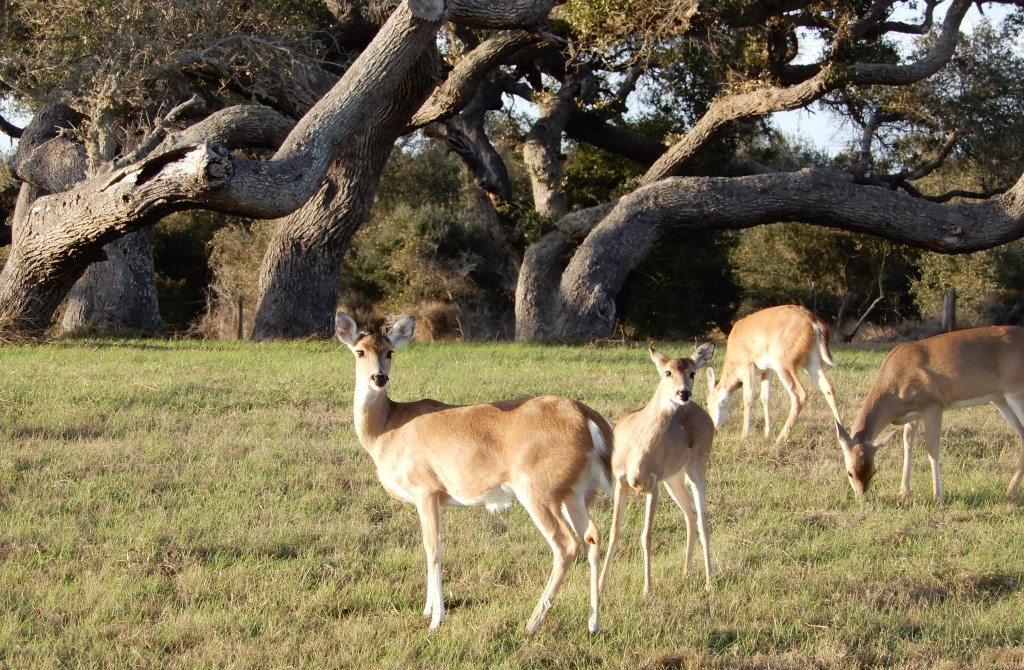
White Tailed DeerWhite Tailed DeerAnother White Tailed Deer
Further away, we spotted a few more White Tails amongst quite a lot of feral hogs. The two species of mammals seemed to be getting along just fine. I had never seen deer and hogs together and thought the hogs would be too aggressive.
We saw a variety of birds: lots of Black vultures; some Turkey vultures; Great blue herons; Snowy egrets; Great egrets; Little egrets; Osprey; Red tailed hawk; Grebes; Moorhen; Pelican; Terns; Kestrels; Ducks; Caracara. We checked out the observation decks searching the marshes for Whooping Cranes, but only spotted one, a tall white dot far in the distance. Several other visitors told us they had seen Whooping Cranes at Goose Island State Park in Rockport and we pondered checking it out.
On the 9 mile Auto Loop in the Refuge (one way only), we saw something new for both of us. There were a handful of Black vultures bathing in a marsh. Who would ever think seeing vultures bathe would be a treat?
Turkey Vulture
As we prepared to leave the park, we stopped and walked out onto a pier over San Antonio Bay. Here we let go of our beloved dog’s ashes, mindful of the wind.
San Antonio Bay
Leaving the park we saw more deer:
White Tailed Deer Near Park Headquarters
We had a hearty meal that evening at The Boiling Pot. The waiters cover your table with butcher paper and dump your dinner in a pile in front of you. Shrimp, sausage, corn on the cob, and usually crab, which they were out of that night. We took the offered plastic bibs and made a mess eating with our fingers.
The next day we decided to check out Goose Island State Park before we headed home. We got out of the car and walked around The Big Tree. Experts think it is 1,100 years old and huge (my photos didn’t do it justice). We drove around the park and saw deer, numerous birds, and people fishing, but no whoopers. We drove back to the park entrance and my husband went in and asked the ranger where the whoopers might be seen. She told him exactly where to see them, just outside of the park. And find them we did. The closest I have ever been to them (but not close enough for good photos with my little camera). And they weren’t just standing and walking like I had seen from afar in the past. Some would fly to a different area of this private property. There were at least 3 juveniles among them. Sandhill cranes, Egrets, and Herons were nearby. It turns out that they love this property because of the deer corn feeder.
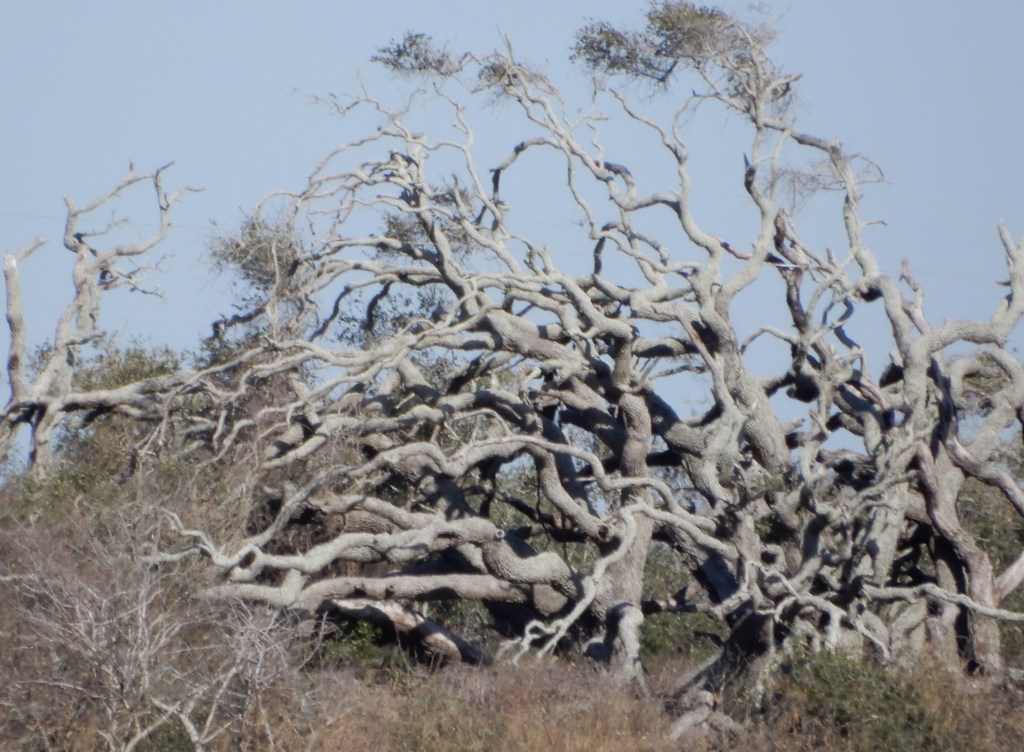
Whooping Cranes in RockportWhooping Cranes and Sandhill CraneInteresting Trees Behind Whoopers
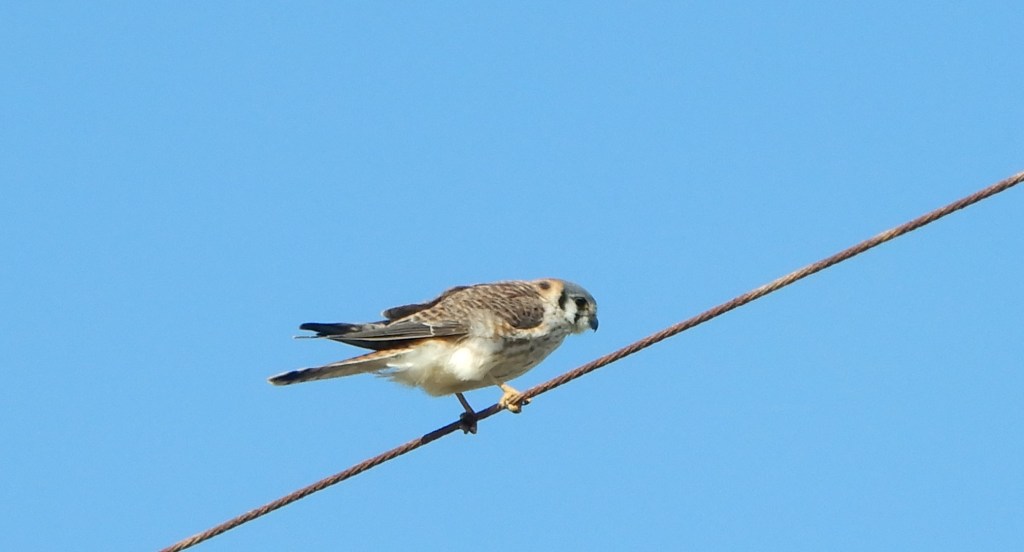
And a Kestrel on a wire nearby:
Kestrel
So, a good get away for us. We came home refreshed and renewed. Two weeks later we are sick…my husband has Covid and my head feels stuffy and I am tired (my Covid test was negative). And, Yes, we have been fully vaxed and boosted.
According to The Austin American-Statesman newspaper, we had 21 days of at least 100 degree highs in June, including 12 days in a row of this nastiness. We got a break late Monday the 27th with some much prayed for rain. Yay! I can now sit comfortably on my shaded porch and enjoy my coffee and read. It is still hot, but bearable.
As I get older I do not handle the heat as well as the younger me could. And our summers are getting hotter. June was not all bad. The beauty of nature carries on and helps me carry on. It sustains me. Here are some photos from my yard taken this month:
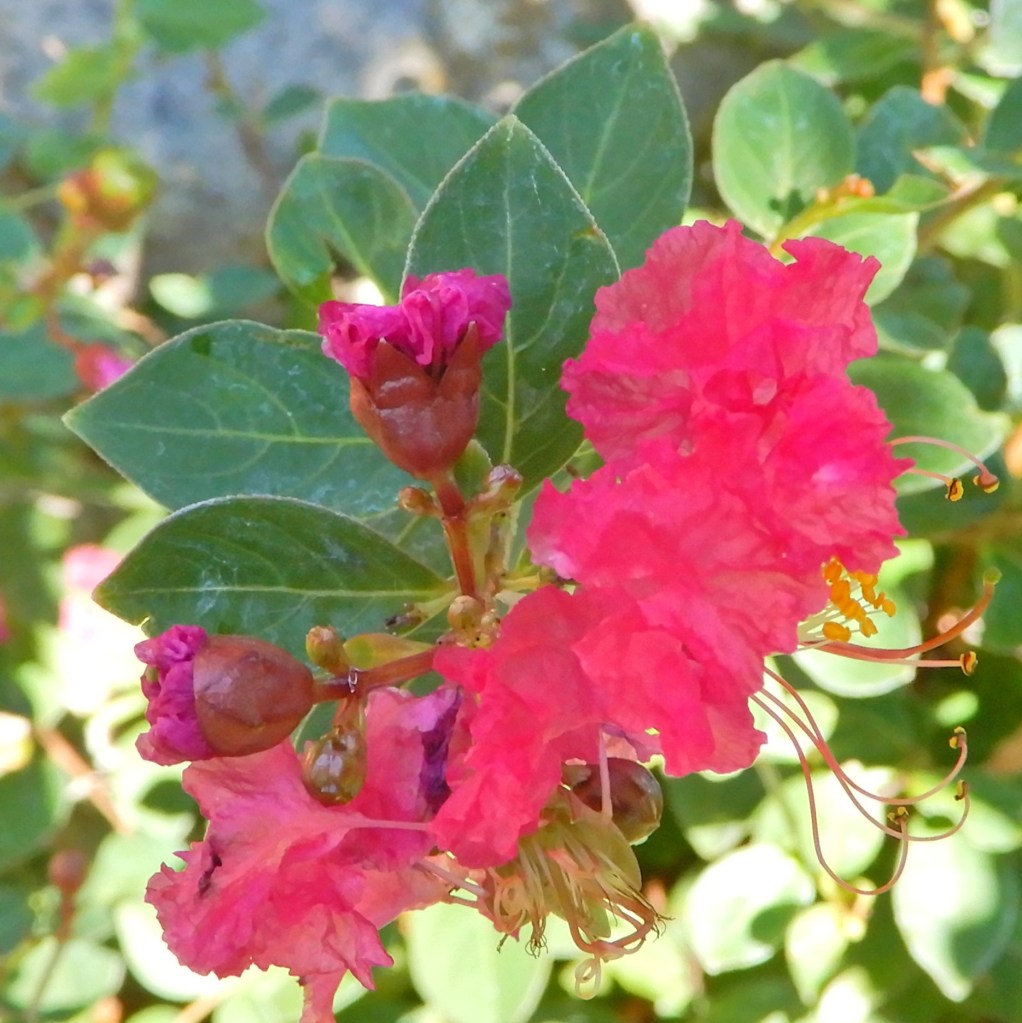
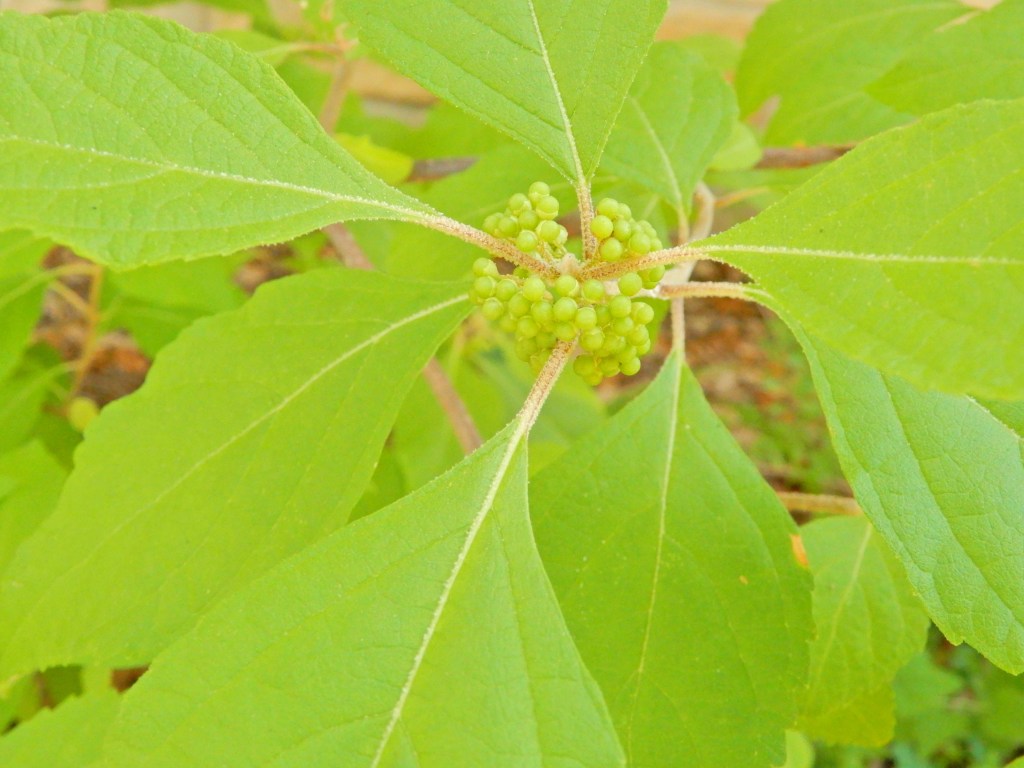
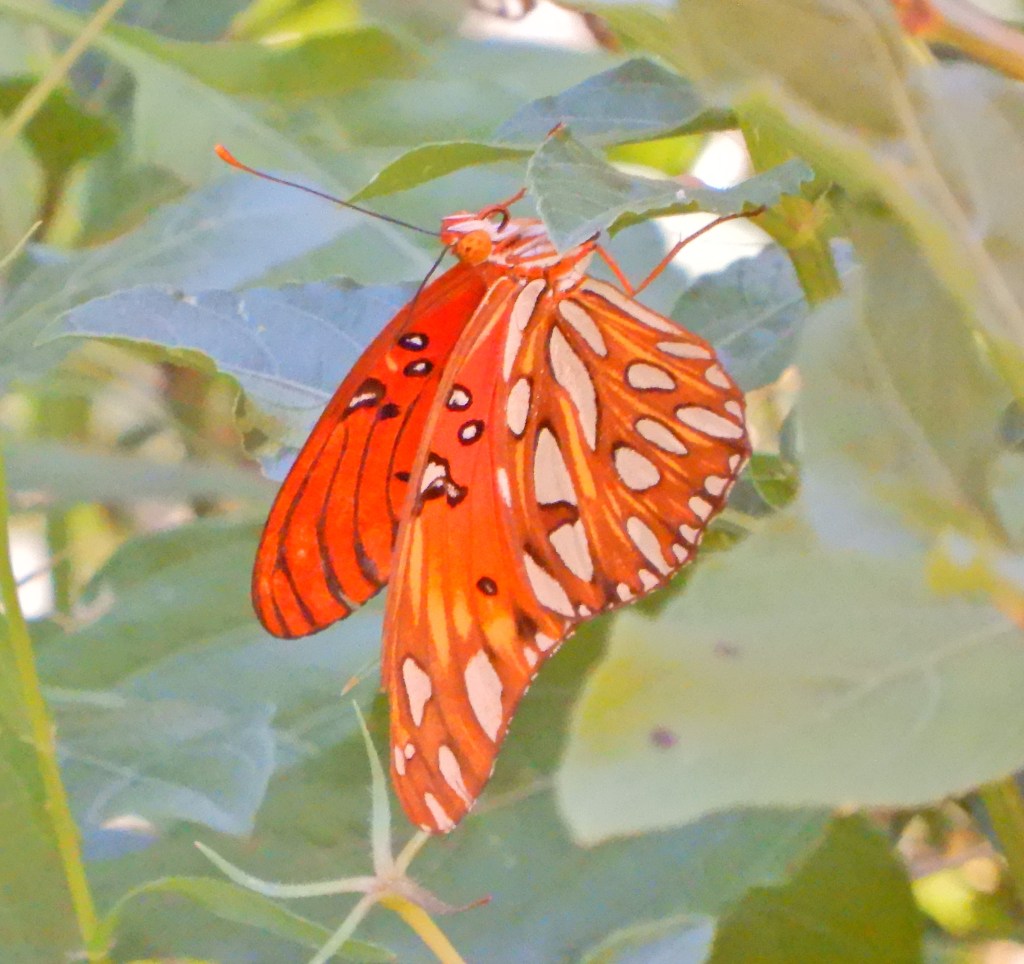
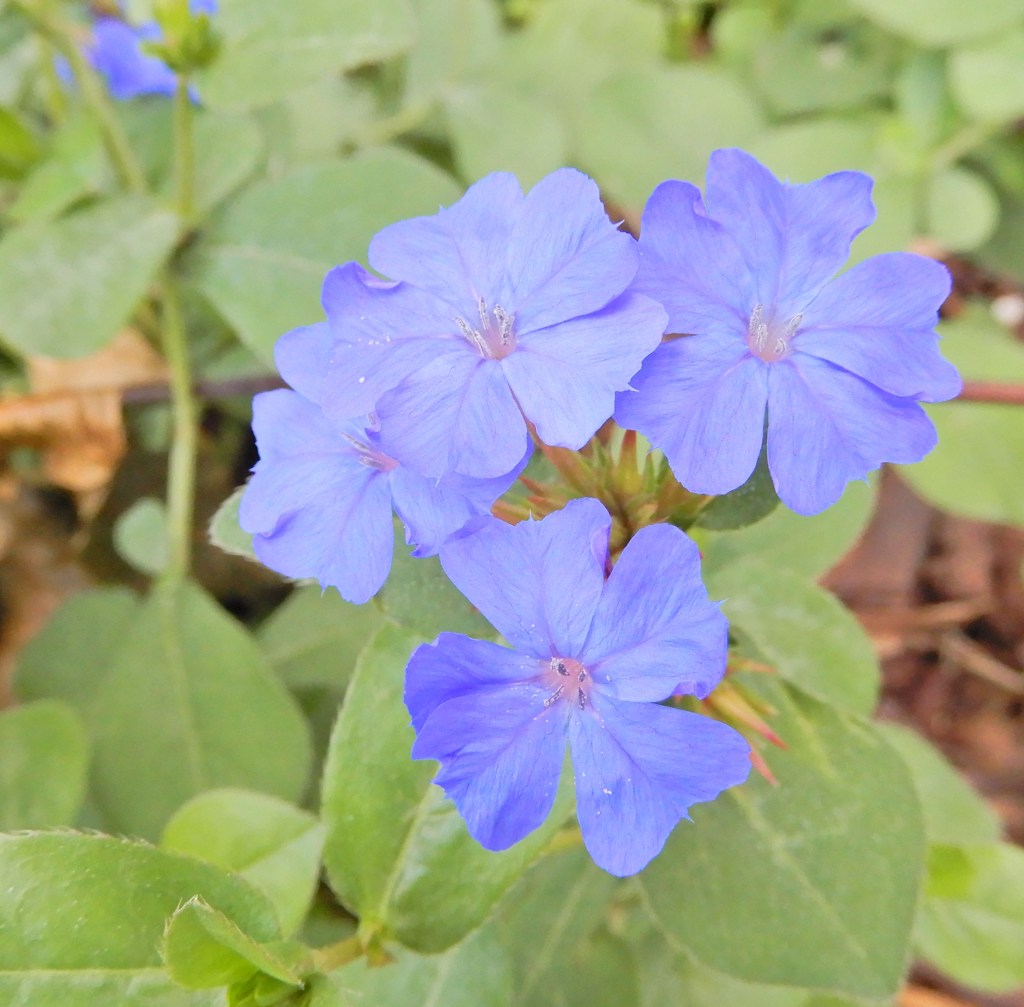
Water LilyCrepe MyrtleTurk’s CapRock RoseBeauty BerryPurple Blooms (id unknown)Mexican PetuniasGulf Fritillary ButterflyCrab Spider on Pokeberry BloomsMint BlossomsEnglemann’s DaisyLittle Blue Flowers
I want to express my gratitude to Mother Nature for sharing this beauty.
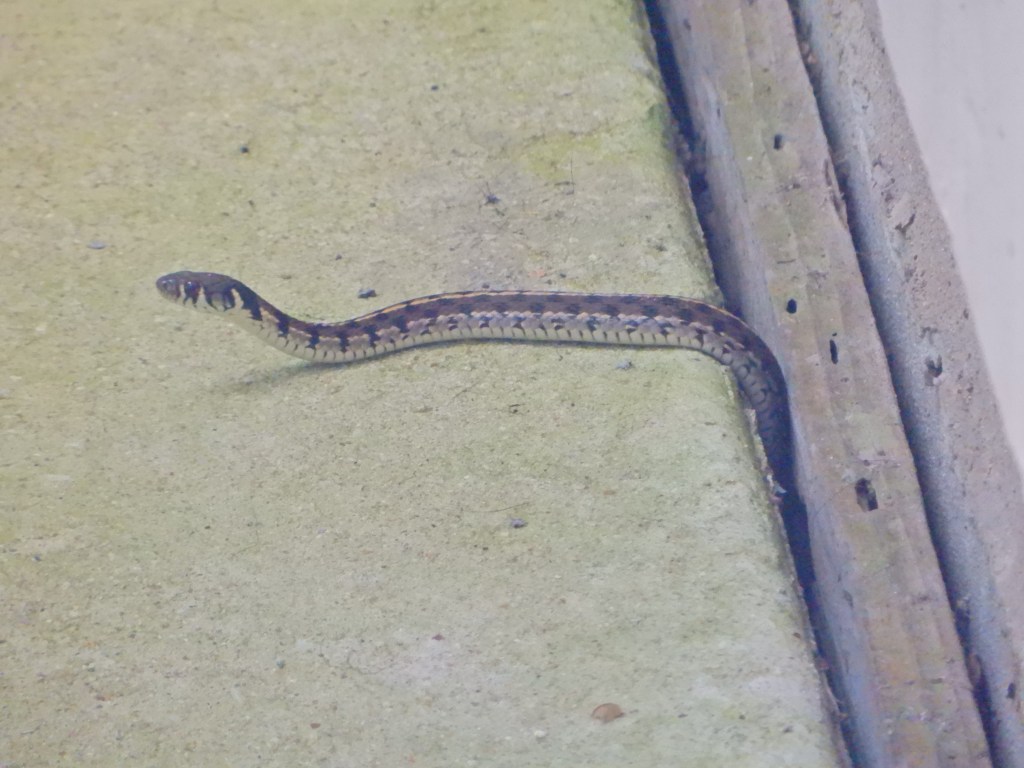
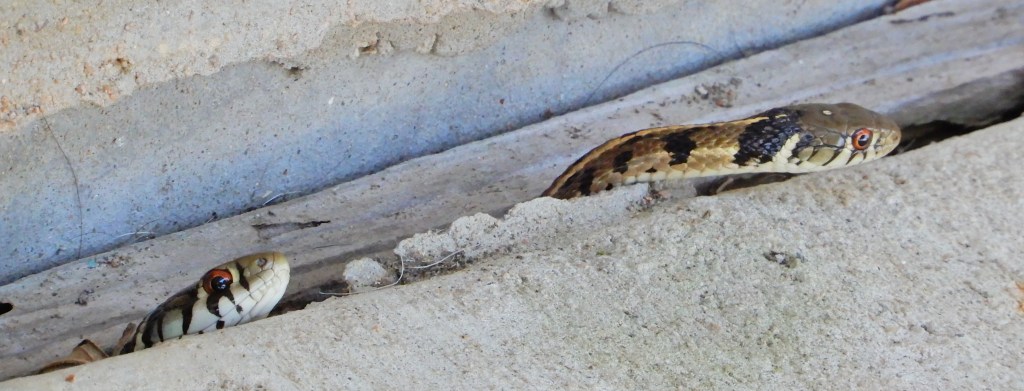
Could these little guys be the offspring of the snake in the previous photo?
Same Snakes (3-28-2022)Another Eastern Blackneck Garter Snake (June 2021)
Eastern Blackneck Garter snakes ((Thamnophis cyrtopsis ocellatus) are nonvenomous although they may nip and release some funky musk when threatened. They eat small frogs, toads, and tadpoles. We have a small pond in our back yard and that is probably why we get the privilege of their company. They are diurnal and their adult size ranges from 16 to 43 inches (the latter being a record size). They give birth to live babies, maybe as many as 9.
I know a lot of people find snakes frightening, but to me they are beautiful examples of Nature’s beauty.
*All photos by B. McCreary
*Information from A Field Guide to Texas Snakes by Alan Tennant (from Texas Monthly Field Guide Series)
Have you ever bathed with family or a dear friend? I had the privilege of bathing with both recently. No, I am not talking about bathing in a tub or a shower. I am talking about Nature bathing, taking long, slow walks outside. Some call it forest bathing. I say it can also be called prairie bathing, riparian bathing, or desert bathing.
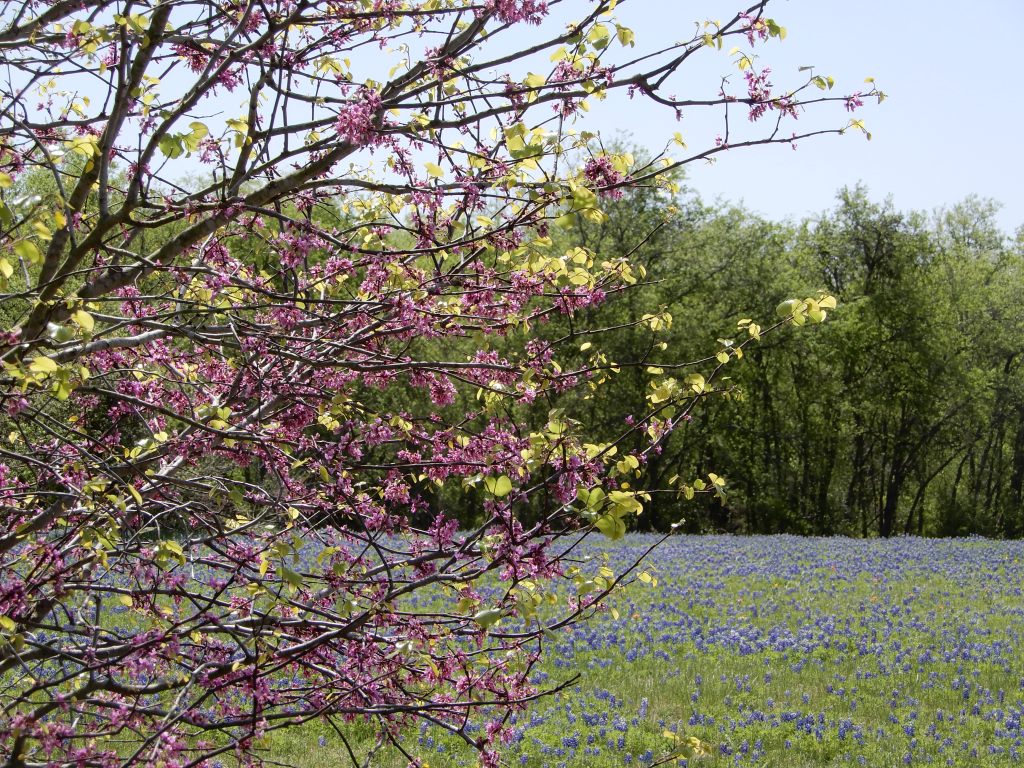
In early April I enjoyed such an outing at McKinney Falls State Park, which is on the outskirts of Austin. My husband and our daughter and I had a great time meandering along the creek looking at wildflowers (which are at their peak in early April here), bird watching, and even fish watching. Here are some photos:
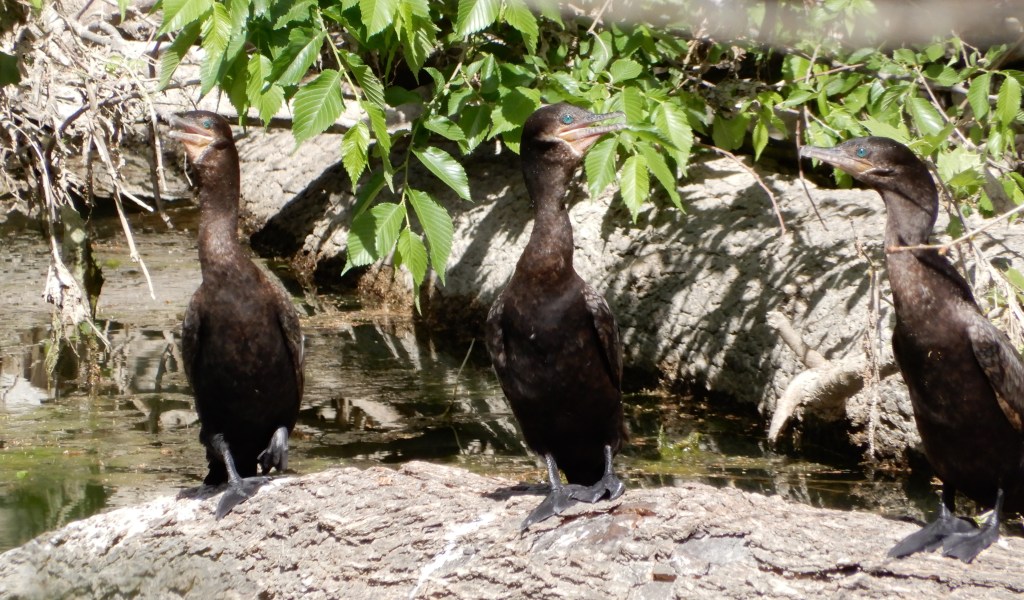
Redbud Tree and BluebonnetsPink Evening Primrose (Oenothera speciosa)Cypress Tree Trunk On Onion CreekCormorants ConveningFish In Onion Creek (unknown species)
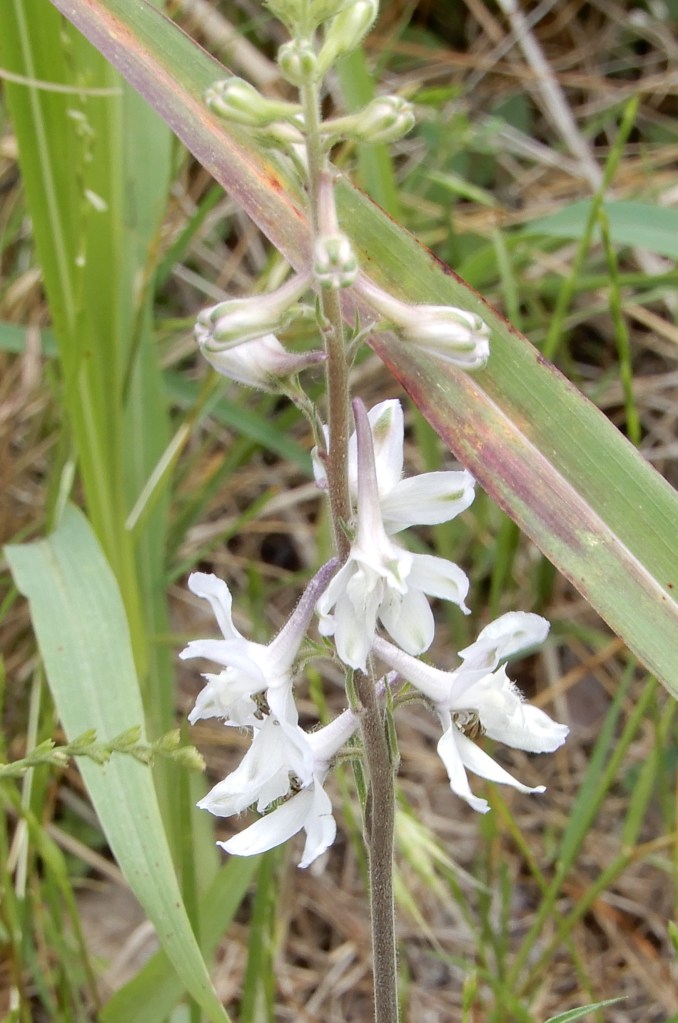
Towards the end of April a dear friend invited me to go bird watching with her in the same park. Some different plants were now blooming. We saw snowy egrets, great blue herons, and more cormorants flying up and down the creek. Other than birdwatching, we had no agenda. We just walked and enjoyed the fresh Spring air on our skin. The sounds of many different birds teased our ears, from the screeching of red tailed hawks to the sweet songs of cardinals. There was also the recurrent chirping of frogs. We stopped to admire and smell flowers. I enjoyed touching leaves to feel their texture. Here are a few photos from that walk:
We did not talk about world affairs or gossip about people or our troubles. We talked about nature, that before us, and old encounters. And we met others enjoying the natural wonders of this park. There were the girls from a nature school laughing and having fun while processing yucca leaves into cordage. And a couple visiting from Israel led us to a view of a barred owl up in a cypress tree.
These times nature bathing with others both relaxed and renewed me. Get out there, somewhere green, and just be. Oh, and don’t forget friends and family. Invite someone outside to bathe with you.
Plant information from A Field Guide to Wildflowers Trees and Shrubs of Texas (Texas Monthly Field Guide Series) and Wildflowers of the Texas Hill Country by Marshall Enquist
Photos by B. McCreary (who is also responsible for any misidentification of plants)





































 Natural Musings